THE ADVENTURE COLLECTIVE® · Independent discovery and booking for outdoor travel

Navigate Charleston’s tidal creeks by boat, explore Morris Island for an hour, and watch dolphins and shorebirds under the watchful rust of the lighthouse. This 2.5-hour eco cruise blends naturalist narration, shell-hunting, and coastal history into a compact, family-friendly outing.
Navigate Charleston’s tidal creeks by boat, explore Morris Island for an hour, and watch dolphins and shorebirds under the watchful rust of the lighthouse. This 2.5-hour eco cruise blends naturalist narration, shell-hunting, and coastal history into a compact, family-friendly outing.
The boat eases away from a low, marsh-fringed dock on Bowens Island Road and the city’s skyline blurs behind you — not because you’ve left Charleston so much as because the salt air insists you pay attention to what’s in front: a mosaic of tidal creeks, oyster bars, and sky.
Verified experiences and guided adventures in the surrounding area.
Operated by Charleston Outdoor Adventures · Charleston, South Carolina
The boat eases away from a low, marsh-fringed dock on Bowens Island Road and the city’s skyline blurs behind you — not because you’ve left Charleston so much as because the salt air insists you pay attention to what’s in front: a mosaic of tidal creeks, oyster bars, and sky.
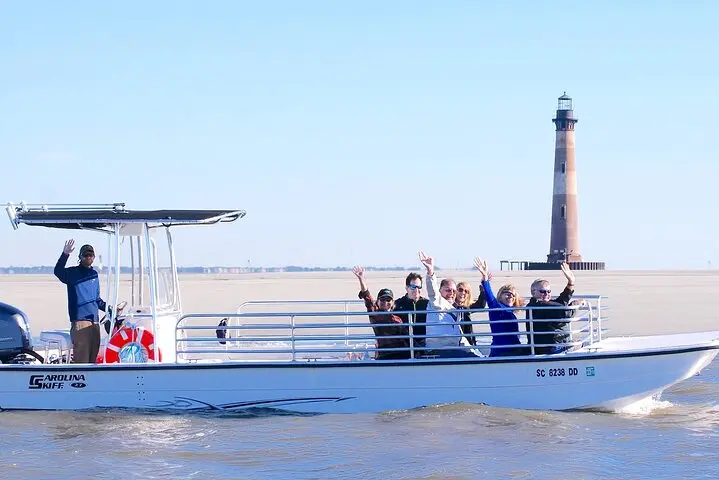
For 2.5 hours this small-group cruise threads through the Charleston estuary toward Morris Island, pausing for roughly an hour so you can set foot on the island’s wide, wind-sculpted beach and stand beneath the rusted silhouette of Morris Island Lighthouse. The captain, a trained naturalist, narrates the route: where the marsh grass slows the tide, how oyster reefs build shoreline, and which channels the dolphins prefer. The narrative is practical and place-based — local history, the lighthouse’s role in Civil War coastal defense, and the geology that makes this a living coastline.
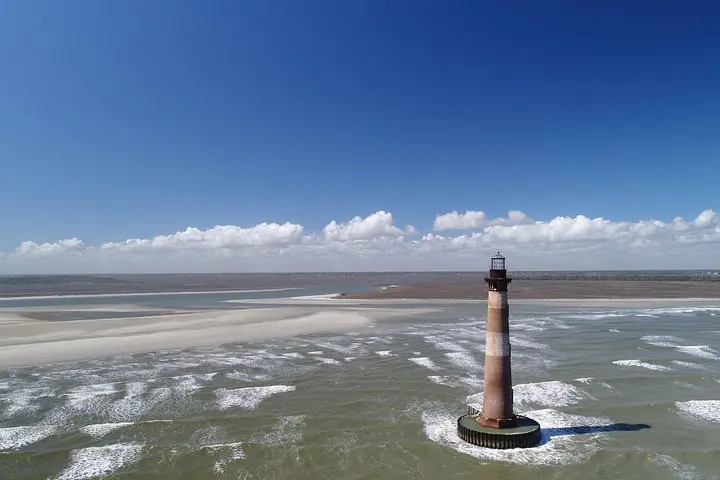
Morris Island itself is a study in coastal processes. The island is a shifting barrier, carved by storms and reshaped by currents; the lighthouse, moved and repaired through decades, is now an iconic marker of human persistence against erosion. Culturally the route ties to Gullah-Geechee traditions and the long relationship between Charlestonians and the sea — shrimpers, oystermen, and oyster beds that still support local tables.
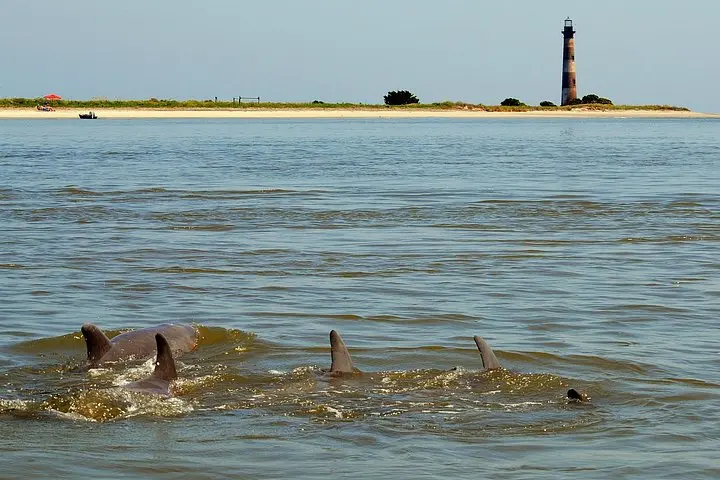
Wildlife shows up with a pragmatic flourish: Atlantic bottlenose dolphins cutting wakes, pelicans folding into the wind, shorebirds probing for invertebrates. The captain points out where loggerhead sea turtles nest in summer and where migratory flocks aggregate in spring and fall.
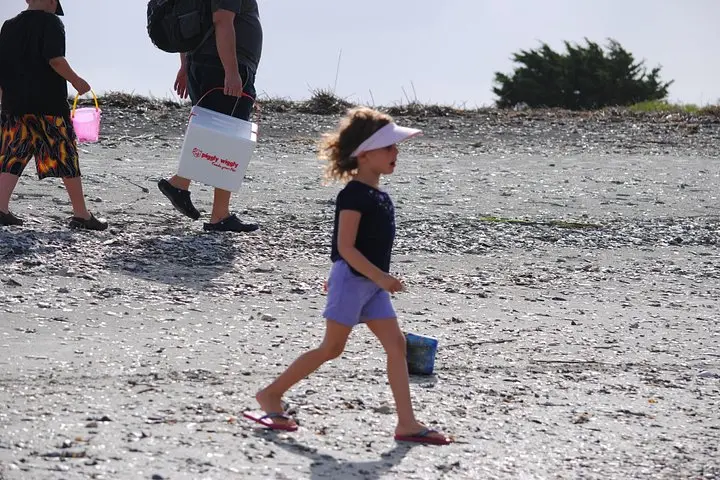
Practicalities matter on this trip. Boats depart from 1871 Bowens Island Road; arrive 15–20 minutes early to check in and use the restrooms. There are no bathrooms on the island or on the boat. Expect about 45–60 minutes ashore — enough time to walk, shell-collect, or search for fossilized shark teeth — but the sand can be soft and uneven; mobility-limited guests may prefer to stay onboard. Tours run rain or shine under safe conditions; cancellations for severe weather are rare but possible.
Bring sun protection, a refillable water bottle, and a small bag for shells. If you want photographs of the lighthouse with minimal people in frame, aim for early departures; later trips tend to see more sun-bleached glare on the water. Gratuities are customary for naturalist crews who navigate tides, point out wildlife, and manage a smooth landing on a shifting shore.
The cruise delivers an efficient, sensory-rich introduction to Charleston’s coastal ecology — equal parts natural history, hands-on beach time, and bird-and-dolphin watching — packaged into a compact outing that works for families, curious travelers, and anyone who wants the low-effort payoff of high coastal drama.
You’ll have roughly 45–60 minutes ashore to walk the beach, collect shells, and view the lighthouse before reboarding.
Restrooms are available at the dock before departure only; there are none on the boat or the island.
The dock and transportation are wheelchair accessible, but Morris Island’s sand and landing may not be navigable for all mobility devices; guests can remain onboard during the stop.
Common sightings include Atlantic bottlenose dolphins, wading birds, pelicans, and occasionally sea turtles; sightings aren’t guaranteed but frequent.
Yes; infants are allowed but must sit on an adult’s lap. Children are welcome and tours are family-friendly.
Full refunds are available if you cancel at least 24 hours before departure; within 24 hours tours are final, though rescheduling may incur a fee.
Charleston Outdoor Adventures operates guided outdoor trips and adventures with an emphasis on safety, stewardship, and memorable experiences.
The boat eases away from a low, marsh-fringed dock on Bowens Island Road and the city’s skyline blurs behind you — not because you’ve left Charleston so much as because the salt air insists you pay attention to what’s in front: a mosaic of tidal creeks, oyster bars, and sky.
The boat eases away from a low, marsh-fringed dock on Bowens Island Road and the city’s skyline blurs behind you — not because you’ve left Charleston so much as because the salt air insists you pay attention to what’s in front: a mosaic of tidal creeks, oyster bars, and sky.
For 2.5 hours this small-group cruise threads through the Charleston estuary toward Morris Island, pausing for roughly an hour so you can set foot on the island’s wide, wind-sculpted beach and stand beneath the rusted silhouette of Morris Island Lighthouse. The captain, a trained naturalist, narrates the route: where the marsh grass slows the tide, how oyster reefs build shoreline, and which channels the dolphins prefer. The narrative is practical and place-based — local history, the lighthouse’s role in Civil War coastal defense, and the geology that makes this a living coastline.
Morris Island itself is a study in coastal processes. The island is a shifting barrier, carved by storms and reshaped by currents; the lighthouse, moved and repaired through decades, is now an iconic marker of human persistence against erosion. Culturally the route ties to Gullah-Geechee traditions and the long relationship between Charlestonians and the sea — shrimpers, oystermen, and oyster beds that still support local tables.
Wildlife shows up with a pragmatic flourish: Atlantic bottlenose dolphins cutting wakes, pelicans folding into the wind, shorebirds probing for invertebrates. The captain points out where loggerhead sea turtles nest in summer and where migratory flocks aggregate in spring and fall.
Practicalities matter on this trip. Boats depart from 1871 Bowens Island Road; arrive 15–20 minutes early to check in and use the restrooms. There are no bathrooms on the island or on the boat. Expect about 45–60 minutes ashore — enough time to walk, shell-collect, or search for fossilized shark teeth — but the sand can be soft and uneven; mobility-limited guests may prefer to stay onboard. Tours run rain or shine under safe conditions; cancellations for severe weather are rare but possible.
Bring sun protection, a refillable water bottle, and a small bag for shells. If you want photographs of the lighthouse with minimal people in frame, aim for early departures; later trips tend to see more sun-bleached glare on the water. Gratuities are customary for naturalist crews who navigate tides, point out wildlife, and manage a smooth landing on a shifting shore.
The cruise delivers an efficient, sensory-rich introduction to Charleston’s coastal ecology — equal parts natural history, hands-on beach time, and bird-and-dolphin watching — packaged into a compact outing that works for families, curious travelers, and anyone who wants the low-effort payoff of high coastal drama.