THE ADVENTURE COLLECTIVE® · Independent discovery and booking for outdoor travel

Taste Charleston’s Lowcountry on a 2½-hour walking tour that pairs pimento cheese and she-crab soup with neighborhood history and local insights. Expect 1.5–2.5 miles of easy walking, small tastings at multiple stops, and stories about Gullah-Geechee culinary roots.
Taste Charleston’s Lowcountry on a 2½-hour walking tour that pairs pimento cheese and she-crab soup with neighborhood history and local insights. Expect 1.5–2.5 miles of easy walking, small tastings at multiple stops, and stories about Gullah-Geechee culinary roots.
A salt-steamed breeze from the Cooper River moves across cobblestones as you step off King Street and into the slow rhythm of historic Charleston. The tour begins with the tang of mustard and sharp cheddar folded into pimento cheese, continues past brick churches and shady magnolia trees, and ends with a spoonful of she-crab soup warmed against the Atlantic humidity.
Verified experiences and guided adventures in the surrounding area.
A salt-steamed breeze from the Cooper River moves across cobblestones as you step off King Street and into the slow rhythm of historic Charleston. The tour begins with the tang of mustard and sharp cheddar folded into pimento cheese, continues past brick churches and shady magnolia trees, and ends with a spoonful of she-crab soup warmed against the Atlantic humidity.
Charleston’s food is a product of place: a coastal plain carved by tidal creeks, rice plantations and a port that brought West African, European and Caribbean influences together to shape Lowcountry cuisine. Expect short lectures on the Gullah-Geechee traditions that shaped local recipes, and notes on how rice and seafood shaped settlement patterns more than a century ago.
Practically, the route mixes paved sidewalks, a few cobbled stretches and short blocks between tastings—plan for roughly 1.5–2.5 miles of walking over 2½ hours. Portions are tasting-size but filling; vendors rotate, so exact stops vary. The experience is as much about local stories and kitchen techniques as it is about flavor—chefs explain why grits comfort locals and why local oysters change with the tide.
Bring comfortable shoes, a small water bottle, and a sense of curiosity; food tours move at neighborhood pace but usually include stairs and narrow alleys. Midday tours avoid the early-morning chill and evening dinner crowds, but summer thunderstorms can interrupt outdoor stops. If you have dietary restrictions, notify the operator in advance. This walk is an efficient way to taste Charleston while learning the social and ecological history that put these dishes on the table.
The tour covers approximately 1.5–2.5 miles spread over 2½ hours, with stops every few blocks.
Some stops offer vegetarian options; notify the operator ahead of time about allergies so accommodations can be arranged where possible.
Yes—families and active seniors can usually participate, though some historic sites have stairs and uneven surfaces to consider.
Policies vary; this operator lists free cancellation and recommends confirming details at booking and contacting them directly for changes.
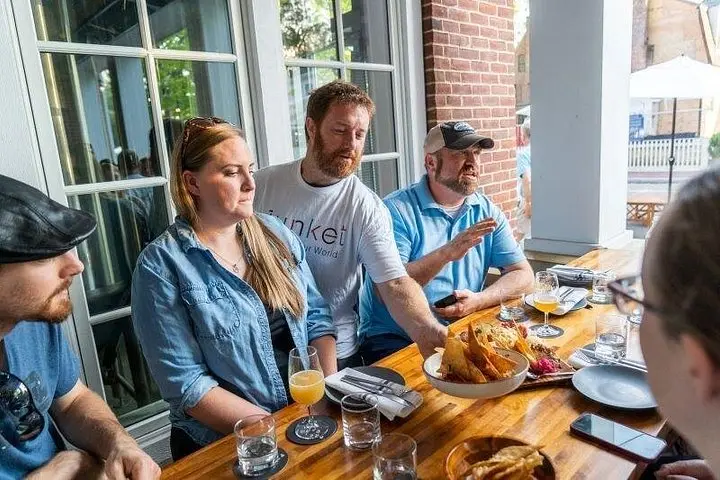
A salt-steamed breeze from the Cooper River moves across cobblestones as you step off King Street and into the slow rhythm of historic Charleston. The tour begins with the tang of mustard and sharp cheddar folded into pimento cheese, continues past brick churches and shady magnolia trees, and ends with a spoonful of she-crab soup warmed against the Atlantic humidity.
A salt-steamed breeze from the Cooper River moves across cobblestones as you step off King Street and into the slow rhythm of historic Charleston. The tour begins with the tang of mustard and sharp cheddar folded into pimento cheese, continues past brick churches and shady magnolia trees, and ends with a spoonful of she-crab soup warmed against the Atlantic humidity.
Charleston’s food is a product of place: a coastal plain carved by tidal creeks, rice plantations and a port that brought West African, European and Caribbean influences together to shape Lowcountry cuisine. Expect short lectures on the Gullah-Geechee traditions that shaped local recipes, and notes on how rice and seafood shaped settlement patterns more than a century ago.
Practically, the route mixes paved sidewalks, a few cobbled stretches and short blocks between tastings—plan for roughly 1.5–2.5 miles of walking over 2½ hours. Portions are tasting-size but filling; vendors rotate, so exact stops vary. The experience is as much about local stories and kitchen techniques as it is about flavor—chefs explain why grits comfort locals and why local oysters change with the tide.
Bring comfortable shoes, a small water bottle, and a sense of curiosity; food tours move at neighborhood pace but usually include stairs and narrow alleys. Midday tours avoid the early-morning chill and evening dinner crowds, but summer thunderstorms can interrupt outdoor stops. If you have dietary restrictions, notify the operator in advance. This walk is an efficient way to taste Charleston while learning the social and ecological history that put these dishes on the table.