THE ADVENTURE COLLECTIVE® · Independent discovery and booking for outdoor travel

Head out of Reykjavik in a small superjeep group to hunt the Northern Lights with a local Icelandic guide and on-board photographer. This guided chase pairs practical sky science with Norse storytelling and a free retry if conditions hide the aurora.
Head out of Reykjavik in a small superjeep group to hunt the Northern Lights with a local Icelandic guide and on-board photographer. This guided chase pairs practical sky science with Norse storytelling and a free retry if conditions hide the aurora.
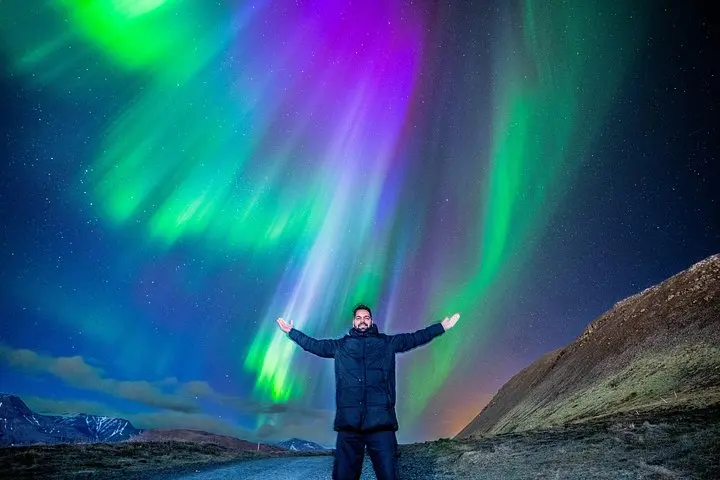
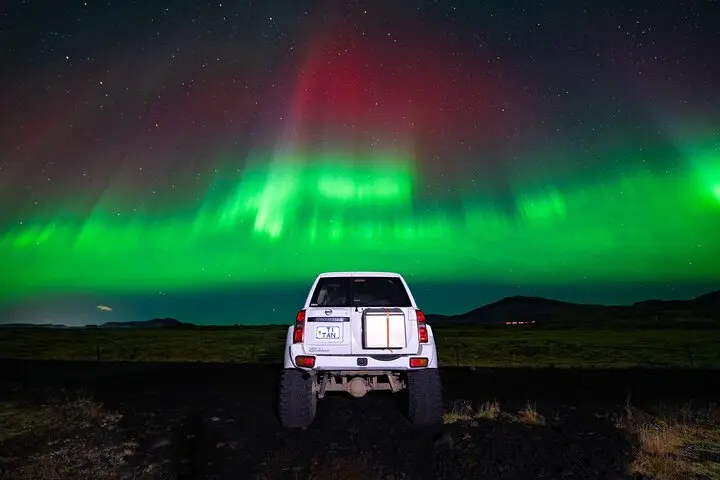
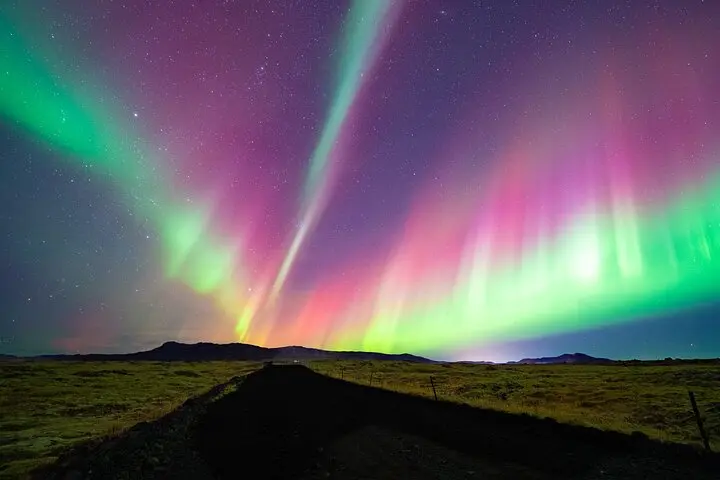
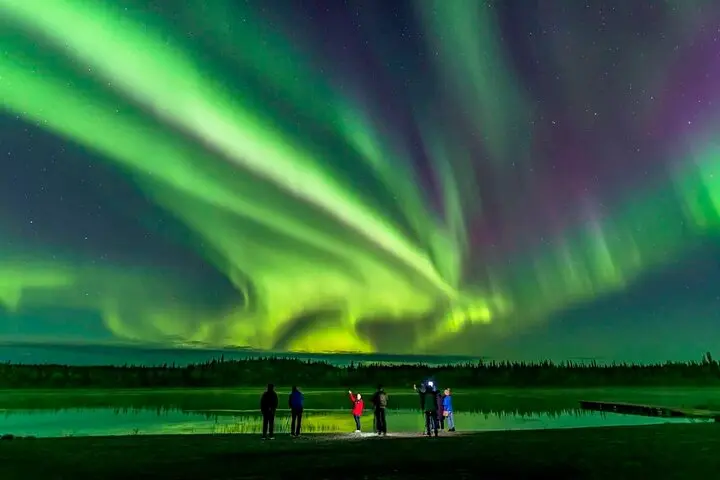
You step out of Reykjavik’s halo of sodium lamps into an ocean of cold, clean night. The superjeep rumbles across black lava fields and coastal roads, headlights carving brief moonscapes while the guide scans the sky. When green bands appear, they unfurl and curl—an active, living ceiling that demands silence and quick fingers on a camera.
Verified experiences and guided adventures in the surrounding area.
Operated by Norse Adventures · Reykjavik, Capital Region
You step out of Reykjavik’s halo of sodium lamps into an ocean of cold, clean night. The superjeep rumbles across black lava fields and coastal roads, headlights carving brief moonscapes while the guide scans the sky. When green bands appear, they unfurl and curl—an active, living ceiling that demands silence and quick fingers on a camera.
Iceland’s aurora displays are the product of solar wind and Earth’s magnetic field; this region’s latitude and sparse rural light make the area around Reykjavik a reliable launching point for chases. Guides on these tours mix practical astronomy—KP index, cloud cover, clear-air forecasts—with local lore: Viking sagas, tales of elves and trolls, and how early settlers read the sky.
The terrain you’ll cross is geological history in motion: recent lava flows, peat soils, and coastal beaches shaped by glacial eras. Cultural notes surface at stops—a lone turf church silhouette or a roadside marker tied to a saga—while guides emphasize safety and leave-no-trace ethics under fragile winter grasses.
Practically, expect a 3–5 hour evening, small groups (max ~14), and a late-model 4x4 that can reach dark vantage points away from light pollution. Bring insulated layers, a tripod for long exposures, and fully charged batteries—cold kills runtime. If clouds or weather block views the operator typically offers a free retry subject to availability. Tours are suitable for most fitness levels but prepare for standing, short walks on uneven ground, and subfreezing temperatures after midnight.
Chances depend on solar activity and cloud cover; guides use forecasts to maximize odds, and if lights don’t appear many operators offer a free retry subject to availability.
Tours accept families and provide infant seats when needed, but prepare for cold, late hours and short walks on uneven ground.
Guides typically drive 30–120 minutes to dark-sky locations depending on conditions, using 4x4 vehicles to reach varied vantage points.
Smartphones can capture bright displays, but for best results bring a tripod and know long-exposure settings; guides often offer photography tips and may take pro shots.
Norse Adventures operates guided outdoor trips and adventures with an emphasis on safety, stewardship, and memorable experiences.
You step out of Reykjavik’s halo of sodium lamps into an ocean of cold, clean night. The superjeep rumbles across black lava fields and coastal roads, headlights carving brief moonscapes while the guide scans the sky. When green bands appear, they unfurl and curl—an active, living ceiling that demands silence and quick fingers on a camera.
You step out of Reykjavik’s halo of sodium lamps into an ocean of cold, clean night. The superjeep rumbles across black lava fields and coastal roads, headlights carving brief moonscapes while the guide scans the sky. When green bands appear, they unfurl and curl—an active, living ceiling that demands silence and quick fingers on a camera.
Iceland’s aurora displays are the product of solar wind and Earth’s magnetic field; this region’s latitude and sparse rural light make the area around Reykjavik a reliable launching point for chases. Guides on these tours mix practical astronomy—KP index, cloud cover, clear-air forecasts—with local lore: Viking sagas, tales of elves and trolls, and how early settlers read the sky.
The terrain you’ll cross is geological history in motion: recent lava flows, peat soils, and coastal beaches shaped by glacial eras. Cultural notes surface at stops—a lone turf church silhouette or a roadside marker tied to a saga—while guides emphasize safety and leave-no-trace ethics under fragile winter grasses.
Practically, expect a 3–5 hour evening, small groups (max ~14), and a late-model 4x4 that can reach dark vantage points away from light pollution. Bring insulated layers, a tripod for long exposures, and fully charged batteries—cold kills runtime. If clouds or weather block views the operator typically offers a free retry subject to availability. Tours are suitable for most fitness levels but prepare for standing, short walks on uneven ground, and subfreezing temperatures after midnight.