THE ADVENTURE COLLECTIVE® · Independent discovery and booking for outdoor travel

Head into Lapland’s auroral corridor on a small-group chase from Kiruna toward Abisko. Guides combine live forecasts and photography coaching to maximize your chance of seeing—and capturing—the northern lights.
Head into Lapland’s auroral corridor on a small-group chase from Kiruna toward Abisko. Guides combine live forecasts and photography coaching to maximize your chance of seeing—and capturing—the northern lights.
The night opens cold and wide as the minivan pulls away from Kiruna; headlights cut into a sky that could flare any second. Guides cross-reference aurora and cloud forecasts, then steer toward higher, darker ground between Kiruna and Abisko. Small groups—maximum seven—stop at cleared viewpoints and short trailheads where the horizon is low and the stars are sharp.
Verified experiences and guided adventures in the surrounding area.
Operated by Cityphototour · Kiruna, Norrbotten County
The night opens cold and wide as the minivan pulls away from Kiruna; headlights cut into a sky that could flare any second. Guides cross-reference aurora and cloud forecasts, then steer toward higher, darker ground between Kiruna and Abisko. Small groups—maximum seven—stop at cleared viewpoints and short trailheads where the horizon is low and the stars are sharp.
This corridor in northern Swedish Lapland sits under the auroral oval, a geomagnetic ring shaped by solar wind and Earth’s magnetosphere. The landscape—low birch forest, peat bogs and rounded fells—reflects a mining and Sámi reindeer-herding history that still shapes roads and place names. Guides share why the Abisko area statistically produces strong displays: a combination of latitude and a local microclimate that can keep skies clearer than surrounding valleys.
Expect practical, photography-first instruction: tripod use, long-exposure settings and framing against silhouetted fjäll. The tour provides warm outerwear if you meet at the office, plus a transport loop that returns to Kiruna. Because the aurora is a dynamic atmospheric event, sightings cannot be guaranteed; good tours maximize probability by moving to multiple vantage points and reading real-time forecasts.
Prepare for standing still in subzero air—layer strategically, protect camera batteries from the cold, and time the outing on nights with new moon or low lunar illumination for the best contrast. If visibility is poor, guides prioritize comfort and learning: aurora science, camera technique and local stories about the land, so the night still feels earned even if the sky stays quiet.
Guides optimize for probability by following real-time aurora and cloud forecasts, but the phenomenon is natural and unpredictable; tours increase chances but cannot guarantee sightings.
Yes—this tour is rated easy and includes vehicle transport and short walks, but let the operator know about mobility needs for pickup arrangements.
A DSLR or mirrorless camera with manual controls and a tripod yields the best aurora photos; phones can work on newer models but generally need tripod support and longer-exposure modes.
Providers typically offer insulated overalls, hat and gloves if you meet at their office—still bring warm base layers, an insulated mid-layer, and waterproof winter boots.
Cityphototour operates guided outdoor trips and adventures with an emphasis on safety, stewardship, and memorable experiences.
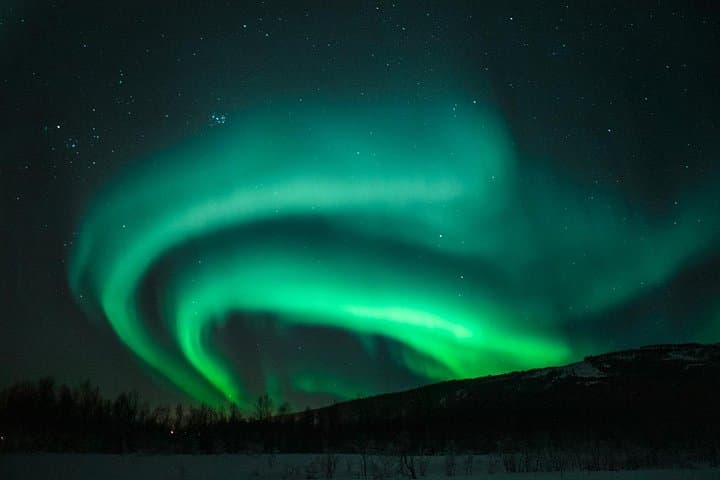


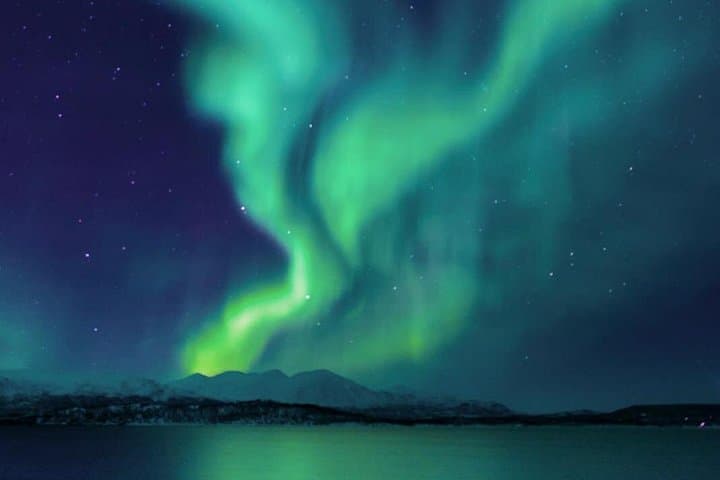
The night opens cold and wide as the minivan pulls away from Kiruna; headlights cut into a sky that could flare any second. Guides cross-reference aurora and cloud forecasts, then steer toward higher, darker ground between Kiruna and Abisko. Small groups—maximum seven—stop at cleared viewpoints and short trailheads where the horizon is low and the stars are sharp.
The night opens cold and wide as the minivan pulls away from Kiruna; headlights cut into a sky that could flare any second. Guides cross-reference aurora and cloud forecasts, then steer toward higher, darker ground between Kiruna and Abisko. Small groups—maximum seven—stop at cleared viewpoints and short trailheads where the horizon is low and the stars are sharp.
This corridor in northern Swedish Lapland sits under the auroral oval, a geomagnetic ring shaped by solar wind and Earth’s magnetosphere. The landscape—low birch forest, peat bogs and rounded fells—reflects a mining and Sámi reindeer-herding history that still shapes roads and place names. Guides share why the Abisko area statistically produces strong displays: a combination of latitude and a local microclimate that can keep skies clearer than surrounding valleys.
Expect practical, photography-first instruction: tripod use, long-exposure settings and framing against silhouetted fjäll. The tour provides warm outerwear if you meet at the office, plus a transport loop that returns to Kiruna. Because the aurora is a dynamic atmospheric event, sightings cannot be guaranteed; good tours maximize probability by moving to multiple vantage points and reading real-time forecasts.
Prepare for standing still in subzero air—layer strategically, protect camera batteries from the cold, and time the outing on nights with new moon or low lunar illumination for the best contrast. If visibility is poor, guides prioritize comfort and learning: aurora science, camera technique and local stories about the land, so the night still feels earned even if the sky stays quiet.