THE ADVENTURE COLLECTIVE® · Independent discovery and booking for outdoor travel

Four days of vehicle safaris from Arusha into Serengeti and Ngorongoro: long drives, close game drives and a shot at river-crossing drama. Plan for early starts, layers, and binoculars—the plains reward the prepared.
Four days of vehicle safaris from Arusha into Serengeti and Ngorongoro: long drives, close game drives and a shot at river-crossing drama. Plan for early starts, layers, and binoculars—the plains reward the prepared.
You arrive before dawn on a red-dust track outside Seronera, the low winter sun cutting the grass into long shadows. The land opens into a broad, breathing plain where thousands of hooves have worn pathways through the grasses; acacia silhouettes puncture the horizon and the air smells faintly of earth and diesel from the safari truck.
Verified experiences and guided adventures in the surrounding area.
Operated by MERU SLOPES TOURS AND SAFARIS · Seronera, Mara Region
You arrive before dawn on a red-dust track outside Seronera, the low winter sun cutting the grass into long shadows. The land opens into a broad, breathing plain where thousands of hooves have worn pathways through the grasses; acacia silhouettes puncture the horizon and the air smells faintly of earth and diesel from the safari truck.
This four-day loop threads Arusha, Serengeti National Park and the Ngorongoro Crater—places shaped by ice-age geology and recent volcanic collapse. The Serengeti’s rolling plains, named from the Maasai word siringet for “endless plains,” host the annual wildebeest and zebra migration. Ngorongoro is a collapsed caldera whose sheltered floor concentrates game into predictable waterholes.
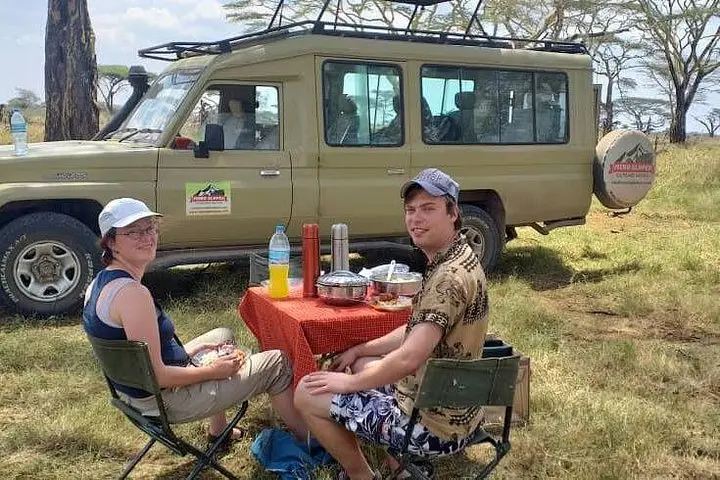
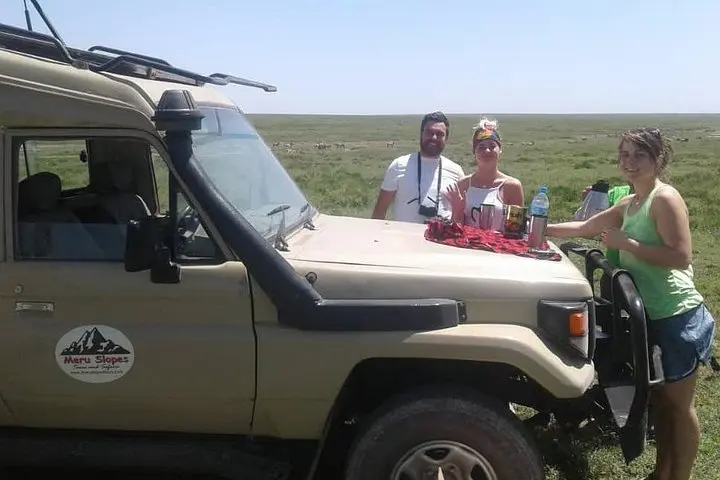
Culturally, your route passes Maasai grazing lands and small market towns; local guides often blend natural history with stories of livestock and seasonal movement. Expect long vehicle days on graded dirt tracks, early-morning and late-afternoon game drives, picnic lunches on kopjes, and nights at modest camps or lodges under open skies.
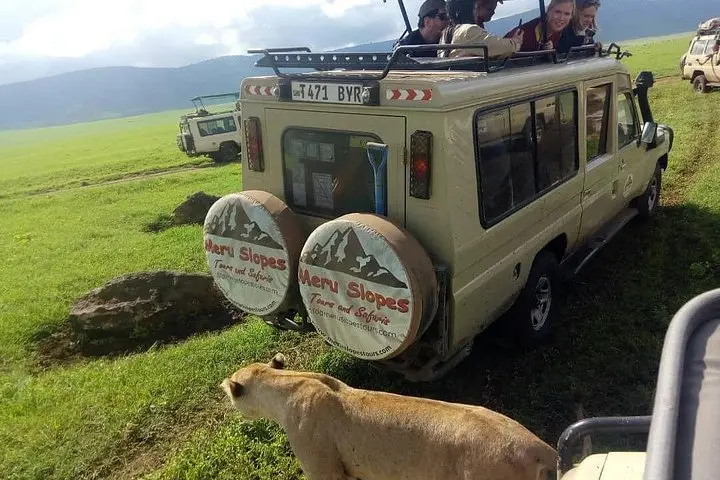
Practical guidance: pack layered clothing for chilly mornings and hot afternoons, strong binoculars, and a small daypack for short walks from the vehicle. Vehicle-safari etiquette matters—stay in the truck, follow the guide’s distances, and keep voices low to maintain animal behavior and safety. Hydration and sun protection are essential. If you’re chasing river crossings, plan June–October for the highest chance, but migration patterns move with the rains.
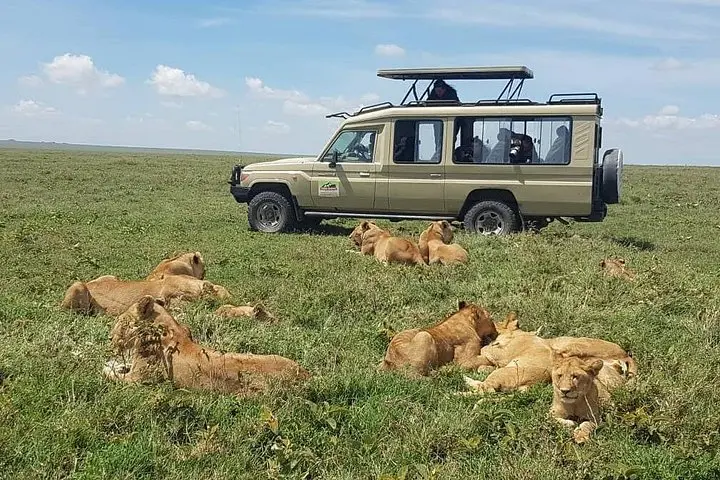
This itinerary balances high-density wildlife viewing with compact logistics: long drives, close-up sightings, and the crater’s concentrated biodiversity—an efficient, vehicle-forward safari for travelers who want maximum encounter time with minimal fuss.
The migration moves with the rains; dry months (June–October) concentrate animals and increase the chance of river crossings, while the southern plains host calving in January–March.
This tour lists breakfasts, lunches and dinners included; park entry fees vary by park and season—confirm with your operator before travel for the exact inclusions.
Expect a multi-hour drive (roughly 6–8 hours depending on route and stops) over graded dirt roads; the itinerary schedules full travel days between parks.
Travel health advice commonly includes yellow fever certification if arriving from endemic countries, routine vaccinations, and malaria prevention; check Tanzania visa rules for your nationality before departure.
MERU SLOPES TOURS AND SAFARIS operates guided outdoor trips and adventures with an emphasis on safety, stewardship, and memorable experiences.
You arrive before dawn on a red-dust track outside Seronera, the low winter sun cutting the grass into long shadows. The land opens into a broad, breathing plain where thousands of hooves have worn pathways through the grasses; acacia silhouettes puncture the horizon and the air smells faintly of earth and diesel from the safari truck.
You arrive before dawn on a red-dust track outside Seronera, the low winter sun cutting the grass into long shadows. The land opens into a broad, breathing plain where thousands of hooves have worn pathways through the grasses; acacia silhouettes puncture the horizon and the air smells faintly of earth and diesel from the safari truck.
This four-day loop threads Arusha, Serengeti National Park and the Ngorongoro Crater—places shaped by ice-age geology and recent volcanic collapse. The Serengeti’s rolling plains, named from the Maasai word siringet for “endless plains,” host the annual wildebeest and zebra migration. Ngorongoro is a collapsed caldera whose sheltered floor concentrates game into predictable waterholes.
Culturally, your route passes Maasai grazing lands and small market towns; local guides often blend natural history with stories of livestock and seasonal movement. Expect long vehicle days on graded dirt tracks, early-morning and late-afternoon game drives, picnic lunches on kopjes, and nights at modest camps or lodges under open skies.
Practical guidance: pack layered clothing for chilly mornings and hot afternoons, strong binoculars, and a small daypack for short walks from the vehicle. Vehicle-safari etiquette matters—stay in the truck, follow the guide’s distances, and keep voices low to maintain animal behavior and safety. Hydration and sun protection are essential. If you’re chasing river crossings, plan June–October for the highest chance, but migration patterns move with the rains.
This itinerary balances high-density wildlife viewing with compact logistics: long drives, close-up sightings, and the crater’s concentrated biodiversity—an efficient, vehicle-forward safari for travelers who want maximum encounter time with minimal fuss.