THE ADVENTURE COLLECTIVE® · Independent discovery and booking for outdoor travel

A two-day, round-trip excursion from Casablanca that deposits you in Chefchaouen’s blue-washed alleys for an overnight stay, local crafts, and mountain views. Practical and paced for walking exploration, this trip combines culture, light hiking, and time to soak in the Rif highlands.
A two-day, round-trip excursion from Casablanca that deposits you in Chefchaouen’s blue-washed alleys for an overnight stay, local crafts, and mountain views. Practical and paced for walking exploration, this trip combines culture, light hiking, and time to soak in the Rif highlands.
The bus eases out of Casablanca before dawn and the air changes: salt from the Atlantic gives way to a dry, herb-tinged wind as the Rif Mountains rise. By late afternoon the town appears—walls and alleys painted a range of washed blues that make the medina feel like a living canvas. Visitors stroll narrow lanes where light and shadow play across doorways and piled rugs.
Verified experiences and guided adventures in the surrounding area.
Operated by Tilila Travel · Chefchaouen, Tanger-Tetouan-Al Hoceima
The bus eases out of Casablanca before dawn and the air changes: salt from the Atlantic gives way to a dry, herb-tinged wind as the Rif Mountains rise. By late afternoon the town appears—walls and alleys painted a range of washed blues that make the medina feel like a living canvas. Visitors stroll narrow lanes where light and shadow play across doorways and piled rugs.
Chefchaouen grew where mountain streams meet terraced slopes; founded in the 15th century by refugees fleeing the Reconquista, the town’s blue tones were later reinforced by Jewish and Andalusian influence. Geologically the Rif is folded limestone and schist, giving steep ravines and viewpoints that look over cultivated terraces. Culture here is textile and craft—handwoven blankets, local goat cheese, and small dye workshops that follow time-honored techniques.
Practical guidance: the trip is packaged as a two-day round trip from Casablanca with an overnight in a local hotel, morning pick-up, and time to explore the Outa el Hammam square, the 15th-century kasbah and the Great Mosque area. Expect cobbled, steep alleys—good footwear matters. Cash is useful for small shops; haggling is common but polite. Bring a light layer for cool mountain evenings and a refillable bottle for limited tap water reliability.
Plan for walking-driven discovery rather than rigid itineraries: follow side lanes to find leather workshops, climb to the Spanish Mosque for sunset, and allow slow, unstructured time to meet artisans. The town is compact, atmospheric, and best appreciated on foot.
The trip takes roughly 4–5 hours each way depending on traffic and stops; expect an early departure and late afternoon arrival the first day.
Many streets are steep and cobbled; some central areas are flatter, but overall mobility is limited—notify the operator about accessibility needs.
The itinerary typically includes breakfast and dinner in Chefchaouen but verify specific meal inclusions before booking.
Yes—there is usually an option to hire a local guide for on-site walking tours to dive deeper into crafts and history.
Tilila Travel operates guided outdoor trips and adventures with an emphasis on safety, stewardship, and memorable experiences.


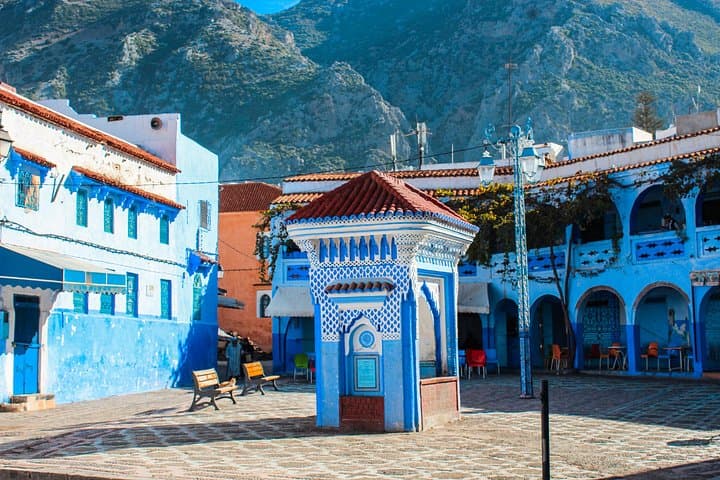
The bus eases out of Casablanca before dawn and the air changes: salt from the Atlantic gives way to a dry, herb-tinged wind as the Rif Mountains rise. By late afternoon the town appears—walls and alleys painted a range of washed blues that make the medina feel like a living canvas. Visitors stroll narrow lanes where light and shadow play across doorways and piled rugs.
The bus eases out of Casablanca before dawn and the air changes: salt from the Atlantic gives way to a dry, herb-tinged wind as the Rif Mountains rise. By late afternoon the town appears—walls and alleys painted a range of washed blues that make the medina feel like a living canvas. Visitors stroll narrow lanes where light and shadow play across doorways and piled rugs.
Chefchaouen grew where mountain streams meet terraced slopes; founded in the 15th century by refugees fleeing the Reconquista, the town’s blue tones were later reinforced by Jewish and Andalusian influence. Geologically the Rif is folded limestone and schist, giving steep ravines and viewpoints that look over cultivated terraces. Culture here is textile and craft—handwoven blankets, local goat cheese, and small dye workshops that follow time-honored techniques.
Practical guidance: the trip is packaged as a two-day round trip from Casablanca with an overnight in a local hotel, morning pick-up, and time to explore the Outa el Hammam square, the 15th-century kasbah and the Great Mosque area. Expect cobbled, steep alleys—good footwear matters. Cash is useful for small shops; haggling is common but polite. Bring a light layer for cool mountain evenings and a refillable bottle for limited tap water reliability.
Plan for walking-driven discovery rather than rigid itineraries: follow side lanes to find leather workshops, climb to the Spanish Mosque for sunset, and allow slow, unstructured time to meet artisans. The town is compact, atmospheric, and best appreciated on foot.