THE ADVENTURE COLLECTIVE® · Independent discovery and booking for outdoor travel

Travel from Tangier to Chefchaouen on a scenic day trip through the Rif Mountains to explore the famous blue medina, historic kasbah and local markets. Expect a relaxed walking day with photo opportunities, cultural stops and time to shop the craft stalls.
Travel from Tangier to Chefchaouen on a scenic day trip through the Rif Mountains to explore the famous blue medina, historic kasbah and local markets. Expect a relaxed walking day with photo opportunities, cultural stops and time to shop the craft stalls.
Morning light slips across the Rif Mountains and the minivan hums toward a city painted in shades of blue — Chefchaouen appears like a calm, cool breath after the drive from Tangier. Streets open into narrow alleys where doors, walls and stairways are washed in layered pigments; vendors call quietly, and the air carries the scent of mint tea and frying sesame.
Verified experiences and guided adventures in the surrounding area.
Operated by Royal Respite · Chefchaouen, Tanger-Tétouan-Al Hoceima
Morning light slips across the Rif Mountains and the minivan hums toward a city painted in shades of blue — Chefchaouen appears like a calm, cool breath after the drive from Tangier. Streets open into narrow alleys where doors, walls and stairways are washed in layered pigments; vendors call quietly, and the air carries the scent of mint tea and frying sesame.
The town grew from a 15th‑century Berber stronghold and later absorbed Andalusian refugees, a history visible in its kasbah walls, simple mosques and the geometric patterns in local textiles. Geologically, Chefchaouen sits on folded limestone foothills that slope down into fertile valleys; terraces and springs explain the town’s long-standing agricultural and craft economy.
Visitors enter a living neighborhood rather than a staged attraction: the Outa El Hammam square is a social hub, while the Jewish quarter and jewelry market reveal a layered cultural past. The Kasbah museum offers compact exhibits that contextualize the city’s Andalusian-Arabic architecture and local crafts.
Practical guidance is straightforward: expect a 2.5‑hour scenic drive each way, a multi-hour walking window in uneven, cobbled alleys, and sun exposed viewpoints above the medina. Bring comfortable shoes, a light jacket for the mountains, cash in Moroccan dirham for small purchases, and a respectful approach to photography in residential areas. Timed right, the return drive catches sunset over the ridgeline — the mountains seem to pull the light down the valley — closing a day that balances easy exploration with rich cultural detail.
Typical departure is around 9:00 AM from Tangier with an approximate return to hotels by 7:00 PM, depending on traffic and stops.
The vehicle and some areas are wheelchair accessible, but the medina has uneven cobbles and narrow alleys that can be challenging for mobility devices.
Kasbah admission is generally not included; the itinerary lists optional visits and any museum fees are paid on site.
Yes — the schedule includes several hours of free time in the medina for lunch, cafés and browsing local craft markets.
Royal Respite operates guided outdoor trips and adventures with an emphasis on safety, stewardship, and memorable experiences.
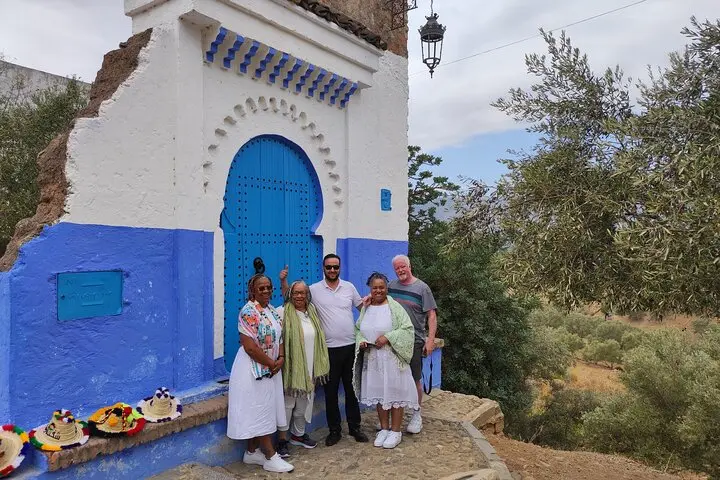



Morning light slips across the Rif Mountains and the minivan hums toward a city painted in shades of blue — Chefchaouen appears like a calm, cool breath after the drive from Tangier. Streets open into narrow alleys where doors, walls and stairways are washed in layered pigments; vendors call quietly, and the air carries the scent of mint tea and frying sesame.
Morning light slips across the Rif Mountains and the minivan hums toward a city painted in shades of blue — Chefchaouen appears like a calm, cool breath after the drive from Tangier. Streets open into narrow alleys where doors, walls and stairways are washed in layered pigments; vendors call quietly, and the air carries the scent of mint tea and frying sesame.
The town grew from a 15th‑century Berber stronghold and later absorbed Andalusian refugees, a history visible in its kasbah walls, simple mosques and the geometric patterns in local textiles. Geologically, Chefchaouen sits on folded limestone foothills that slope down into fertile valleys; terraces and springs explain the town’s long-standing agricultural and craft economy.
Visitors enter a living neighborhood rather than a staged attraction: the Outa El Hammam square is a social hub, while the Jewish quarter and jewelry market reveal a layered cultural past. The Kasbah museum offers compact exhibits that contextualize the city’s Andalusian-Arabic architecture and local crafts.
Practical guidance is straightforward: expect a 2.5‑hour scenic drive each way, a multi-hour walking window in uneven, cobbled alleys, and sun exposed viewpoints above the medina. Bring comfortable shoes, a light jacket for the mountains, cash in Moroccan dirham for small purchases, and a respectful approach to photography in residential areas. Timed right, the return drive catches sunset over the ridgeline — the mountains seem to pull the light down the valley — closing a day that balances easy exploration with rich cultural detail.