THE ADVENTURE COLLECTIVE® · Independent discovery and booking for outdoor travel

Spend a day driving from Chengdu to stand beneath the 71-meter Leshan Giant Buddha. This private tour covers transport, lunch and guided access to the cliff-face carving and adjoining temples—perfect for travelers wanting cultural depth with straightforward logistics.
Spend a day driving from Chengdu to stand beneath the 71-meter Leshan Giant Buddha. This private tour covers transport, lunch and guided access to the cliff-face carving and adjoining temples—perfect for travelers wanting cultural depth with straightforward logistics.
You step off the air-conditioned van into a bruise of river-smoothed stone and the Buddha looks back, carved into the red cliff like a patient island facing two rivers that dare the bank. The path down the left side is a twisting stair that makes the statue’s braided hair feel close enough to touch; wind pushes river mist against your cheeks and the temples above hum with incense and footsteps.
Verified experiences and guided adventures in the surrounding area.
Operated by Trazip · Leshan, Sichuan
You step off the air-conditioned van into a bruise of river-smoothed stone and the Buddha looks back, carved into the red cliff like a patient island facing two rivers that dare the bank. The path down the left side is a twisting stair that makes the statue’s braided hair feel close enough to touch; wind pushes river mist against your cheeks and the temples above hum with incense and footsteps.
The Giant Buddha was cut from the cliff during the Tang Dynasty under monk Haitong’s commission—an engineering and devotional project intended to calm river currents that once wrecked boats. The rock here is red sandstone; centuries of water and weather have shaped terraces, stairways and the composite temples of Lingyun and Wuyou that crown the site. Local temple culture remains active: monks tend halls, pilgrims leave offerings, and guide narration ties the site’s practical river-control origins to its monumental scale.
Expect a full day of driving from Chengdu, a sit-down local lunch, and several hundred steps—both down to riverside viewing platforms and up to temple courtyards. Photography works best in morning light or late afternoon; midday haze can soften distant detail. Bring a reusable water bottle, solid footwear for steep stairs, and patience for crowds at prime viewpoints. If you have mobility issues, ask ahead about routes and vehicle drop-off points.
This tour pairs cultural insight with straightforward logistics: private transport, guide support, and included entry make for a focused, accessible experience of one of China’s largest stone carvings.
The trip is roughly 2 hours each way depending on traffic and your hotel location; plan for an 8-hour round trip with sightseeing and lunch.
Yes—this private tour includes entrance tickets and a local lunch as stated in the itinerary.
A river viewpoint exists and is popular, but this private day tour focuses on park access and cliff-side stairs; ask the operator if a river cruise option can be arranged separately.
The site has many stairs and uneven paths; travelers with mobility concerns should inform the operator in advance to discuss drop-off points and alternative viewpoints.
Trazip operates guided outdoor trips and adventures with an emphasis on safety, stewardship, and memorable experiences.


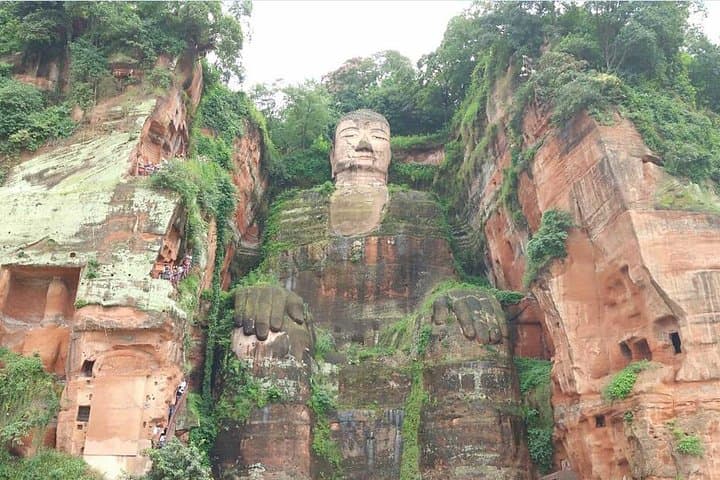

You step off the air-conditioned van into a bruise of river-smoothed stone and the Buddha looks back, carved into the red cliff like a patient island facing two rivers that dare the bank. The path down the left side is a twisting stair that makes the statue’s braided hair feel close enough to touch; wind pushes river mist against your cheeks and the temples above hum with incense and footsteps.
You step off the air-conditioned van into a bruise of river-smoothed stone and the Buddha looks back, carved into the red cliff like a patient island facing two rivers that dare the bank. The path down the left side is a twisting stair that makes the statue’s braided hair feel close enough to touch; wind pushes river mist against your cheeks and the temples above hum with incense and footsteps.
The Giant Buddha was cut from the cliff during the Tang Dynasty under monk Haitong’s commission—an engineering and devotional project intended to calm river currents that once wrecked boats. The rock here is red sandstone; centuries of water and weather have shaped terraces, stairways and the composite temples of Lingyun and Wuyou that crown the site. Local temple culture remains active: monks tend halls, pilgrims leave offerings, and guide narration ties the site’s practical river-control origins to its monumental scale.
Expect a full day of driving from Chengdu, a sit-down local lunch, and several hundred steps—both down to riverside viewing platforms and up to temple courtyards. Photography works best in morning light or late afternoon; midday haze can soften distant detail. Bring a reusable water bottle, solid footwear for steep stairs, and patience for crowds at prime viewpoints. If you have mobility issues, ask ahead about routes and vehicle drop-off points.
This tour pairs cultural insight with straightforward logistics: private transport, guide support, and included entry make for a focused, accessible experience of one of China’s largest stone carvings.