THE ADVENTURE COLLECTIVE® · Independent discovery and booking for outdoor travel

Cycle away from the tourist line and into Chiang Mai’s living neighborhoods. This three‑hour backstreets tour pairs temple visits with hilltribe artisan stops and mostly quiet lanes—ideal for riders who want cultural immersion with easy pedaling.
Cycle away from the tourist line and into Chiang Mai’s living neighborhoods. This three‑hour backstreets tour pairs temple visits with hilltribe artisan stops and mostly quiet lanes—ideal for riders who want cultural immersion with easy pedaling.
You push off from Tha Phae Gate and the city exhales around you—scooters hum, market stalls call, and a ribbon of quiet lanes slips you away from the main road.
Verified experiences and guided adventures in the surrounding area.
Operated by Oh-Hoo · Chiang Mai, Chiang Mai Province
You push off from Tha Phae Gate and the city exhales around you—scooters hum, market stalls call, and a ribbon of quiet lanes slips you away from the main road.
This three‑hour ride threads Chiang Mai’s inner bastion of the old Lanna city, where brick walls, low wooden houses and century‑old wats (temples) share space with vegetable stalls and lacquered crafts. The route favors narrow alleys and shaded backstreets; mountain ridges loom in the distance like patient guards, inviting a glance but never stealing the scene.
Chiang Mai was founded as the Lanna capital in 1296, and the city’s layout still reflects that heritage: square walls, moats and temple clusters marking neighborhoods. Geologically, the region sits at the northern edge of Thailand’s river plains beneath the granite and limestone folds of the Shan Hills—those slopes frame the skyline you’ll glimpse beyond the rooftops. Culturally, the tour offers a working look at artisan hilltribe traditions and community workshops where textiles and silverwork are crafted by hand.
Practical guidance: routes change daily to match traffic and local rhythms, but expect paved alleys, occasional cobbles and light climbs beyond the wall. Wear closed shoes, carry water, and dress modestly when entering temples—shoulders and knees should be covered. Helmets and city bikes are provided, and the group size keeps navigation steady. Plan morning or late‑afternoon departures to avoid the strongest sun and the busiest market hours.
This ride is less about speed and more about noticing: the tumbling laugh of a canal, a monk pausing at a shrine, a craftsman hammering silver—Chiang Mai’s character is best found on two wheels.
The tour is approximately three hours and begins at Tha Phae Gate in central Chiang Mai.
Yes—customized city bikes and helmets are provided; adult and child helmets are available and optional.
Yes—routes are mostly on quiet lanes and suitable for riders with basic balance; infant/child seats are available on request.
Dress modestly: cover shoulders and knees. A sarong or lightweight long sleeves are recommended for comfort and respect.
Oh-Hoo operates guided outdoor trips and adventures with an emphasis on safety, stewardship, and memorable experiences.
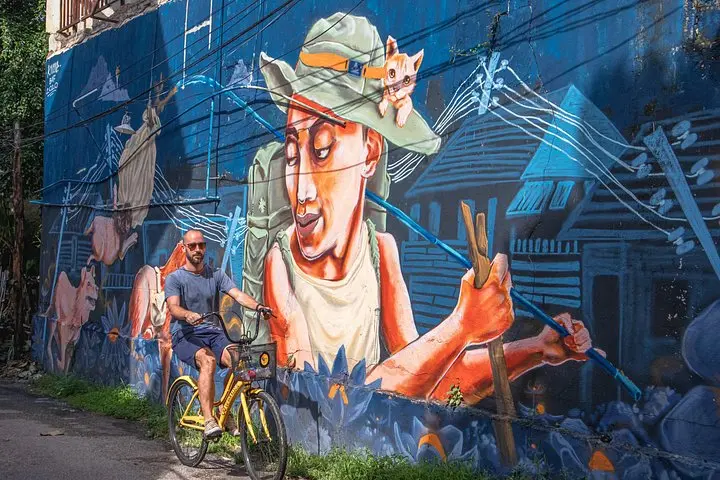
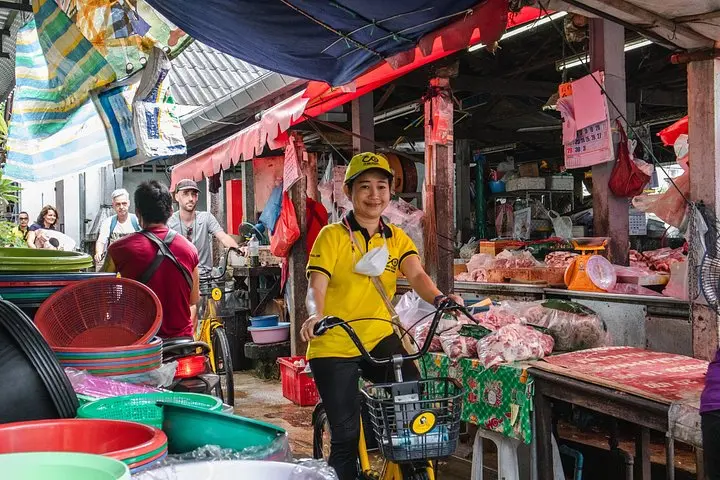
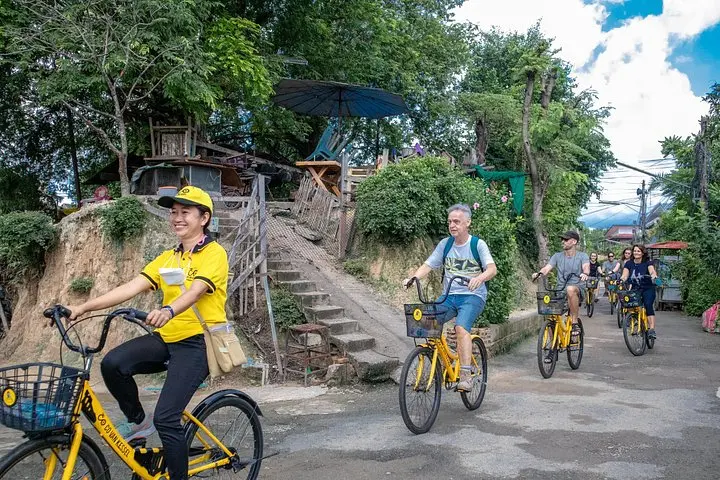
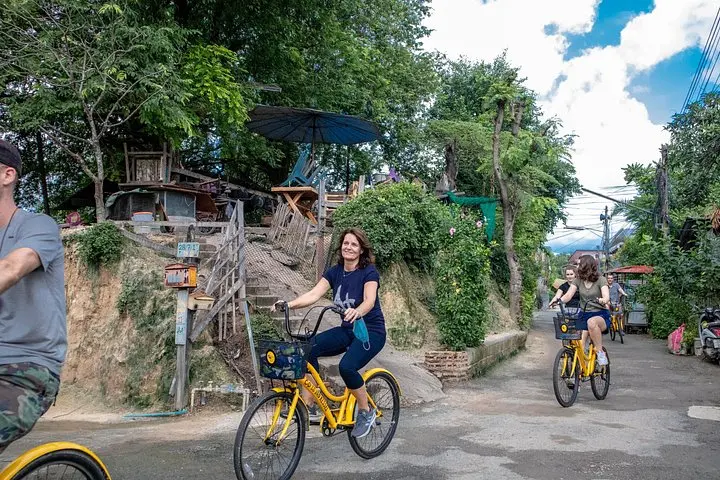
You push off from Tha Phae Gate and the city exhales around you—scooters hum, market stalls call, and a ribbon of quiet lanes slips you away from the main road.
You push off from Tha Phae Gate and the city exhales around you—scooters hum, market stalls call, and a ribbon of quiet lanes slips you away from the main road.
This three‑hour ride threads Chiang Mai’s inner bastion of the old Lanna city, where brick walls, low wooden houses and century‑old wats (temples) share space with vegetable stalls and lacquered crafts. The route favors narrow alleys and shaded backstreets; mountain ridges loom in the distance like patient guards, inviting a glance but never stealing the scene.
Chiang Mai was founded as the Lanna capital in 1296, and the city’s layout still reflects that heritage: square walls, moats and temple clusters marking neighborhoods. Geologically, the region sits at the northern edge of Thailand’s river plains beneath the granite and limestone folds of the Shan Hills—those slopes frame the skyline you’ll glimpse beyond the rooftops. Culturally, the tour offers a working look at artisan hilltribe traditions and community workshops where textiles and silverwork are crafted by hand.
Practical guidance: routes change daily to match traffic and local rhythms, but expect paved alleys, occasional cobbles and light climbs beyond the wall. Wear closed shoes, carry water, and dress modestly when entering temples—shoulders and knees should be covered. Helmets and city bikes are provided, and the group size keeps navigation steady. Plan morning or late‑afternoon departures to avoid the strongest sun and the busiest market hours.
This ride is less about speed and more about noticing: the tumbling laugh of a canal, a monk pausing at a shrine, a craftsman hammering silver—Chiang Mai’s character is best found on two wheels.