THE ADVENTURE COLLECTIVE® · Independent discovery and booking for outdoor travel

Move from a bustling northern Thai market to an open-air organic farm kitchen in the evening, learning to hand-pound curry paste and cook six authentic dishes. Practical, hands-on instruction finishes with a communal meal and take-home recipes.
Move from a bustling northern Thai market to an open-air organic farm kitchen in the evening, learning to hand-pound curry paste and cook six authentic dishes. Practical, hands-on instruction finishes with a communal meal and take-home recipes.
Slide from the market into a warm open-air kitchen: the day begins under fluorescent stalls and ends with wood-fired woks flashing against a cooling northern sky. At Somphet Market students choose produce alongside vendors calling out herbs and spice names; later, the class moves to an organic farm 13 km outside Chiang Mai where rows of lemongrass and galangal lift their scents into the evening.
Verified experiences and guided adventures in the surrounding area.
Operated by The Best Thai Cookery School · Chiang Mai, Chiang Mai
Slide from the market into a warm open-air kitchen: the day begins under fluorescent stalls and ends with wood-fired woks flashing against a cooling northern sky. At Somphet Market students choose produce alongside vendors calling out herbs and spice names; later, the class moves to an organic farm 13 km outside Chiang Mai where rows of lemongrass and galangal lift their scents into the evening.
Northern Thai (Lanna) culinary traditions shape the menu—papaya salad here has sharper lime, curries rely on roasted dry spices, and sticky rice appears as the final, sweet punctuation. Geologically, the area sits on Chiang Mai’s red-clay plains fed by mountain runoff; that soil yields the intense, aromatic herbs the course uses. The instruction focuses on technique—knife care, balancing fish sauce and palm sugar, and hand-pounding curry paste—while chefs explain why certain ingredients define regional flavors.
Practical guidance: plan for a five-hour window that includes a market walk, farm tour and hands-on cooking of six dishes. Wear closed-toe shoes for the farm and bring a light layer as temperatures drop after sunset. Most classes provide transport, utensils, recipe cards and a colored cookbook to take home; notify instructors of allergies ahead of time. Expect a small-group dynamic (under 10), lots of tactile learning, and a communal meal at the end. The experience is part food education, part cultural exchange—quiet mornings tending herbs give way to the satisfying, loud clatter of woks under the stars.
Yes—most bookings include van pickup and return; confirm your pickup point when booking.
Yes—inform the operator during booking so they can prepare suitable ingredient substitutions.
Instruction is typically in English; staff are experienced with international students but confirm if you need translation support.
The activity is family-friendly and stroller-accessible, but infants must sit on an adult’s lap and kitchen work involves hot surfaces—use discretion.
The Best Thai Cookery School operates guided outdoor trips and adventures with an emphasis on safety, stewardship, and memorable experiences.
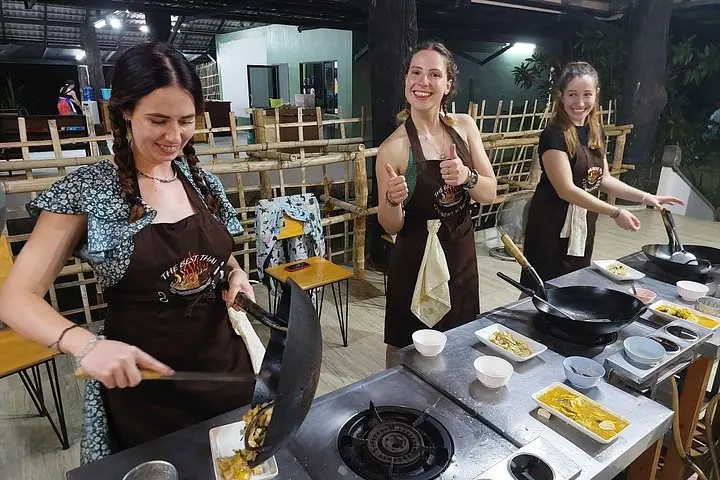
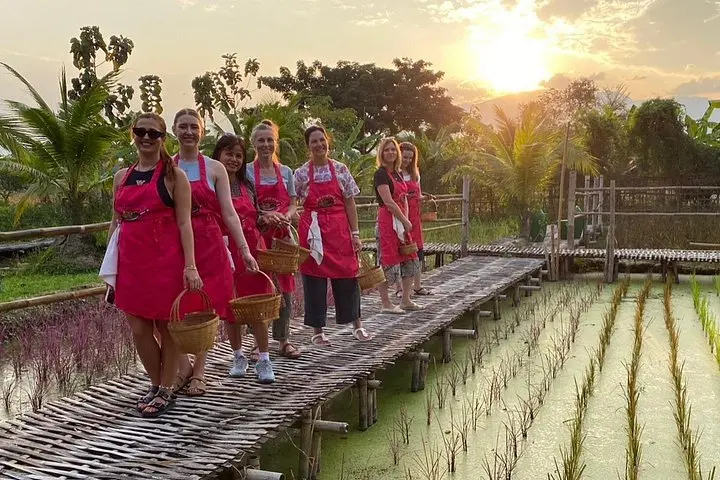
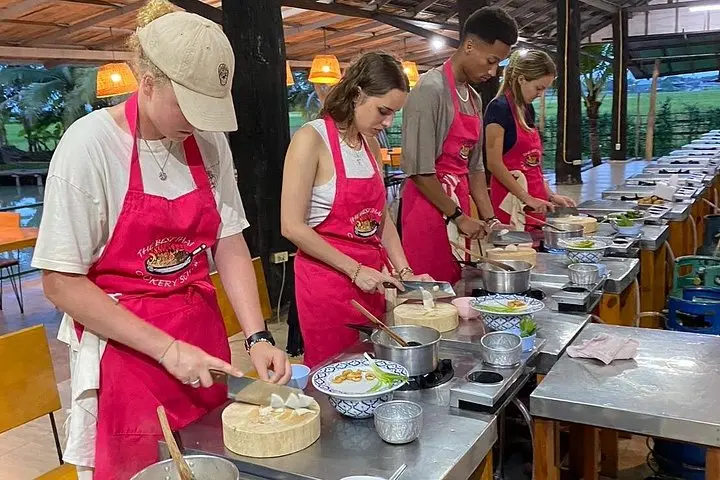
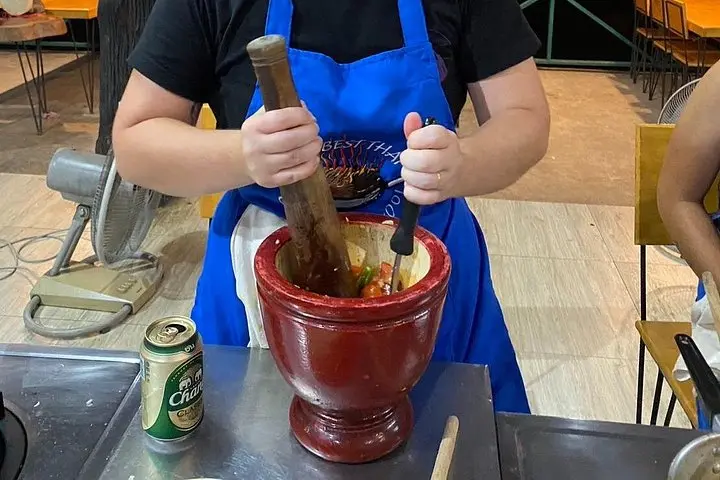
Slide from the market into a warm open-air kitchen: the day begins under fluorescent stalls and ends with wood-fired woks flashing against a cooling northern sky. At Somphet Market students choose produce alongside vendors calling out herbs and spice names; later, the class moves to an organic farm 13 km outside Chiang Mai where rows of lemongrass and galangal lift their scents into the evening.
Slide from the market into a warm open-air kitchen: the day begins under fluorescent stalls and ends with wood-fired woks flashing against a cooling northern sky. At Somphet Market students choose produce alongside vendors calling out herbs and spice names; later, the class moves to an organic farm 13 km outside Chiang Mai where rows of lemongrass and galangal lift their scents into the evening.
Northern Thai (Lanna) culinary traditions shape the menu—papaya salad here has sharper lime, curries rely on roasted dry spices, and sticky rice appears as the final, sweet punctuation. Geologically, the area sits on Chiang Mai’s red-clay plains fed by mountain runoff; that soil yields the intense, aromatic herbs the course uses. The instruction focuses on technique—knife care, balancing fish sauce and palm sugar, and hand-pounding curry paste—while chefs explain why certain ingredients define regional flavors.
Practical guidance: plan for a five-hour window that includes a market walk, farm tour and hands-on cooking of six dishes. Wear closed-toe shoes for the farm and bring a light layer as temperatures drop after sunset. Most classes provide transport, utensils, recipe cards and a colored cookbook to take home; notify instructors of allergies ahead of time. Expect a small-group dynamic (under 10), lots of tactile learning, and a communal meal at the end. The experience is part food education, part cultural exchange—quiet mornings tending herbs give way to the satisfying, loud clatter of woks under the stars.