THE ADVENTURE COLLECTIVE® · Independent discovery and booking for outdoor travel

Cycle eight hours through southeastern Chiang Mai’s rice fields, riverside lanes and village markets. This full-day tour pairs gentle mileage with cultural stops—ideal for riders who want scenery, local food and craft villages.
Cycle eight hours through southeastern Chiang Mai’s rice fields, riverside lanes and village markets. This full-day tour pairs gentle mileage with cultural stops—ideal for riders who want scenery, local food and craft villages.
Pedal into a Chiang Mai morning as dust lifts from narrow lanes and the Ping River pulls your gaze downstream, daring you to keep pace. This full-day, eight-hour cycling loop moves through southeastern Chiang Mai’s patchwork of rice paddies, vegetable plots and fruit orchards, stopping at community markets, woodcraft hamlets and small temples where monks sweep courtyards and incense hangs in the air.
Verified experiences and guided adventures in the surrounding area.
Operated by Chiang Mai Biking · Chiang Mai, Chiang Mai Province
Pedal into a Chiang Mai morning as dust lifts from narrow lanes and the Ping River pulls your gaze downstream, daring you to keep pace. This full-day, eight-hour cycling loop moves through southeastern Chiang Mai’s patchwork of rice paddies, vegetable plots and fruit orchards, stopping at community markets, woodcraft hamlets and small temples where monks sweep courtyards and incense hangs in the air.
The land here wears layers of history: Lanna-era settlements clustered along the river that has shaped floodplain soils and local farming rhythms for centuries. Geologically, the area is a lowland plain fed by upland streams from the nearby mountains — flat enough for sustained riding but edged by terraces and levees that mark seasonal water. Culturally, expect markets that pulse with chatty vendors selling grilled fish, sticky rice and hand-carved goods; hospitality is direct and practical rather than performative.
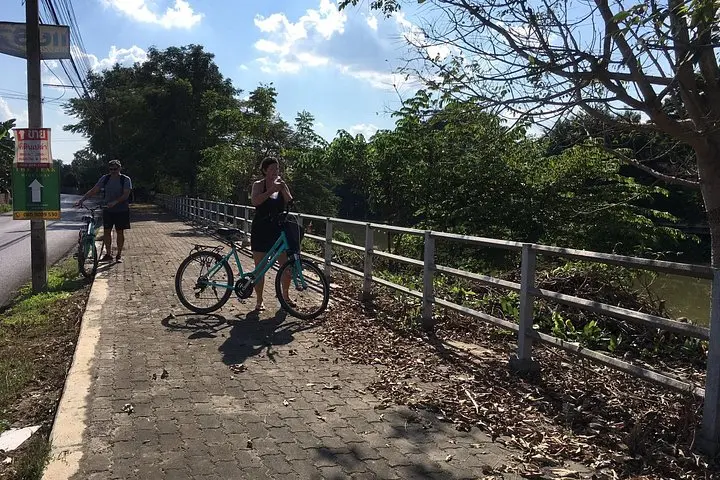
Practical guidance: most of the route is quiet rural road and compacted dirt with occasional paved stretches; expect 20–40 km of rolling, low-elevation riding with several short stops. Helmets and hybrid bikes are supplied, but bring padded shorts and a reliable water bottle — shade is intermittent and midday sun is strong. Plan departures early to avoid the hottest hours and to catch market activity at its liveliest.
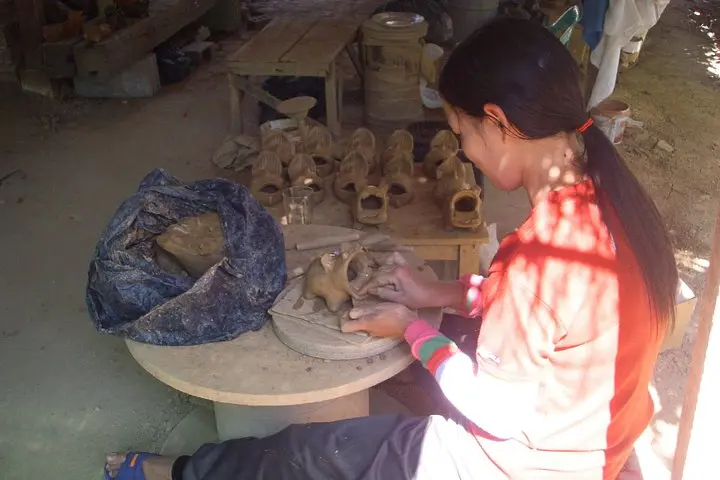
Keep a loose itinerary: allow time to dismount and explore craft workshops, sample roadside fruit or sit at a temple courtyard. The ride is as much about meeting locals and seeing everyday agricultural life as it is about distance — move deliberately, observe closely, and let the river set your pace.
Moderate fitness is required—expect several hours of steady pedaling with short breaks; guides can adjust pace for the group.
Yes—bicycles and helmets are included; bring your own cycling shorts or gloves for extra comfort.
A Thai lunch and snacks are provided, and potable water or soft drinks are available during the ride.
Children can join; infant seats are available but private bookings for under-11s must be arranged by phone.
Chiang Mai Biking operates guided outdoor trips and adventures with an emphasis on safety, stewardship, and memorable experiences.
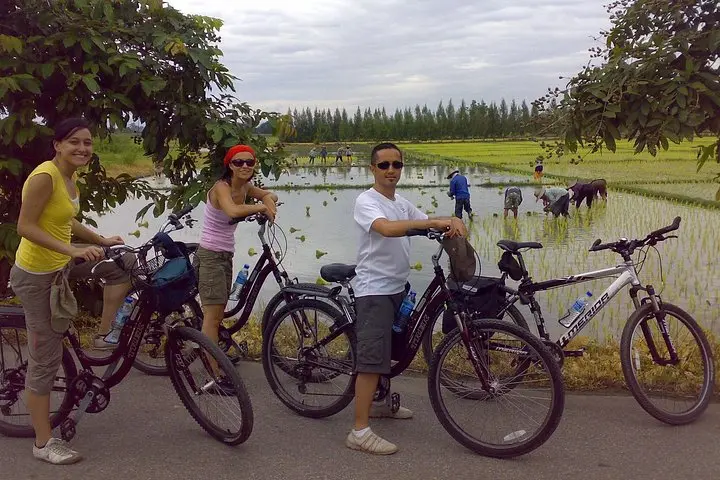
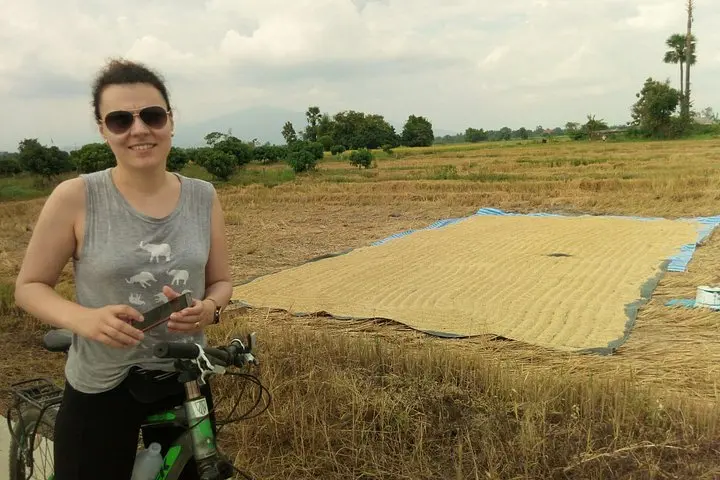
Pedal into a Chiang Mai morning as dust lifts from narrow lanes and the Ping River pulls your gaze downstream, daring you to keep pace. This full-day, eight-hour cycling loop moves through southeastern Chiang Mai’s patchwork of rice paddies, vegetable plots and fruit orchards, stopping at community markets, woodcraft hamlets and small temples where monks sweep courtyards and incense hangs in the air.
Pedal into a Chiang Mai morning as dust lifts from narrow lanes and the Ping River pulls your gaze downstream, daring you to keep pace. This full-day, eight-hour cycling loop moves through southeastern Chiang Mai’s patchwork of rice paddies, vegetable plots and fruit orchards, stopping at community markets, woodcraft hamlets and small temples where monks sweep courtyards and incense hangs in the air.
The land here wears layers of history: Lanna-era settlements clustered along the river that has shaped floodplain soils and local farming rhythms for centuries. Geologically, the area is a lowland plain fed by upland streams from the nearby mountains — flat enough for sustained riding but edged by terraces and levees that mark seasonal water. Culturally, expect markets that pulse with chatty vendors selling grilled fish, sticky rice and hand-carved goods; hospitality is direct and practical rather than performative.
Practical guidance: most of the route is quiet rural road and compacted dirt with occasional paved stretches; expect 20–40 km of rolling, low-elevation riding with several short stops. Helmets and hybrid bikes are supplied, but bring padded shorts and a reliable water bottle — shade is intermittent and midday sun is strong. Plan departures early to avoid the hottest hours and to catch market activity at its liveliest.
Keep a loose itinerary: allow time to dismount and explore craft workshops, sample roadside fruit or sit at a temple courtyard. The ride is as much about meeting locals and seeing everyday agricultural life as it is about distance — move deliberately, observe closely, and let the river set your pace.