THE ADVENTURE COLLECTIVE® · Independent discovery and booking for outdoor travel

Spend a morning between steaming mineral pools and skilled hands weaving Thai silk. This half-day tour to San Kamphaeng combines a relaxed hot-spring visit with live demonstrations of Chiang Mai’s handicraft traditions.
Spend a morning between steaming mineral pools and skilled hands weaving Thai silk. This half-day tour to San Kamphaeng combines a relaxed hot-spring visit with live demonstrations of Chiang Mai’s handicraft traditions.
Steam rises from mineral pools as you step off the shaded path—warm breath against a cool northern Thai morning. The San Kamphaeng area opens like a working museum: palm-thatched stalls selling hand-woven silk and kilns glowing with celadon, while nearby pools steam and bubble, pushed by underground heat.
Verified experiences and guided adventures in the surrounding area.
Operated by Sightseeing Chiang Mai · San Kamphaeng, Chiang Mai
Steam rises from mineral pools as you step off the shaded path—warm breath against a cool northern Thai morning. The San Kamphaeng area opens like a working museum: palm-thatched stalls selling hand-woven silk and kilns glowing with celadon, while nearby pools steam and bubble, pushed by underground heat.
The hot springs themselves are a product of Chiang Mai’s volcanic past; mineral-rich waters surface through fractured rock and have long been used for bathing and therapeutic soaking. San Kamphaeng village grew as an artisan hub in the 20th century, its reputation built on silk weaving, lacquerware and pottery—skills you’ll see demonstrated and available to buy throughout the visit.
Expect a gentle mix of sensory experiences: the earth’s warmth against your hands at the spring, the fine motor rhythm of silk-weavers, and the scent of fired clay. Cultural guides typically explain silk production—from mulberry-fed silkworms to dyed thread—so the handicraft component is both demonstrative and transactional.
Practically, this is an easy half-day outing, often with air-conditioned transfer from Chiang Mai. Wear light, quick-dry clothing if you plan to soak your feet; bring cash for small purchases and a modest bargaining instinct. Mornings are cooler and less crowded; afternoons can be hot and humid. Respect posted rules around the hot pools—temperatures vary and some areas are for viewing only. This tour pairs well with a nearby temple visit or a stop at local markets, making it a compact cultural add-on for first-time visitors to Chiang Mai.
Yes—this tour typically includes round-trip transfers in an air-conditioned vehicle from central Chiang Mai pickup points.
Admission fees to the hot springs and craft demonstrations are usually included in the tour price, per the itinerary.
Yes; the activity is easy and family-friendly, but infants must sit on laps during transport and parental supervision is required at hot pools.
The tour is approximately four hours, allowing time for the springs, handicraft stops, and transfers to and from Chiang Mai.
Sightseeing Chiang Mai operates guided outdoor trips and adventures with an emphasis on safety, stewardship, and memorable experiences.
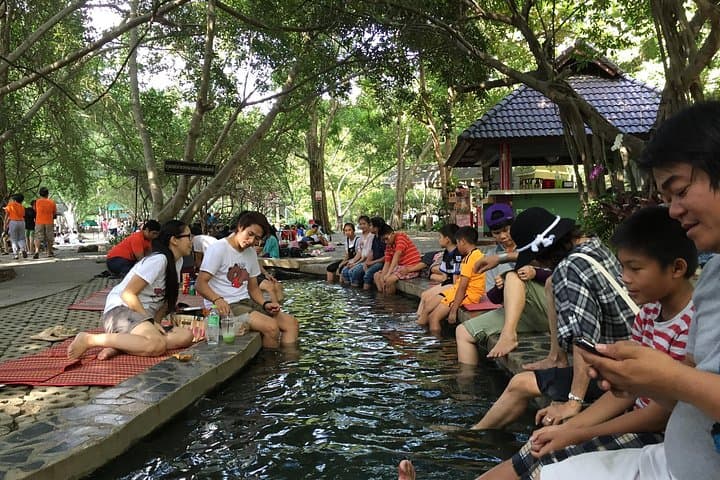


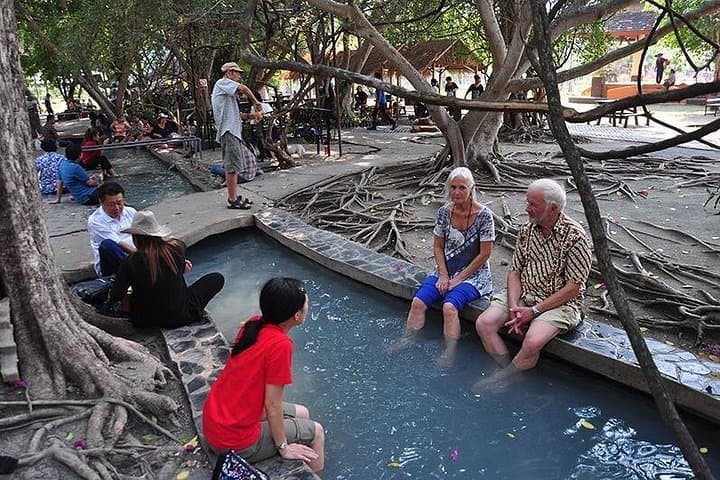
Steam rises from mineral pools as you step off the shaded path—warm breath against a cool northern Thai morning. The San Kamphaeng area opens like a working museum: palm-thatched stalls selling hand-woven silk and kilns glowing with celadon, while nearby pools steam and bubble, pushed by underground heat.
Steam rises from mineral pools as you step off the shaded path—warm breath against a cool northern Thai morning. The San Kamphaeng area opens like a working museum: palm-thatched stalls selling hand-woven silk and kilns glowing with celadon, while nearby pools steam and bubble, pushed by underground heat.
The hot springs themselves are a product of Chiang Mai’s volcanic past; mineral-rich waters surface through fractured rock and have long been used for bathing and therapeutic soaking. San Kamphaeng village grew as an artisan hub in the 20th century, its reputation built on silk weaving, lacquerware and pottery—skills you’ll see demonstrated and available to buy throughout the visit.
Expect a gentle mix of sensory experiences: the earth’s warmth against your hands at the spring, the fine motor rhythm of silk-weavers, and the scent of fired clay. Cultural guides typically explain silk production—from mulberry-fed silkworms to dyed thread—so the handicraft component is both demonstrative and transactional.
Practically, this is an easy half-day outing, often with air-conditioned transfer from Chiang Mai. Wear light, quick-dry clothing if you plan to soak your feet; bring cash for small purchases and a modest bargaining instinct. Mornings are cooler and less crowded; afternoons can be hot and humid. Respect posted rules around the hot pools—temperatures vary and some areas are for viewing only. This tour pairs well with a nearby temple visit or a stop at local markets, making it a compact cultural add-on for first-time visitors to Chiang Mai.