THE ADVENTURE COLLECTIVE® · Independent discovery and booking for outdoor travel

Spend a day climbing the unique Bua Tong “sticky” waterfall, observing elephants in a conservation-focused sanctuary, and drifting downstream on a bamboo raft. This accessible excursion mixes hands-off wildlife viewing with scenic drives and river time, ideal for travelers who want outdoor variety in one day.
Spend a day climbing the unique Bua Tong “sticky” waterfall, observing elephants in a conservation-focused sanctuary, and drifting downstream on a bamboo raft. This accessible excursion mixes hands-off wildlife viewing with scenic drives and river time, ideal for travelers who want outdoor variety in one day.
Mist lifts off the river as visitors reach the Bua Tong “sticky” cascade — its mineral-coated steps allow barefoot climbs that feel more like walking up a slow- moving stone staircase than scaling a waterfall. The air smells of wet leaves and limestone; downstream, a bamboo raft nudges the current, the river daring you to slow your pace and look around.
Verified experiences and guided adventures in the surrounding area.
Operated by NEW ELEPHANT HOME · Chiang Mai, Chiang Mai Province
Mist lifts off the river as visitors reach the Bua Tong “sticky” cascade — its mineral-coated steps allow barefoot climbs that feel more like walking up a slow- moving stone staircase than scaling a waterfall. The air smells of wet leaves and limestone; downstream, a bamboo raft nudges the current, the river daring you to slow your pace and look around.
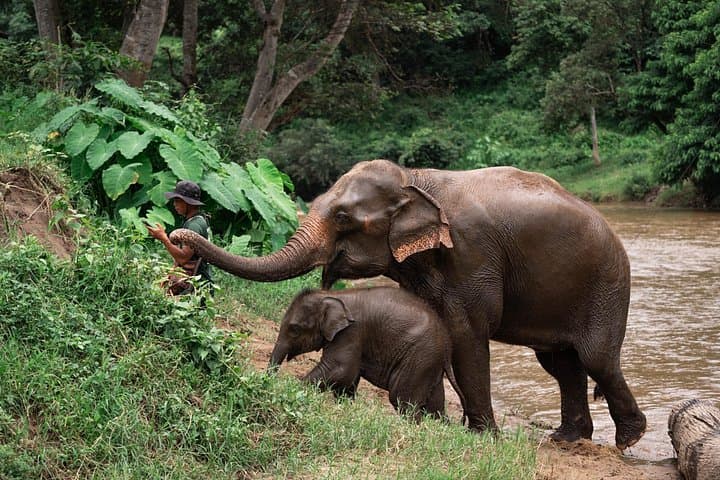
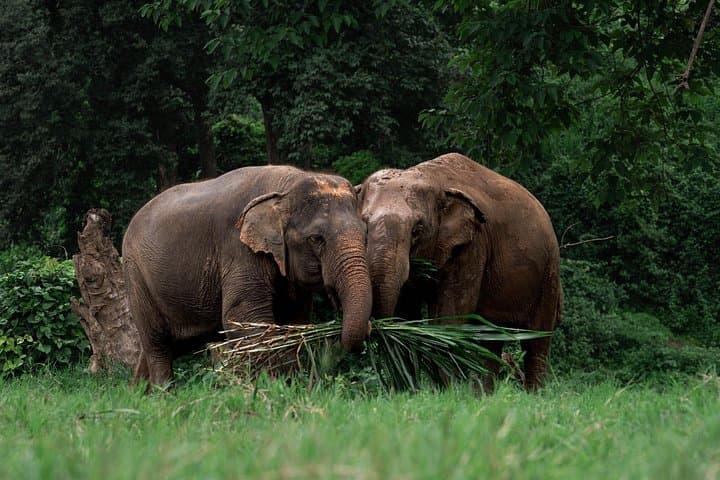
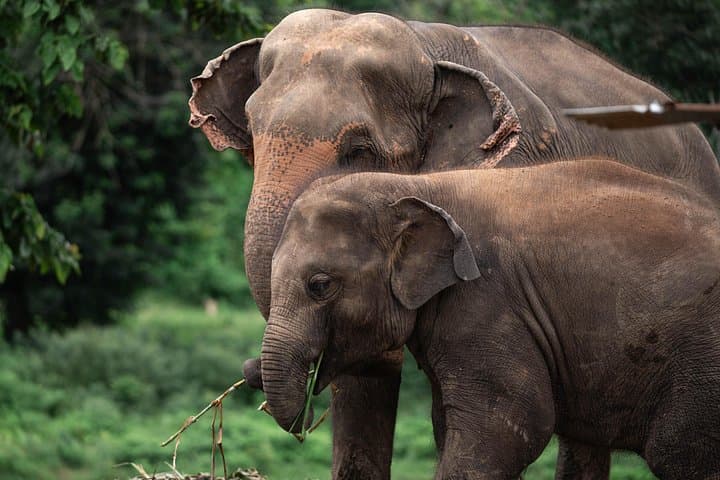
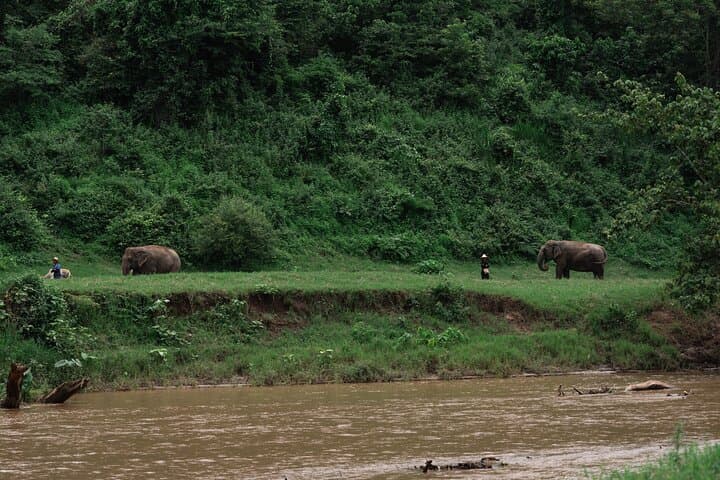
This loop through the Mae Tang valley threads together geology and wildlife. Bua Tong’s calcified rock forms grippy terraces that have made it a local curiosity for decades. The region’s forests were long used for logging and agriculture before a shift toward conservation and community-based tourism; nearby villages still practice Northern Thai crafts and rice farming. At the elephant sanctuary, a herd of animals moves freely across shaded slopes — observation replaces riding, and keepers emphasize natural behaviors and veterinary care.
Expect an easy, full-day outing: a roughly 80-minute drive from Chiang Mai to the waterfall, then a shorter transfer to the sanctuary and a calm bamboo-rafting float on a low-gradient river. Terrain ranges from shallow, slick stone and short forest trails to seated raft travel. Practicalities matter — bring shoes that grip wet rock, sun protection, and modest cash for small roadside vendors. Respect the sanctuary rules: no feeding, no forced interaction, and keep a soft voice near the elephants. Mornings offer cooler light and quieter animals; afternoons can be humid with sudden showers. For travelers wanting a compact introduction to northern Thailand’s landscapes and ethical wildlife viewing, this day trip balances immersive moments with straightforward logistics.
No — the sanctuary operates on a no-ride policy focused on observing natural behaviors and conservation.
Yes — the tour is family-friendly, though supervision is required near water and around elephants; some activities may be limited for infants.
The provider lists wheelchair accessibility, but activities like climbing the waterfall and short forest walks may be difficult; contact the operator about specific needs.
Lunch is included, but bring snacks, water, and any dietary notes; small roadside vendors near launch points may offer local treats.
NEW ELEPHANT HOME operates guided outdoor trips and adventures with an emphasis on safety, stewardship, and memorable experiences.
Mist lifts off the river as visitors reach the Bua Tong “sticky” cascade — its mineral-coated steps allow barefoot climbs that feel more like walking up a slow- moving stone staircase than scaling a waterfall. The air smells of wet leaves and limestone; downstream, a bamboo raft nudges the current, the river daring you to slow your pace and look around.
Mist lifts off the river as visitors reach the Bua Tong “sticky” cascade — its mineral-coated steps allow barefoot climbs that feel more like walking up a slow- moving stone staircase than scaling a waterfall. The air smells of wet leaves and limestone; downstream, a bamboo raft nudges the current, the river daring you to slow your pace and look around.
This loop through the Mae Tang valley threads together geology and wildlife. Bua Tong’s calcified rock forms grippy terraces that have made it a local curiosity for decades. The region’s forests were long used for logging and agriculture before a shift toward conservation and community-based tourism; nearby villages still practice Northern Thai crafts and rice farming. At the elephant sanctuary, a herd of animals moves freely across shaded slopes — observation replaces riding, and keepers emphasize natural behaviors and veterinary care.
Expect an easy, full-day outing: a roughly 80-minute drive from Chiang Mai to the waterfall, then a shorter transfer to the sanctuary and a calm bamboo-rafting float on a low-gradient river. Terrain ranges from shallow, slick stone and short forest trails to seated raft travel. Practicalities matter — bring shoes that grip wet rock, sun protection, and modest cash for small roadside vendors. Respect the sanctuary rules: no feeding, no forced interaction, and keep a soft voice near the elephants. Mornings offer cooler light and quieter animals; afternoons can be humid with sudden showers. For travelers wanting a compact introduction to northern Thailand’s landscapes and ethical wildlife viewing, this day trip balances immersive moments with straightforward logistics.