THE ADVENTURE COLLECTIVE® · Independent discovery and booking for outdoor travel

Spend a day in a northern Thai village learning traditional spinning and weaving, visiting the Huay Lan reservoir and a royal fishery project. This hands-on cultural tour pairs practical demonstrations with light walking through gardens and homesteads.
Spend a day in a northern Thai village learning traditional spinning and weaving, visiting the Huay Lan reservoir and a royal fishery project. This hands-on cultural tour pairs practical demonstrations with light walking through gardens and homesteads.
You step off the minivan into a lane that smells of wet earth and coconut smoke; wooden houses lean toward a reservoir that glints like a watchful eye. Villagers move with deliberate ease, and the rice paddies and home gardens frame a working day where craft and conservation meet.
Verified experiences and guided adventures in the surrounding area.
Operated by Touring Center · Chiang Mai, Chiang Mai Province
You step off the minivan into a lane that smells of wet earth and coconut smoke; wooden houses lean toward a reservoir that glints like a watchful eye. Villagers move with deliberate ease, and the rice paddies and home gardens frame a working day where craft and conservation meet.
This full-day loop visits Ban Pong Huay Lan, the nearby Huay Lan Reservoir and a fishery project initiated under King Bhumibol (Rama IX). The royal projects of northern Thailand combined irrigation, reforestation and community agriculture—practical responses to seasonal drought and soil erosion that reshaped local land use and livelihoods.
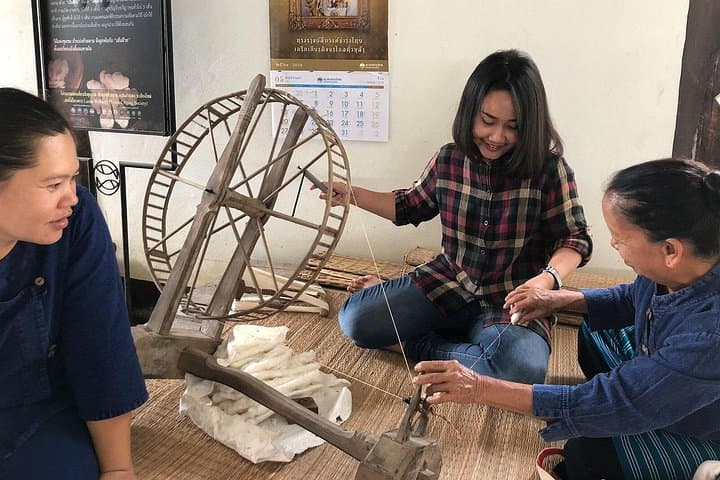
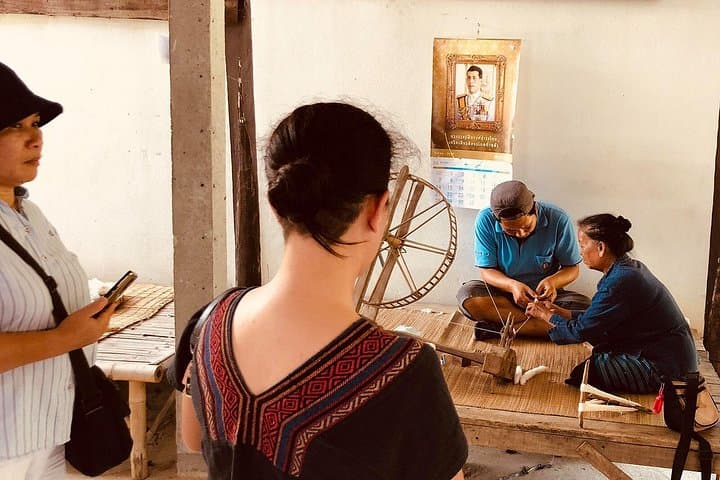
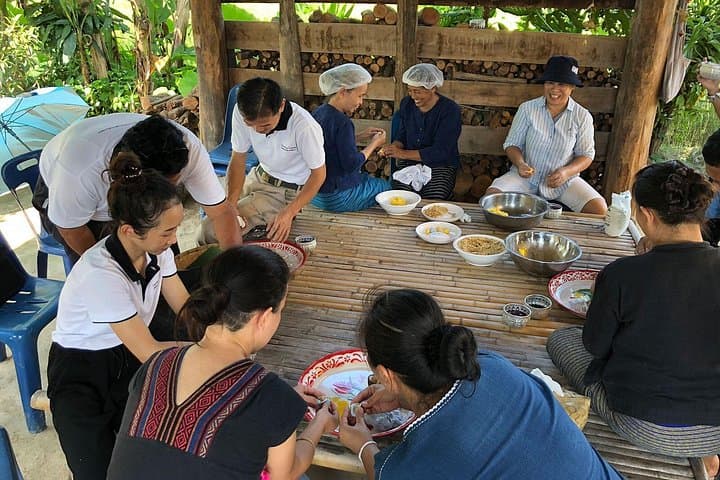
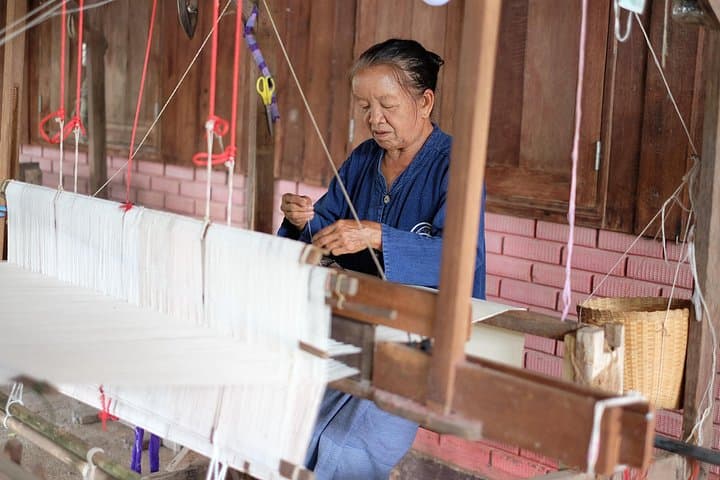
Geology here is gentle: low hills of Chiang Mai’s basin give way to alluvial soils and shallow wetlands around the reservoir, good ground for vegetable plots and fish ponds. Culturally the trip is hands-on—learn basic spinning, fluffing and back-strap or frame weaving from local artisans, and try a simple coconut-based dessert using traditional tools.
Practical side: the day includes hotel pickup, a set Thai lunch, bottled water and English-speaking local guides; expect light walking on dirt lanes and home-farm terrain, and a return to Chiang Mai mid-afternoon. Wear closed-toe shoes for weaving workshops and uneven paths, bring sun protection and modest clothing for village visits.
The experience pairs slow cultural exchange with tangible skills—an accessible day for travelers who want to leave with both a souvenir and a clearer idea of how community projects and craft continue to shape rural northern Thailand.
Yes—air-conditioned minivan pickup and drop-off from central Chiang Mai hotels is included in the tour price.
Absolutely—workshops are designed for beginners and cover basic steps like fluffing, spinning and simple loom techniques.
A simple Thai set lunch and bottled water are provided; vegetarian options are available if requested at booking.
Yes—this tour is stroller-accessible and marked suitable for all fitness levels, though children should be supervised during hands-on workshops.
Touring Center operates guided outdoor trips and adventures with an emphasis on safety, stewardship, and memorable experiences.
You step off the minivan into a lane that smells of wet earth and coconut smoke; wooden houses lean toward a reservoir that glints like a watchful eye. Villagers move with deliberate ease, and the rice paddies and home gardens frame a working day where craft and conservation meet.
You step off the minivan into a lane that smells of wet earth and coconut smoke; wooden houses lean toward a reservoir that glints like a watchful eye. Villagers move with deliberate ease, and the rice paddies and home gardens frame a working day where craft and conservation meet.
This full-day loop visits Ban Pong Huay Lan, the nearby Huay Lan Reservoir and a fishery project initiated under King Bhumibol (Rama IX). The royal projects of northern Thailand combined irrigation, reforestation and community agriculture—practical responses to seasonal drought and soil erosion that reshaped local land use and livelihoods.
Geology here is gentle: low hills of Chiang Mai’s basin give way to alluvial soils and shallow wetlands around the reservoir, good ground for vegetable plots and fish ponds. Culturally the trip is hands-on—learn basic spinning, fluffing and back-strap or frame weaving from local artisans, and try a simple coconut-based dessert using traditional tools.
Practical side: the day includes hotel pickup, a set Thai lunch, bottled water and English-speaking local guides; expect light walking on dirt lanes and home-farm terrain, and a return to Chiang Mai mid-afternoon. Wear closed-toe shoes for weaving workshops and uneven paths, bring sun protection and modest clothing for village visits.
The experience pairs slow cultural exchange with tangible skills—an accessible day for travelers who want to leave with both a souvenir and a clearer idea of how community projects and craft continue to shape rural northern Thailand.