THE ADVENTURE COLLECTIVE® · Independent discovery and booking for outdoor travel

Clip into a harness and fly through a century-old canopy on Thailand’s 1,000m longest zipline. This Mae Rim eco-adventure pairs adrenaline with rainforest education, guided safety, and a local Thai meal.
Clip into a harness and fly through a century-old canopy on Thailand’s 1,000m longest zipline. This Mae Rim eco-adventure pairs adrenaline with rainforest education, guided safety, and a local Thai meal.
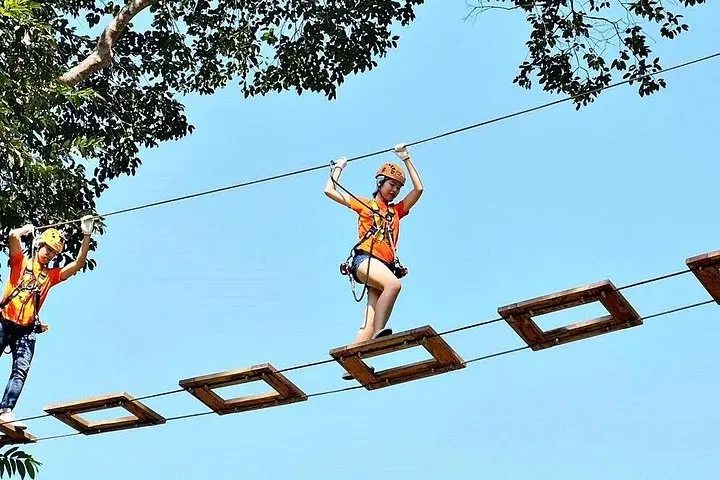
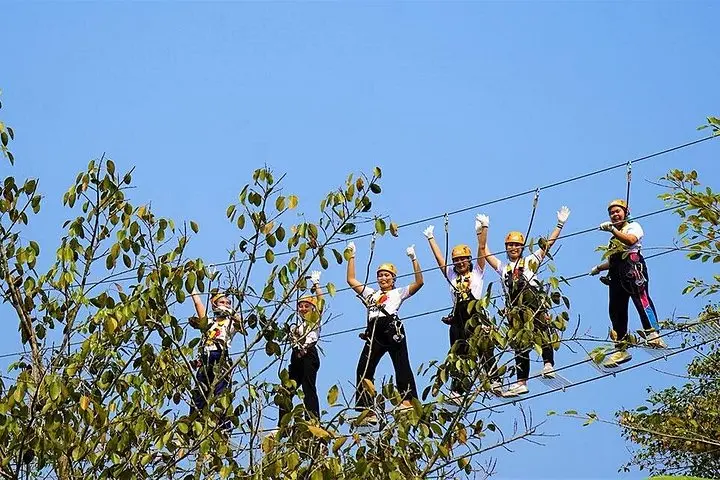
The morning air in Mae Rim is thick with scent of wet earth and green sap; sunlight threads through leaves and the forest seems to shift its weight as the first riders clip in. At the Phoenix Adventure Park a chorus of nylon and steel meets the jungle—guides in orange harness the nervous and the eager alike, run a final equipment check, then point toward a line of platforms that step up the slope like wooden watch posts.
Verified experiences and guided adventures in the surrounding area.
Operated by Oh-Hoo · Chiang Mai, Chiang Mai Province
The morning air in Mae Rim is thick with scent of wet earth and green sap; sunlight threads through leaves and the forest seems to shift its weight as the first riders clip in. At the Phoenix Adventure Park a chorus of nylon and steel meets the jungle—guides in orange harness the nervous and the eager alike, run a final equipment check, then point toward a line of platforms that step up the slope like wooden watch posts.
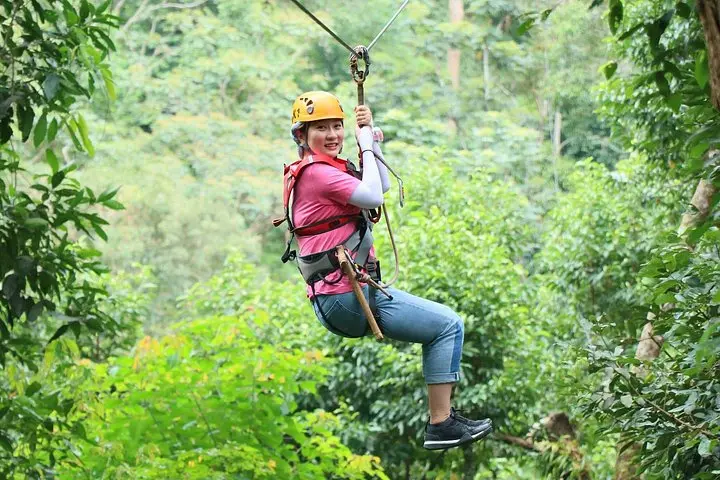
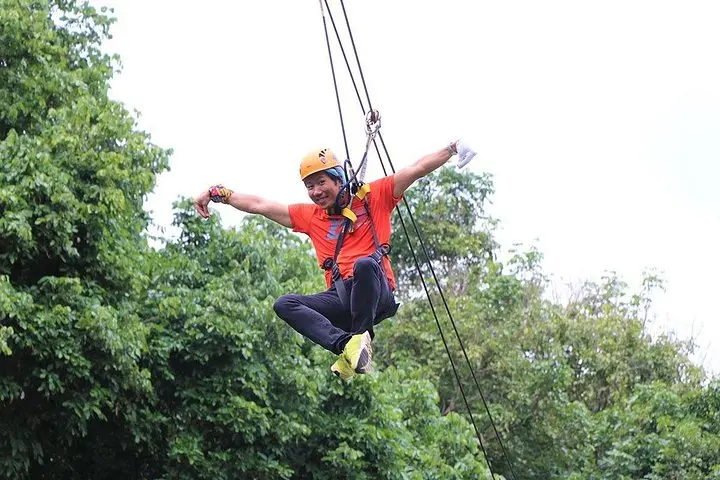
You launch from one platform and the canopy takes you. The longest line here stretches 1,000 meters—enough distance for the jungle to rearrange itself in your imagination. Treetops become a moving landscape; ancient trunks, some more than a century old, lean and breathe around cables designed to let them keep growing. Wind pushes past like an impatient companion; distant streams dare you to look down.
Mae Rim sits on the northern edge of Chiang Mai’s volcanic highlands. The soil is old lava and riverine deposits that have fed dense evergreen and dipterocarp forests for centuries. Human history here runs from Lanna-era teak logging to modern eco-tourism: local operators now emphasize preserving the canopy rather than harvesting it. Zipline platforms are relatively recent additions, but they sit atop older stories—hill-tribe villages, small-holder farms, and monasteries that shaped the region’s culture.
The operator pairs adrenaline with local context: guides give a safety briefing and a short talk on rainforest preservation, and meals after the run are simple Thai plates—stir-fried noodles or basil chicken—that taste of the same humid air you’ve just flown through. The whole experience is family-friendly but conditional: guests must be between roughly 6 and 65 years and under the weight threshold.
Practical guidance: plan for about an hour of on-site activity plus travel time from Chiang Mai (pick-up from the old city is usually included). Wear closed-toe shoes, light long sleeves to avoid rope burn and sun, and a small pack for essentials. Hydrate before you go—the work of climbing platforms and managing harnesses in the heat is real. If you’re photographing, hand your camera or phone to a friend for action shots or use a wrist strap; most platforms are too tight for bulky gear.
Safety is central: equipment is new and guides are trained in first aid; yet the course isn’t recommended for guests with recent surgery, serious heart conditions, or pregnancy. Cancellations for bad weather are standard—rain can bring slick platforms and low visibility.
For those who want a fuller day, combine the zipline with nearby botanical gardens or a short trek to a local waterfall. The zipline here doesn’t just push you through trees—it asks you to notice them, to accept speed as a way to learn the shape of the jungle.
Generally guests should be between 6–65 years old and under about 110 kg; children 6–12 must be supervised—confirm exact limits with the operator before booking.
Round-trip transfer within a ~5 km radius of Chiang Mai Old City is included; other pickup points may be arranged at booking.
On-site activity is roughly 1 hour depending on the package chosen, plus briefing and meal time; allow 3–4 hours total including transfers.
Yes—staff provide a full safety briefing, and all equipment is inspected; participants follow guided runs rather than free-rope setups.
Closed-toe shoes, comfortable pants or shorts, and a light top; remove loose jewelry and secure long hair.
Tours may be delayed or cancelled for rain or strong winds; the operator will offer rescheduling or a refund as per policy.
Oh-Hoo operates guided outdoor trips and adventures with an emphasis on safety, stewardship, and memorable experiences.
The morning air in Mae Rim is thick with scent of wet earth and green sap; sunlight threads through leaves and the forest seems to shift its weight as the first riders clip in. At the Phoenix Adventure Park a chorus of nylon and steel meets the jungle—guides in orange harness the nervous and the eager alike, run a final equipment check, then point toward a line of platforms that step up the slope like wooden watch posts.
The morning air in Mae Rim is thick with scent of wet earth and green sap; sunlight threads through leaves and the forest seems to shift its weight as the first riders clip in. At the Phoenix Adventure Park a chorus of nylon and steel meets the jungle—guides in orange harness the nervous and the eager alike, run a final equipment check, then point toward a line of platforms that step up the slope like wooden watch posts.
You launch from one platform and the canopy takes you. The longest line here stretches 1,000 meters—enough distance for the jungle to rearrange itself in your imagination. Treetops become a moving landscape; ancient trunks, some more than a century old, lean and breathe around cables designed to let them keep growing. Wind pushes past like an impatient companion; distant streams dare you to look down.
Mae Rim sits on the northern edge of Chiang Mai’s volcanic highlands. The soil is old lava and riverine deposits that have fed dense evergreen and dipterocarp forests for centuries. Human history here runs from Lanna-era teak logging to modern eco-tourism: local operators now emphasize preserving the canopy rather than harvesting it. Zipline platforms are relatively recent additions, but they sit atop older stories—hill-tribe villages, small-holder farms, and monasteries that shaped the region’s culture.
The operator pairs adrenaline with local context: guides give a safety briefing and a short talk on rainforest preservation, and meals after the run are simple Thai plates—stir-fried noodles or basil chicken—that taste of the same humid air you’ve just flown through. The whole experience is family-friendly but conditional: guests must be between roughly 6 and 65 years and under the weight threshold.
Practical guidance: plan for about an hour of on-site activity plus travel time from Chiang Mai (pick-up from the old city is usually included). Wear closed-toe shoes, light long sleeves to avoid rope burn and sun, and a small pack for essentials. Hydrate before you go—the work of climbing platforms and managing harnesses in the heat is real. If you’re photographing, hand your camera or phone to a friend for action shots or use a wrist strap; most platforms are too tight for bulky gear.
Safety is central: equipment is new and guides are trained in first aid; yet the course isn’t recommended for guests with recent surgery, serious heart conditions, or pregnancy. Cancellations for bad weather are standard—rain can bring slick platforms and low visibility.
For those who want a fuller day, combine the zipline with nearby botanical gardens or a short trek to a local waterfall. The zipline here doesn’t just push you through trees—it asks you to notice them, to accept speed as a way to learn the shape of the jungle.