
Chiang Rai Day Trip: White Temple, Blue Temple & Black House Private Tour from Chiang Mai
A full-day private drive from Chiang Mai delivers Chiang Rai’s most striking modern temples and arts sites—White Temple’s mirrored white surfaces, the saturated calm of the Blue Temple, and the darkly atmospheric Black House. This practical guide explains what to expect, how to prepare, and where to focus your camera.
An Adventure In Chiang Mai.
A full-day private drive from Chiang Mai delivers Chiang Rai’s most striking modern temples and arts sites—White Temple’s mirrored white surfaces, the saturated calm of the Blue Temple, and the darkly atmospheric Black House. This practical guide explains what to expect, how to prepare, and where to focus your camera.
Read the full experience
You leave Chiang Mai before dawn and the highway unfurls like a flat river of asphalt; hills push back the morning and the air grows cooler as you near Chiang Rai. The tour moves at a steady pace—hot springs, a surreal white temple, an intense blue sanctum, and a collection of dark wooden pavilions—each site offering a different mood and visual language.
You leave Chiang Mai before dawn and the highway unfurls like a flat river of asphalt; hills push back the morning and the air grows cooler as you near Chiang Rai. The tour moves at a steady pace—hot springs, a surreal white temple, an intense blue sanctum, and a collection of dark wooden pavilions—each site offering a different mood and visual language.
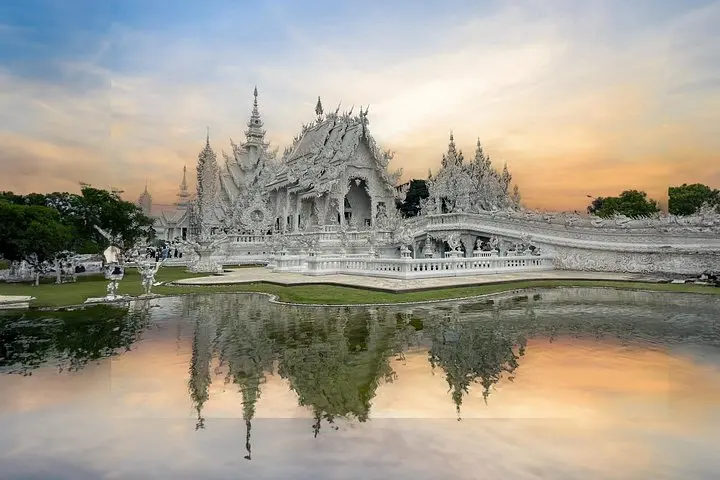
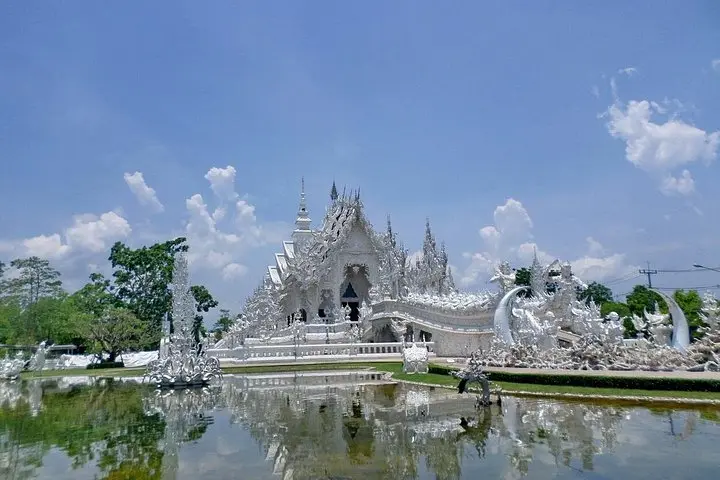
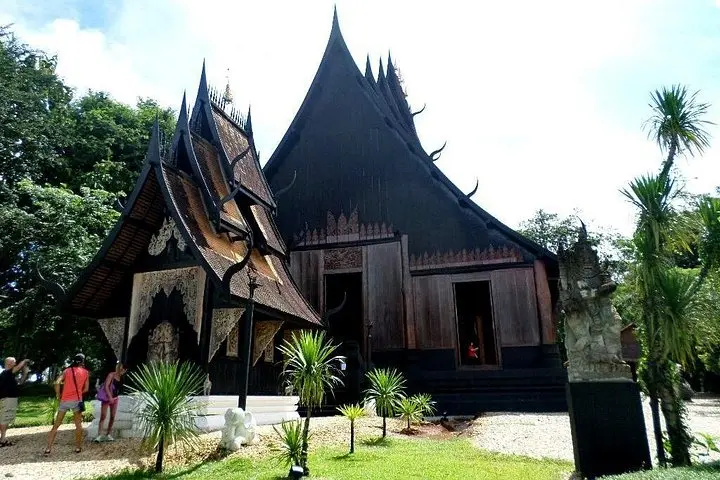
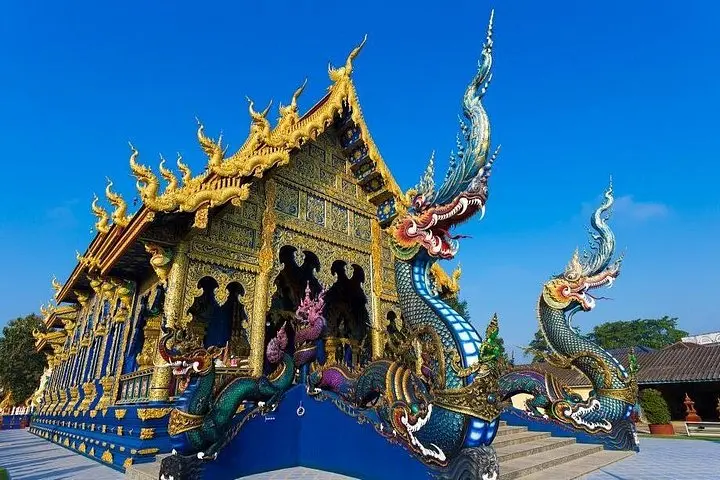
Wat Rong Khun (the White Temple) is a contemporary work by artist Chalermchai Kositpipat, blending Buddhist iconography with modern motifs; its reflective white surfaces catch light and force close inspection. Nearby Blue Temple's cobalt interior centers on a large white Buddha and contemporary murals that mix myth and modernity. Baan Dam (the Black House) is the late Thawan Duchanee's gallery-turned-museum, where black lacquer, animal motifs and carved wood explore more somber themes.
Geologically the route crosses low Northern Thai hills carved by tributaries of the Kok River; hot springs like Mae Khachan are fed by geothermal pockets in volcanic-affected strata. Culturally, these sites reflect late-20th-century Thai artistic revivalism and local pride in Chiang Rai's contemporary art scene.
Practical guidance: expect a 10–11 hour day with multiple short walks, photo stops, and temple etiquette—cover shoulders and knees, remove shoes at sanctified interiors, and keep quiet inside main halls. Bring a refillable water bottle, sun protection, comfortable walking shoes, and a light layer for morning chills in the minivan. The itinerary is private and guided in English, with lunch included and hotel pickup from Chiang Mai; carry local currency for small purchases and donations.
Frequently asked questions
Expect about a 3-hour one-way drive to Chiang Rai sites; the full tour runs roughly 10–11 hours including stops.
Yes—admissions listed in the itinerary and a local lunch are included with the tour price.
Yes—the tour is rated easy with minimal walking; however, participants should be able to get in and out of the vehicle and walk short distances.
Wear clothing that covers shoulders and knees; remove shoes in indoor sanctified areas and keep quiet inside main halls.
About This Experience
AP Good@travel operates guided outdoor trips and adventures with an emphasis on safety, stewardship, and memorable experiences.
Adventure tips
Recommended gear
- Comfortable walking shoes: Easy-to-remove shoes are useful for frequent temple entries and uneven paths.
- Modest cover-up (scarf or lightweight long-sleeve): Required for temple etiquette and to protect from sun in open courtyards.
- Refillable water bottle: Keeps you hydrated throughout the long day and reduces single-use plastic.
- Camera or smartphone with extra battery: Capture high-contrast architecture and detailed artworks; spare power helps on long days.
Photos of the experience
Related adventures & guides
Read the full experience
You leave Chiang Mai before dawn and the highway unfurls like a flat river of asphalt; hills push back the morning and the air grows cooler as you near Chiang Rai. The tour moves at a steady pace—hot springs, a surreal white temple, an intense blue sanctum, and a collection of dark wooden pavilions—each site offering a different mood and visual language.
You leave Chiang Mai before dawn and the highway unfurls like a flat river of asphalt; hills push back the morning and the air grows cooler as you near Chiang Rai. The tour moves at a steady pace—hot springs, a surreal white temple, an intense blue sanctum, and a collection of dark wooden pavilions—each site offering a different mood and visual language.
Wat Rong Khun (the White Temple) is a contemporary work by artist Chalermchai Kositpipat, blending Buddhist iconography with modern motifs; its reflective white surfaces catch light and force close inspection. Nearby Blue Temple's cobalt interior centers on a large white Buddha and contemporary murals that mix myth and modernity. Baan Dam (the Black House) is the late Thawan Duchanee's gallery-turned-museum, where black lacquer, animal motifs and carved wood explore more somber themes.
Geologically the route crosses low Northern Thai hills carved by tributaries of the Kok River; hot springs like Mae Khachan are fed by geothermal pockets in volcanic-affected strata. Culturally, these sites reflect late-20th-century Thai artistic revivalism and local pride in Chiang Rai's contemporary art scene.
Practical guidance: expect a 10–11 hour day with multiple short walks, photo stops, and temple etiquette—cover shoulders and knees, remove shoes at sanctified interiors, and keep quiet inside main halls. Bring a refillable water bottle, sun protection, comfortable walking shoes, and a light layer for morning chills in the minivan. The itinerary is private and guided in English, with lunch included and hotel pickup from Chiang Mai; carry local currency for small purchases and donations.
Make a day of it nearby.
Verified experiences and guided adventures in the surrounding area.