THE ADVENTURE COLLECTIVE® · Independent discovery and booking for outdoor travel

Spend a day exploring Chiang Rai’s most striking modern temples—the surreal White Temple, moody Black House museum and jewel-toned Blue Temple—on a guided tour from Chiang Mai with transport and lunch included.
Spend a day exploring Chiang Rai’s most striking modern temples—the surreal White Temple, moody Black House museum and jewel-toned Blue Temple—on a guided tour from Chiang Mai with transport and lunch included.
You step out of an air-conditioned van into a wash of late-morning light and a vision that feels half myth, half manifesto: the White Temple's mirrored mosaics flash like currency in a bright sky, while teak and black lacquer buildings hum with a darker, intimate history.
Verified experiences and guided adventures in the surrounding area.
Operated by Chiang Mai Local Tours · Chiang Rai, Chiang Rai Province
You step out of an air-conditioned van into a wash of late-morning light and a vision that feels half myth, half manifesto: the White Temple's mirrored mosaics flash like currency in a bright sky, while teak and black lacquer buildings hum with a darker, intimate history.
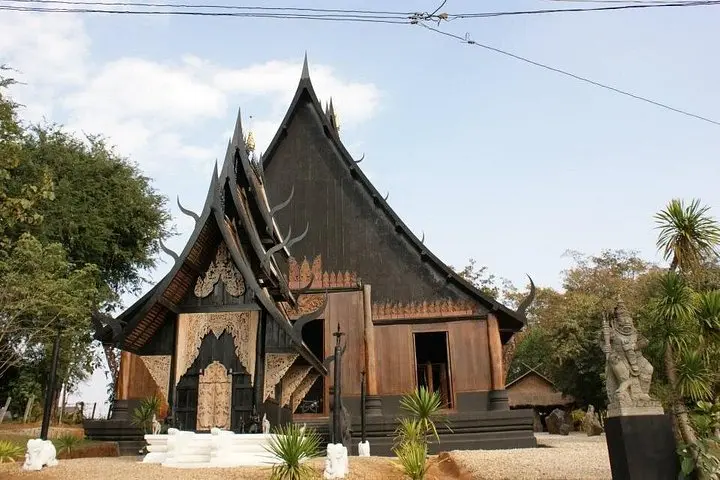
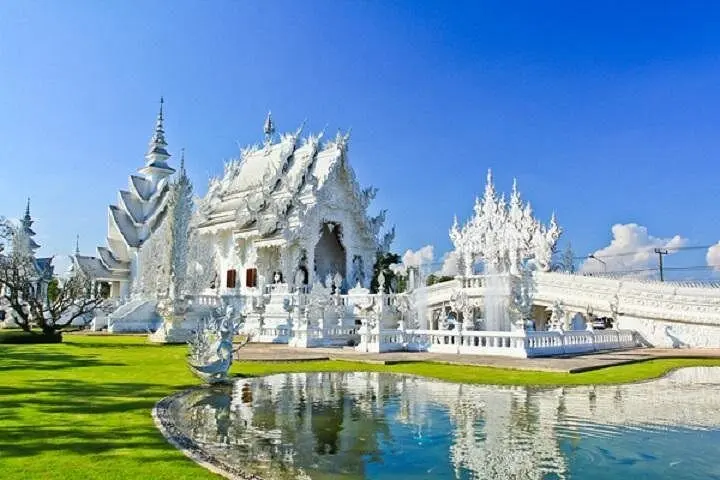
Northern Thailand's limestone foothills and rolling plains frame Chiang Rai’s trio of modern masterpieces. Wat Rong Khun (the White Temple) began as artist Chalermchai Kositpipat’s personal project in 1997 and continues to morph, folding contemporary pop imagery into Buddhist symbolism. Nearby Baan Si Dum (the Black House) is Dr. Thawan Duchanee’s packed museum-residence—heavy wood, carved beasts and a brooding aesthetic that reads like a lived-in gallery. Wat Rong Suea Ten (the Blue Temple) uses ultramarine and gold to rewrite classical motifs; its blue tones are meant to evoke Dharma and calm.
Culturally, the sites are active places of devotion and modern artistic statement; expect mosaics, carved reliefs and rules about modest dress and quiet conduct. Geology here is gentle—low hills and rice-paddy flatlands—so moving between sites is mostly vehicle time punctuated by short walks and steps.
Practical guidance: travel light, bring a cover-up for temples and a water bottle; cameras are welcome but follow signage. The full-day loop runs roughly 10 hours from Chiang Mai with lunch included and several short, wheelchair-accessible stops. Aim for a weekday morning start to avoid crowds, and leave room in your schedule to slow down at the Black House’s shadowed nooks and the White Temple’s reflective ponds.
Yes—transport and most site surfaces are wheelchair accessible, but check with the operator about specific access needs and any steps at certain viewpoints.
Photography is allowed at most exterior and courtyard areas; always follow posted signs and be respectful during religious ceremonies.
Conservative clothing covering shoulders and knees is required; avoid sleeveless tops and short shorts—or bring a sarong to cover up.
Walking is light to moderate—mainly short walks around each temple complex with some staircases; the day includes significant vehicle time between sites.
Chiang Mai Local Tours operates guided outdoor trips and adventures with an emphasis on safety, stewardship, and memorable experiences.
You step out of an air-conditioned van into a wash of late-morning light and a vision that feels half myth, half manifesto: the White Temple's mirrored mosaics flash like currency in a bright sky, while teak and black lacquer buildings hum with a darker, intimate history.
You step out of an air-conditioned van into a wash of late-morning light and a vision that feels half myth, half manifesto: the White Temple's mirrored mosaics flash like currency in a bright sky, while teak and black lacquer buildings hum with a darker, intimate history.
Northern Thailand's limestone foothills and rolling plains frame Chiang Rai’s trio of modern masterpieces. Wat Rong Khun (the White Temple) began as artist Chalermchai Kositpipat’s personal project in 1997 and continues to morph, folding contemporary pop imagery into Buddhist symbolism. Nearby Baan Si Dum (the Black House) is Dr. Thawan Duchanee’s packed museum-residence—heavy wood, carved beasts and a brooding aesthetic that reads like a lived-in gallery. Wat Rong Suea Ten (the Blue Temple) uses ultramarine and gold to rewrite classical motifs; its blue tones are meant to evoke Dharma and calm.
Culturally, the sites are active places of devotion and modern artistic statement; expect mosaics, carved reliefs and rules about modest dress and quiet conduct. Geology here is gentle—low hills and rice-paddy flatlands—so moving between sites is mostly vehicle time punctuated by short walks and steps.
Practical guidance: travel light, bring a cover-up for temples and a water bottle; cameras are welcome but follow signage. The full-day loop runs roughly 10 hours from Chiang Mai with lunch included and several short, wheelchair-accessible stops. Aim for a weekday morning start to avoid crowds, and leave room in your schedule to slow down at the Black House’s shadowed nooks and the White Temple’s reflective ponds.