THE ADVENTURE COLLECTIVE® · Independent discovery and booking for outdoor travel

A full-day road trip from Chiang Mai delivers three of Chiang Rai’s most striking modern temples: the White Temple’s surreal white facades, the Blue Temple’s vivid interiors, and the city-spanning Red Temple complex. Expect a long drive, cultural protocols, and photo-ready architecture.
A full-day road trip from Chiang Mai delivers three of Chiang Rai’s most striking modern temples: the White Temple’s surreal white facades, the Blue Temple’s vivid interiors, and the city-spanning Red Temple complex. Expect a long drive, cultural protocols, and photo-ready architecture.
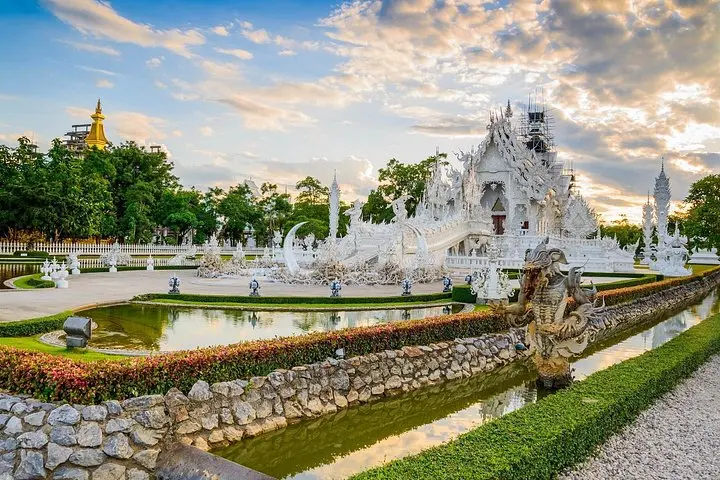
You step off the air-conditioned van onto sun-warmed concrete and the White Temple’s lacquer-white spires sharpen against a blue Lanna sky. The sculpture garden’s bridges and mirrored mosaics pull your eyes; the building’s surreal ornamentation feels like contemporary myth made concrete.
Verified experiences and guided adventures in the surrounding area.
Operated by TripGuru Thailand · Chiang Rai, Chiang Rai
You step off the air-conditioned van onto sun-warmed concrete and the White Temple’s lacquer-white spires sharpen against a blue Lanna sky. The sculpture garden’s bridges and mirrored mosaics pull your eyes; the building’s surreal ornamentation feels like contemporary myth made concrete.
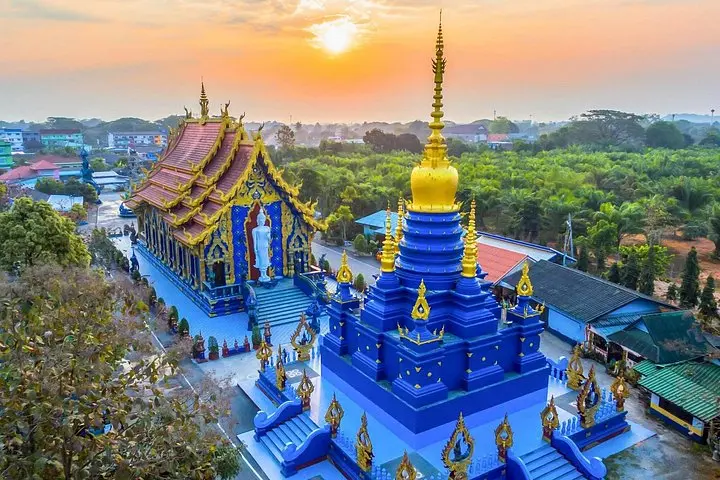
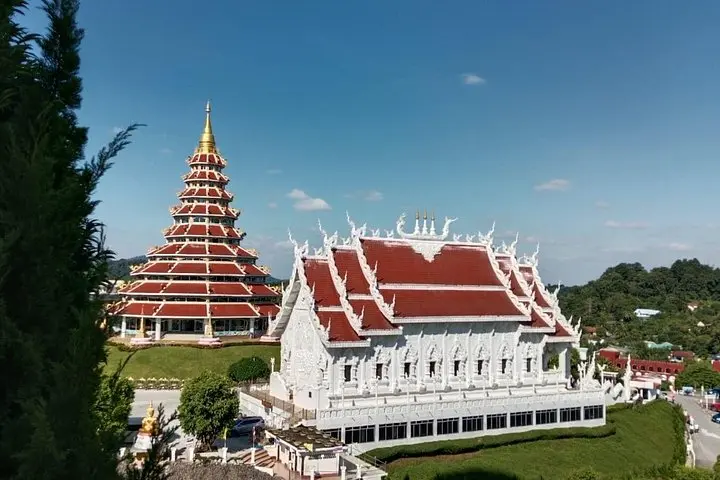
Chiang Rai is a young city by Thai standards, founded near trade routes in the 13th century and later reworked by modern artists and patrons. Wat Rong Khun (the White Temple) is the work of contemporary artist Chalermchai Kositpipat and blends Buddhist symbolism with pop-cultural details; nearby Wat Rong Suea Ten (the Blue Temple) and Wat Huay Pla Kang (the Red Temple complex) reflect recent local investment in devotional architecture and panoramic viewing platforms.
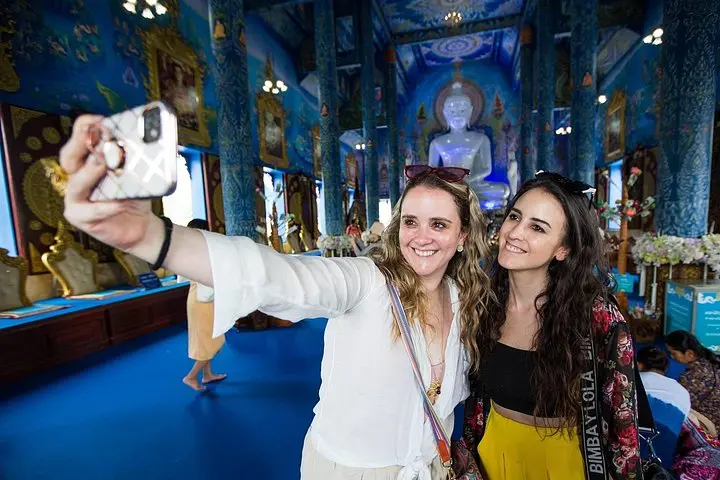
Geologically the region sits on gentle hills feeding the Kok River basin; the landscape rewards distant views more than alpine drama. Culturally, temples remain active community centers—dress modestly, remove shoes, and follow signs.
Practical guidance: expect a long day—round-trip driving from Chiang Mai is roughly 340 km and about six hours on the road. The tour includes entrance to the White Temple (small fee), bottled water, and hotel pick-up. Carry cash for food and donations, wear breathable layers and comfortable walking shoes, and bring sun protection. Plan for brief stair climbs at the Red Temple pagoda for the best vistas.
Timing matters: start early to beat traffic and midday heat; allocate phone battery for photos and offline maps. The route is suitable for most fitness levels but requires patience for travel time—rewarding, concentrated encounters with three very different modern temples.
Expect roughly 3 hours each way (about 172 km one-way), depending on traffic and stops, making the trip a full day.
Yes—there is a small entrance fee (around THB 100) for Wat Rong Khun; bring cash for this and for food or donations.
No—you’ll need to remove shoes before entering most temple buildings; wear socks or bring a small bag for belongings.
The tour is family-friendly but involves some stair climbing and a long day of travel; it's not recommended for travelers with serious spinal or heart conditions.
TripGuru Thailand operates guided outdoor trips and adventures with an emphasis on safety, stewardship, and memorable experiences.
You step off the air-conditioned van onto sun-warmed concrete and the White Temple’s lacquer-white spires sharpen against a blue Lanna sky. The sculpture garden’s bridges and mirrored mosaics pull your eyes; the building’s surreal ornamentation feels like contemporary myth made concrete.
You step off the air-conditioned van onto sun-warmed concrete and the White Temple’s lacquer-white spires sharpen against a blue Lanna sky. The sculpture garden’s bridges and mirrored mosaics pull your eyes; the building’s surreal ornamentation feels like contemporary myth made concrete.
Chiang Rai is a young city by Thai standards, founded near trade routes in the 13th century and later reworked by modern artists and patrons. Wat Rong Khun (the White Temple) is the work of contemporary artist Chalermchai Kositpipat and blends Buddhist symbolism with pop-cultural details; nearby Wat Rong Suea Ten (the Blue Temple) and Wat Huay Pla Kang (the Red Temple complex) reflect recent local investment in devotional architecture and panoramic viewing platforms.
Geologically the region sits on gentle hills feeding the Kok River basin; the landscape rewards distant views more than alpine drama. Culturally, temples remain active community centers—dress modestly, remove shoes, and follow signs.
Practical guidance: expect a long day—round-trip driving from Chiang Mai is roughly 340 km and about six hours on the road. The tour includes entrance to the White Temple (small fee), bottled water, and hotel pick-up. Carry cash for food and donations, wear breathable layers and comfortable walking shoes, and bring sun protection. Plan for brief stair climbs at the Red Temple pagoda for the best vistas.
Timing matters: start early to beat traffic and midday heat; allocate phone battery for photos and offline maps. The route is suitable for most fitness levels but requires patience for travel time—rewarding, concentrated encounters with three very different modern temples.