THE ADVENTURE COLLECTIVE® · Independent discovery and booking for outdoor travel

A full-day small-group loop from Chiang Mai to Chiang Rai that pairs the surreal White Temple and sapphire Blue Temple with a hot-spring foot soak and a visit to a Karen hill-tribe village. Practical, cultural, and rich in photo opportunities.
A full-day small-group loop from Chiang Mai to Chiang Rai that pairs the surreal White Temple and sapphire Blue Temple with a hot-spring foot soak and a visit to a Karen hill-tribe village. Practical, cultural, and rich in photo opportunities.
You step out of an air-conditioned van into a bright, strange light: white plaster and glass fragments flash like frost across low hills. The White Temple greets you with surreal, contemporary Buddhist imagery—angels, serpents and mirrored mosaics—while half an hour down the road the Blue Temple’s cobalt facades and gold detailing feel like a modern parable painted in color.
Verified experiences and guided adventures in the surrounding area.
Operated by WanderSiam · Chiang Rai, Chiang Rai Province
You step out of an air-conditioned van into a bright, strange light: white plaster and glass fragments flash like frost across low hills. The White Temple greets you with surreal, contemporary Buddhist imagery—angels, serpents and mirrored mosaics—while half an hour down the road the Blue Temple’s cobalt facades and gold detailing feel like a modern parable painted in color.
This full-day loop from Chiang Mai traverses northern Thailand’s teak-lined roads and rolling countryside. Geologically, the region sits on gentle alluvial terraces that feed the Mae Kok and Ruak rivers; the hot spring you’ll visit bubbles from geothermal pockets warmed by shallow crustal heat, popular for boiling eggs and soaking tired feet.
Culturally you’ll move from the avant-garde vision of artist Chalermchai at Wat Rong Khun to the contemporary iconography at Wat Rong Suea Ten, then into living culture at a Karen (Long Neck) village where brass rings and traditional weaving tell a complex story of identity and tourism.
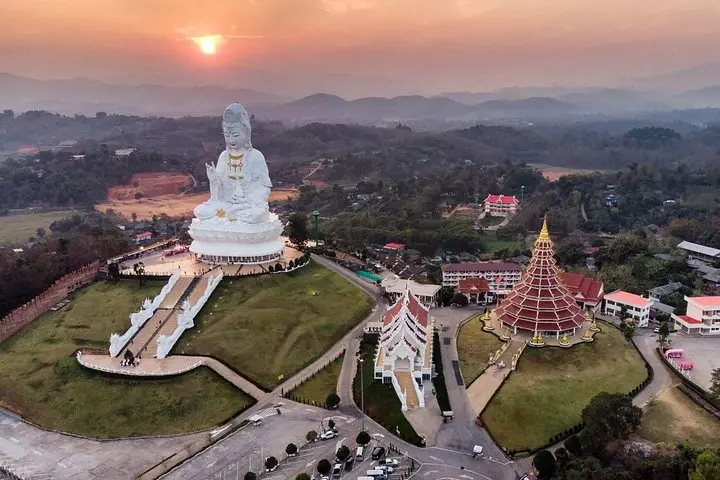
Expect long drives between stops, short guided walks at each temple, and a chance to use the elevator at Wat Huay Pla Kang for panoramic views. Practical tips: dress respectfully (shoulders and knees covered), carry cash for small entrance fees and local purchases, and bring sun protection and a reusable water bottle. Pace your day: there’s time for photos and a relaxed foot soak, but be ready for an active, visual itinerary that mixes architecture, hillside views and hands-on cultural encounters.
Some fees (like Wat Rong Khun’s THB 50 and the Karen village THB 300) are typically not included—bring cash to cover them.
Pick up is provided from hotels in Chiang Mai’s Old City area; if outside the area you’ll meet at Thapae Gate (Burger King) per operator notes.
The tour notes wheelchair-accessible transport and some sites are accessible, but access inside certain temples and the village may have stairs or uneven ground—check in advance for specifics.
Yes—infants can ride in strollers and children are allowed, but be mindful of long travel times and cultural sensitivity when photographing villagers.
WanderSiam operates guided outdoor trips and adventures with an emphasis on safety, stewardship, and memorable experiences.
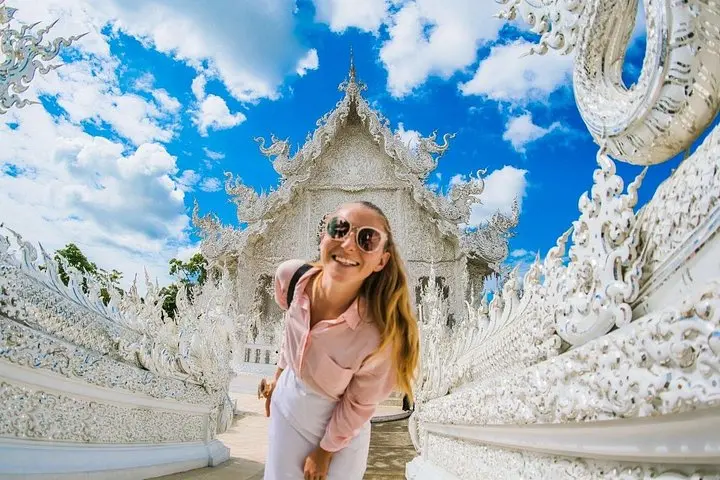
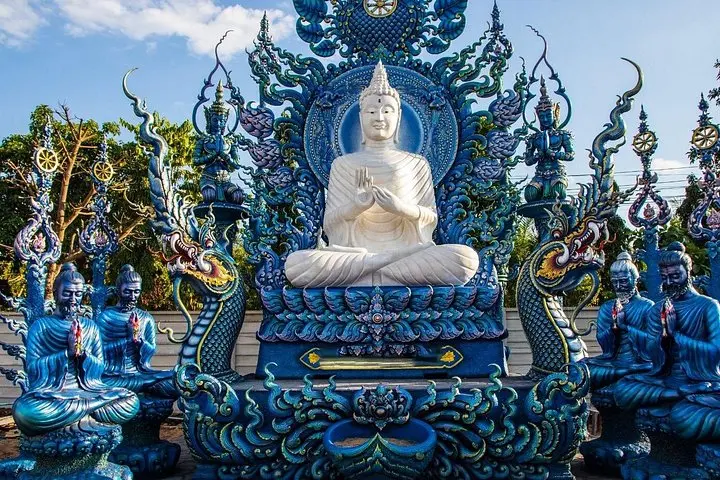
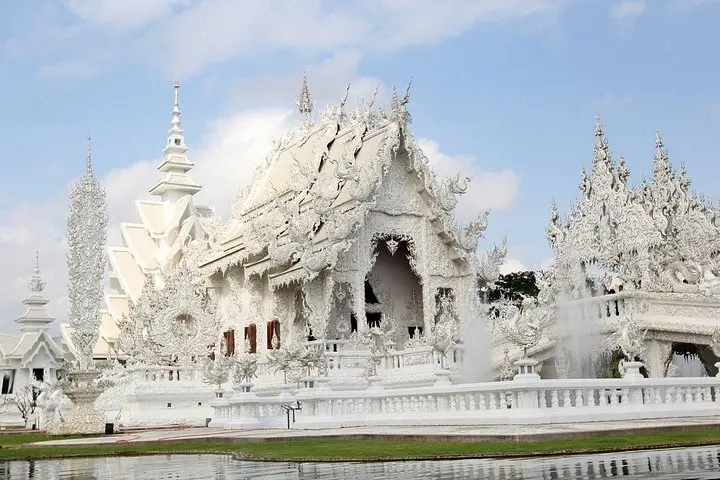
You step out of an air-conditioned van into a bright, strange light: white plaster and glass fragments flash like frost across low hills. The White Temple greets you with surreal, contemporary Buddhist imagery—angels, serpents and mirrored mosaics—while half an hour down the road the Blue Temple’s cobalt facades and gold detailing feel like a modern parable painted in color.
You step out of an air-conditioned van into a bright, strange light: white plaster and glass fragments flash like frost across low hills. The White Temple greets you with surreal, contemporary Buddhist imagery—angels, serpents and mirrored mosaics—while half an hour down the road the Blue Temple’s cobalt facades and gold detailing feel like a modern parable painted in color.
This full-day loop from Chiang Mai traverses northern Thailand’s teak-lined roads and rolling countryside. Geologically, the region sits on gentle alluvial terraces that feed the Mae Kok and Ruak rivers; the hot spring you’ll visit bubbles from geothermal pockets warmed by shallow crustal heat, popular for boiling eggs and soaking tired feet.
Culturally you’ll move from the avant-garde vision of artist Chalermchai at Wat Rong Khun to the contemporary iconography at Wat Rong Suea Ten, then into living culture at a Karen (Long Neck) village where brass rings and traditional weaving tell a complex story of identity and tourism.
Expect long drives between stops, short guided walks at each temple, and a chance to use the elevator at Wat Huay Pla Kang for panoramic views. Practical tips: dress respectfully (shoulders and knees covered), carry cash for small entrance fees and local purchases, and bring sun protection and a reusable water bottle. Pace your day: there’s time for photos and a relaxed foot soak, but be ready for an active, visual itinerary that mixes architecture, hillside views and hands-on cultural encounters.