THE ADVENTURE COLLECTIVE® · Independent discovery and booking for outdoor travel

Ride a climate-controlled coach through Chicago’s most notorious crime scenes—Biograph Theatre, the St. Valentine’s Day Massacre site and the Jewelers Building—while a local guide stitches archival footage and street-level storytelling into a 90–120 minute deep dive into the city’s mob history.
Ride a climate-controlled coach through Chicago’s most notorious crime scenes—Biograph Theatre, the St. Valentine’s Day Massacre site and the Jewelers Building—while a local guide stitches archival footage and street-level storytelling into a 90–120 minute deep dive into the city’s mob history.
You step onto the curb at Michigan Avenue and Pearson with a crowd that includes history buffs, true-crime fans and the occasional skeptical traveler. The coach hums to life and the city—its glass towers and limestone façades—leans in as the guide uncaps a story about Al Capone. By the time the bus slides past the Water Tower and into the Loop, the Chicago River has already cut a jagged line through the skyline, daring you to see the city through a century of bootleggers, shootouts and cold cases.
Verified experiences and guided adventures in the surrounding area.
Operated by Chicago Crime Tours and Experiences LLC · Chicago, Illinois
You step onto the curb at Michigan Avenue and Pearson with a crowd that includes history buffs, true-crime fans and the occasional skeptical traveler. The coach hums to life and the city—its glass towers and limestone façades—leans in as the guide uncaps a story about Al Capone. By the time the bus slides past the Water Tower and into the Loop, the Chicago River has already cut a jagged line through the skyline, daring you to see the city through a century of bootleggers, shootouts and cold cases.
This 90–120 minute tour threads the major neighborhoods that shaped Chicago’s underworld: River North, the Magnificent Mile, Lincoln Park and Old Town. It stitches together Prohibition-era economics, the rise of organized crime in the 1920s, and later headline-making figures such as John Dillinger and Frank “The Enforcer” Nitti. Stops include the Biograph Theatre—where Dillinger met his end—the site of the St. Valentine’s Day Massacre, Holy Name Cathedral, and a mini mob museum with bootlegging-tunnel footage and Nitti’s vault.
Chicago’s criminal history is also civic history. The Water Tower, one of the few structures to survive the Great Fire of 1871, becomes a hinge between the city’s development and its darker chapters. Neighborhood architecture—Jewelers Building, historic storefronts, and theater marquees—offers clues to how gang money and legitimate business braided together during Prohibition. Your guide pairs archival photos with on-site narration so the street feels like a set from the 1920s rather than a backdrop.
Practicalities matter: the tour departs and returns to 163 E. Pearson (SE corner of Pearson St. and Michigan Ave.). Check in 15 minutes early; the bus is climate-controlled and comfortable, but there are no restroom breaks once it’s rolling. Most hop-off stops are brief—five to fifteen minutes—so plan for short walks, photographs and quick, guided explorations rather than long visits.
Accessibility is partial: collapsible wheelchairs are stowable but the coach lacks an electronic lift and includes steps. Photography is encouraged at designated stops—capture the Biograph marquee at dusk or skyline reflections from the State Street Bridge—but audio/video recording onboard requires prior written permission.
For first-time visitors, wear layers (Chicago weather shifts fast), bring a charged phone and a small water bottle, and be ready to follow the guide for efficient, photo-friendly stopovers. The tour balances entertainment and education: expect lively storytelling, archival footage, and a few cold facts about violence and power that shaped modern Chicago.
If you want a fast, immersive primer on the city’s gangland past with curated photo ops and informed narration, this bus tour delivers a compact, well-paced overview with local color and practical logistics handled.
Meet outside 163 E. Pearson Street (SE corner of Pearson St. and Michigan Ave.). Arrive at least 15 minutes early to check in.
No—there are no restroom breaks once the bus departs; please use facilities before check-in.
The coach can store one collapsible wheelchair or stroller, but it does not have an electronic lift and includes steps—call in advance to discuss needs.
No—eating and drinking are not permitted aboard the coach.
Expect brief hop-off stops of around 5–15 minutes for photos and short walks; the majority of the route is viewed from the bus.
Full refunds are available if you cancel at least 24 hours before the scheduled departure; see your booking confirmation for details.
Chicago Crime Tours and Experiences LLC operates guided outdoor trips and adventures with an emphasis on safety, stewardship, and memorable experiences.
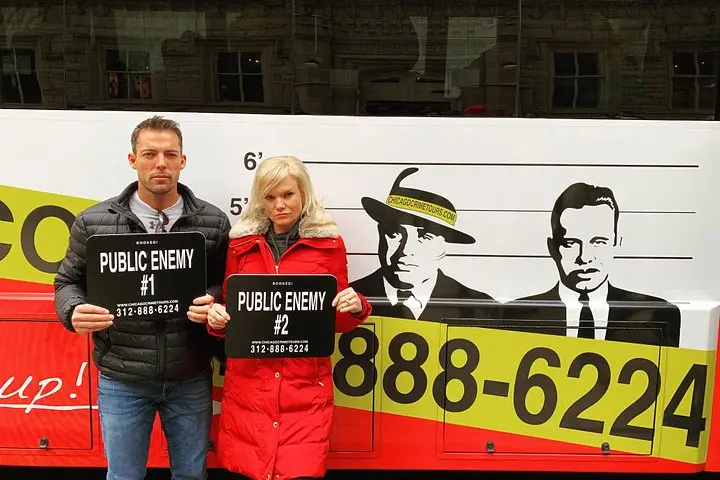
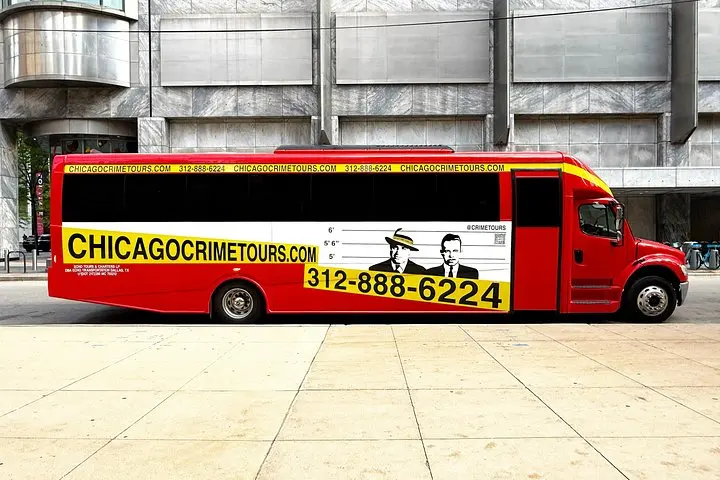
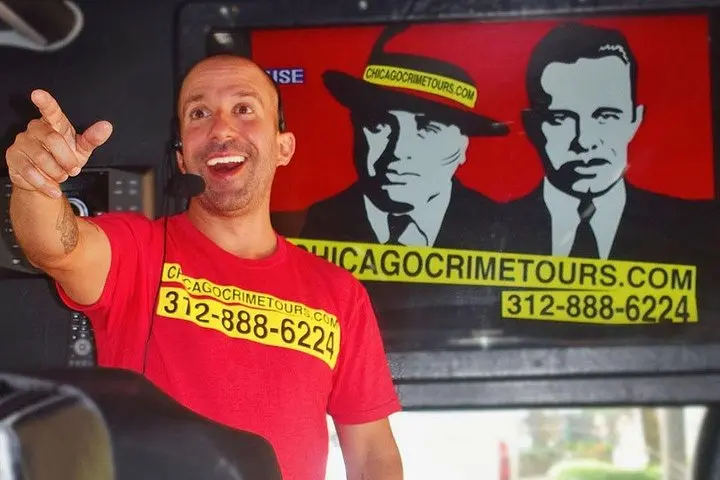
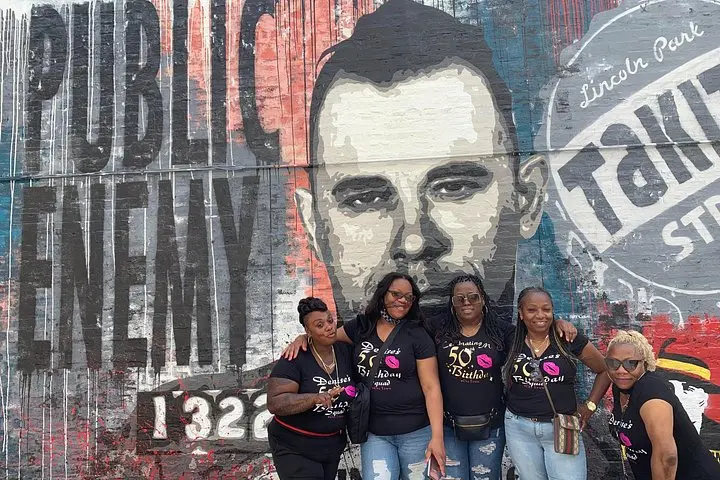
You step onto the curb at Michigan Avenue and Pearson with a crowd that includes history buffs, true-crime fans and the occasional skeptical traveler. The coach hums to life and the city—its glass towers and limestone façades—leans in as the guide uncaps a story about Al Capone. By the time the bus slides past the Water Tower and into the Loop, the Chicago River has already cut a jagged line through the skyline, daring you to see the city through a century of bootleggers, shootouts and cold cases.
You step onto the curb at Michigan Avenue and Pearson with a crowd that includes history buffs, true-crime fans and the occasional skeptical traveler. The coach hums to life and the city—its glass towers and limestone façades—leans in as the guide uncaps a story about Al Capone. By the time the bus slides past the Water Tower and into the Loop, the Chicago River has already cut a jagged line through the skyline, daring you to see the city through a century of bootleggers, shootouts and cold cases.
This 90–120 minute tour threads the major neighborhoods that shaped Chicago’s underworld: River North, the Magnificent Mile, Lincoln Park and Old Town. It stitches together Prohibition-era economics, the rise of organized crime in the 1920s, and later headline-making figures such as John Dillinger and Frank “The Enforcer” Nitti. Stops include the Biograph Theatre—where Dillinger met his end—the site of the St. Valentine’s Day Massacre, Holy Name Cathedral, and a mini mob museum with bootlegging-tunnel footage and Nitti’s vault.
Chicago’s criminal history is also civic history. The Water Tower, one of the few structures to survive the Great Fire of 1871, becomes a hinge between the city’s development and its darker chapters. Neighborhood architecture—Jewelers Building, historic storefronts, and theater marquees—offers clues to how gang money and legitimate business braided together during Prohibition. Your guide pairs archival photos with on-site narration so the street feels like a set from the 1920s rather than a backdrop.
Practicalities matter: the tour departs and returns to 163 E. Pearson (SE corner of Pearson St. and Michigan Ave.). Check in 15 minutes early; the bus is climate-controlled and comfortable, but there are no restroom breaks once it’s rolling. Most hop-off stops are brief—five to fifteen minutes—so plan for short walks, photographs and quick, guided explorations rather than long visits.
Accessibility is partial: collapsible wheelchairs are stowable but the coach lacks an electronic lift and includes steps. Photography is encouraged at designated stops—capture the Biograph marquee at dusk or skyline reflections from the State Street Bridge—but audio/video recording onboard requires prior written permission.
For first-time visitors, wear layers (Chicago weather shifts fast), bring a charged phone and a small water bottle, and be ready to follow the guide for efficient, photo-friendly stopovers. The tour balances entertainment and education: expect lively storytelling, archival footage, and a few cold facts about violence and power that shaped modern Chicago.
If you want a fast, immersive primer on the city’s gangland past with curated photo ops and informed narration, this bus tour delivers a compact, well-paced overview with local color and practical logistics handled.