THE ADVENTURE COLLECTIVE® · Independent discovery and booking for outdoor travel

Float under lift bridges and beside iconic facades on this brisk 45‑minute cruise from the Magnificent Mile. Perfect for first-time visitors, the tour condenses Chicago’s architectural history into a focused, family‑friendly outing.
Float under lift bridges and beside iconic facades on this brisk 45‑minute cruise from the Magnificent Mile. Perfect for first-time visitors, the tour condenses Chicago’s architectural history into a focused, family‑friendly outing.
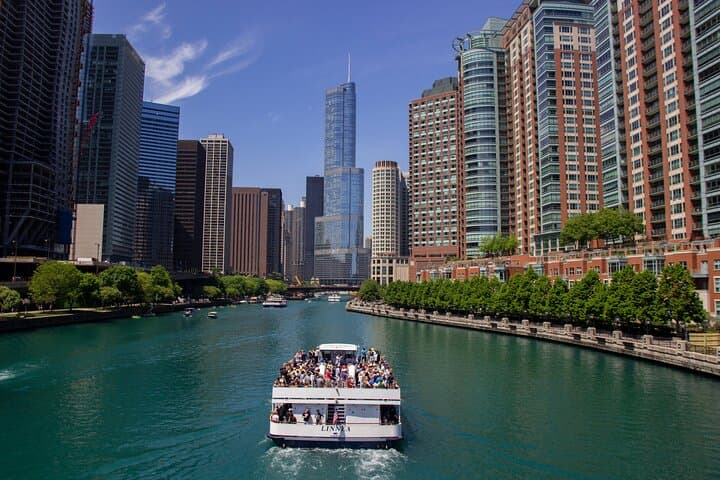
The boat slips away from the dock at 400 N Michigan Avenue and the city leans in. Glass and limestone rise on both banks, bridges click open and shut like the pages of a living city book, and the river—often overlooked in favor of the lakefront—becomes the urban spine you follow for the next 45 minutes.
Verified experiences and guided adventures in the surrounding area.
Operated by Wendella Tours & Cruises · Chicago, IL
The boat slips away from the dock at 400 N Michigan Avenue and the city leans in. Glass and limestone rise on both banks, bridges click open and shut like the pages of a living city book, and the river—often overlooked in favor of the lakefront—becomes the urban spine you follow for the next 45 minutes.
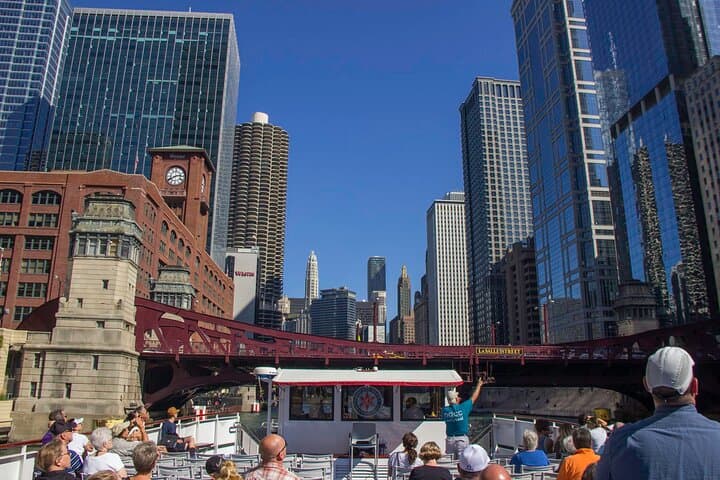
This compact cruise is an efficient primer on Chicago’s furious architectural inventiveness. Guides point out the Wrigley Building’s gleaming terracotta and the bulk of the Merchandise Mart while narrating the story of a river that was engineered to serve industry and public health—most famously reversed at the turn of the 20th century to send wastewater away from Lake Michigan. You glide past early steel-frame commercial buildings of the Chicago School, through later modernist statements, and under the lift bridges that made the river a working corridor for decades.
Geology and infrastructure are part of the show: the river cuts through relatively young glacial deposits, and the channel itself has been reshaped repeatedly to accommodate shipping, sewage, and urban renewal. Cultural footnotes appear in quick succession—the Lyric Opera House’s ornament, the corn-cob towers of Marina City, and the mixed-use blocks that evolved around the riverwalk. The tour’s short length rewards focus; there’s no attempt to do everything, only to make the essentials memorable.
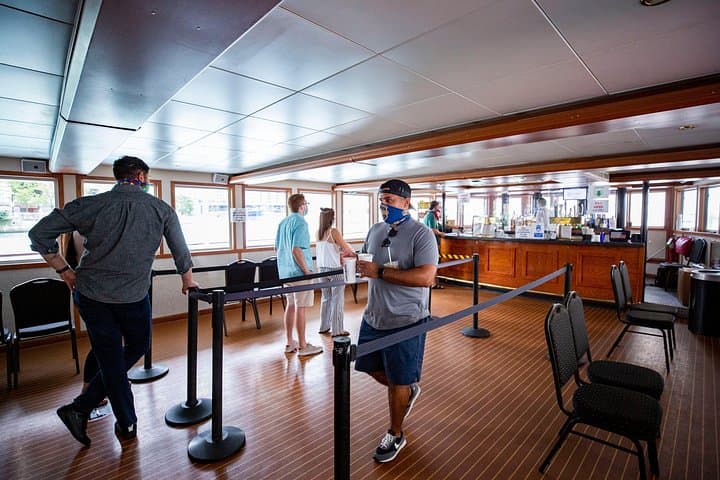
Practicalities are straightforward. The cruise covers the main stem and part of the south branch—roughly three miles of river frontage over 45 minutes—with negligible elevation change. Boarding is at street level near the Wrigley Building; some docks require stairs, so request ADA-accessible boarding in advance if needed. Restrooms are on board and seating is general admission, indoor and outdoor. Arrive 30 minutes early: downtown parking is limited, and traffic can be slow. Tickets scan from your phone; all guests, including infants, require a ticket.
For photographers and sightseers, sit on the starboard side for morning light and port for late-afternoon warmth. The boat’s low profile offers intimate views of cornices, bridges, and the riverwalk’s human scale—details you can miss from land. Dress for wind and spray even on warm days; the river can feel colder than the streets.
This is a family-friendly, low-effort way to read Chicago’s vertical past and present. It won’t replace an all-day architectural deep dive, but as a half-hour capsule it delivers context, landmark names, and the unmistakable sense of how a working waterway shaped one of America’s most architectural cities.
Check in at the Wendella ticket office near 400 N Michigan Avenue (by the Wrigley Building); staff will direct you to the correct dock.
Some docks are ADA-accessible—call Wendella at least 24 hours in advance to arrange accessible boarding.
Yes, there are on-board restrooms on the vessel used for this tour.
Infants and small children can ride in a stroller; however, all guests including infants require a ticket to board.
Tours run in most conditions; they are canceled only for unsafe weather such as tornado warnings or extreme ice and subzero temperatures.
Outside alcohol and weapons are prohibited. Light snacks are fine, but check with staff if you have special requests.
Wendella Tours & Cruises operates guided outdoor trips and adventures with an emphasis on safety, stewardship, and memorable experiences.
The boat slips away from the dock at 400 N Michigan Avenue and the city leans in. Glass and limestone rise on both banks, bridges click open and shut like the pages of a living city book, and the river—often overlooked in favor of the lakefront—becomes the urban spine you follow for the next 45 minutes.
The boat slips away from the dock at 400 N Michigan Avenue and the city leans in. Glass and limestone rise on both banks, bridges click open and shut like the pages of a living city book, and the river—often overlooked in favor of the lakefront—becomes the urban spine you follow for the next 45 minutes.
This compact cruise is an efficient primer on Chicago’s furious architectural inventiveness. Guides point out the Wrigley Building’s gleaming terracotta and the bulk of the Merchandise Mart while narrating the story of a river that was engineered to serve industry and public health—most famously reversed at the turn of the 20th century to send wastewater away from Lake Michigan. You glide past early steel-frame commercial buildings of the Chicago School, through later modernist statements, and under the lift bridges that made the river a working corridor for decades.
Geology and infrastructure are part of the show: the river cuts through relatively young glacial deposits, and the channel itself has been reshaped repeatedly to accommodate shipping, sewage, and urban renewal. Cultural footnotes appear in quick succession—the Lyric Opera House’s ornament, the corn-cob towers of Marina City, and the mixed-use blocks that evolved around the riverwalk. The tour’s short length rewards focus; there’s no attempt to do everything, only to make the essentials memorable.
Practicalities are straightforward. The cruise covers the main stem and part of the south branch—roughly three miles of river frontage over 45 minutes—with negligible elevation change. Boarding is at street level near the Wrigley Building; some docks require stairs, so request ADA-accessible boarding in advance if needed. Restrooms are on board and seating is general admission, indoor and outdoor. Arrive 30 minutes early: downtown parking is limited, and traffic can be slow. Tickets scan from your phone; all guests, including infants, require a ticket.
For photographers and sightseers, sit on the starboard side for morning light and port for late-afternoon warmth. The boat’s low profile offers intimate views of cornices, bridges, and the riverwalk’s human scale—details you can miss from land. Dress for wind and spray even on warm days; the river can feel colder than the streets.
This is a family-friendly, low-effort way to read Chicago’s vertical past and present. It won’t replace an all-day architectural deep dive, but as a half-hour capsule it delivers context, landmark names, and the unmistakable sense of how a working waterway shaped one of America’s most architectural cities.