THE ADVENTURE COLLECTIVE® · Independent discovery and booking for outdoor travel

Combine one of the Maya world’s great archaeological sites with a limestone cenote swim and a stroll through colonial Valladolid on a full-day trip that balances interpreting history with hands-on adventure.
Combine one of the Maya world’s great archaeological sites with a limestone cenote swim and a stroll through colonial Valladolid on a full-day trip that balances interpreting history with hands-on adventure.
Early light slices across limestone plazas as the guide leads a small group through the wide forecourt of Chichén Itzá. The stone faces of the Great Pyramid catch sun and shadow, and wind from the surrounding low scrub seems to push visitors gently toward the ball court and the snake-shadow of the staircase.
Verified experiences and guided adventures in the surrounding area.
Operated by Viajes Tours Maya · Valladolid, Yucatán
Early light slices across limestone plazas as the guide leads a small group through the wide forecourt of Chichén Itzá. The stone faces of the Great Pyramid catch sun and shadow, and wind from the surrounding low scrub seems to push visitors gently toward the ball court and the snake-shadow of the staircase.
This route pairs the region's best-known archaeology with a plunge into Yucatán’s karst geography and living Mayan culture. Chichén Itzá rose as a political and religious center between the Classic and Postclassic Maya eras; its architecture reflects astronomy, ritual, and trade. Geologically the area is a flat limestone plain pocked by sinkholes—cenotes—that were sacred water sources for the Maya and now offer a cool contrast to the open ruins.
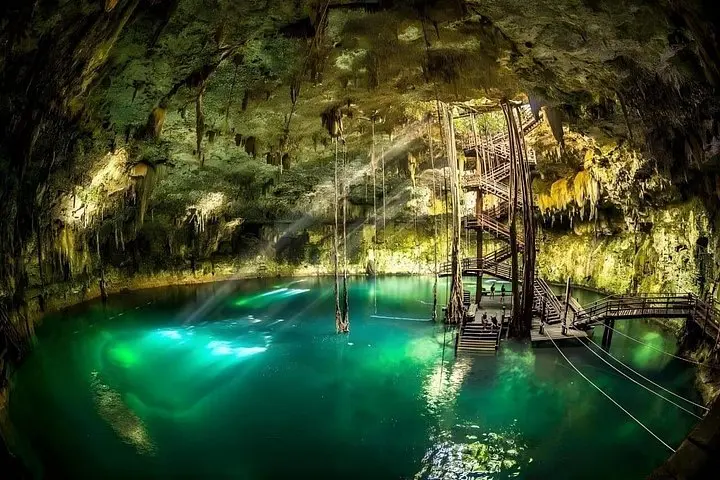
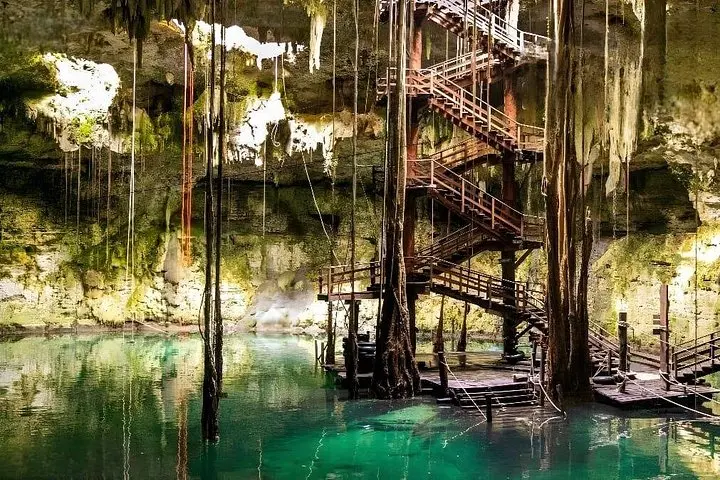
The day's rhythm moves from interpretation at the ruins to hands-on time at Cenote Maya—swimming, rappelling or traversing a rope course—and finishes with a short stroll through colonial Valladolid, where pastel façades and the modest San Gervasio church store quieter histories and local snacks like marquesitas.
Practical edge: leave early to beat the heat and crowds, wear closed-toe shoes for uneven stone, and bring swimwear and biodegradable sunscreen for the cenote. Chichén Itzá no longer allows climbing the pyramid; treat the site respectfully and follow your certified bilingual guide’s instructions. Expect a long but rewarding day—ample water, shade breaks, and a solid pair of walking shoes make this an achievable cultural-adventure from nearby bases such as Valladolid or Cancún.
No—climbing the main pyramid has been prohibited for years to protect the structure; visitors can still explore the base and surrounding monuments.
From Cancún expect about 2–2.5 hours by car; Valladolid is roughly 40–50 minutes from the archaeological site.
Yes—Cenote Maya typically allows swimming and some adventure options like rappelling or rope courses; check operator inclusions and safety briefings.
This tour generally includes a certified bilingual guide and a Mayan-style lunch, but check your booking confirmation for exact inclusions and pickup details.
Viajes Tours Maya operates guided outdoor trips and adventures with an emphasis on safety, stewardship, and memorable experiences.
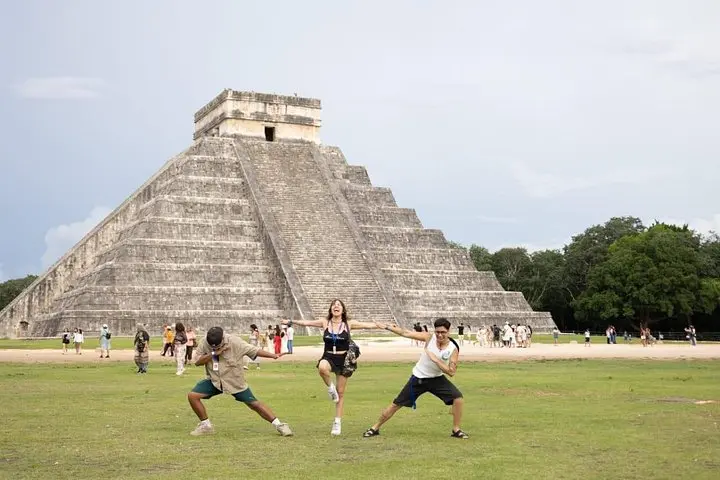
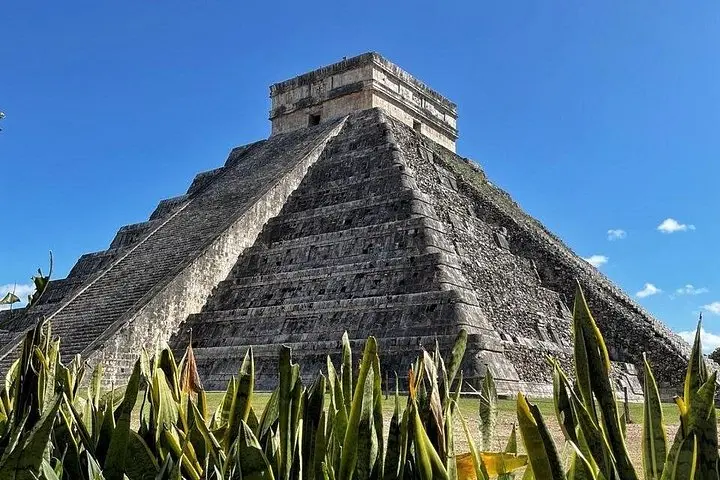
Early light slices across limestone plazas as the guide leads a small group through the wide forecourt of Chichén Itzá. The stone faces of the Great Pyramid catch sun and shadow, and wind from the surrounding low scrub seems to push visitors gently toward the ball court and the snake-shadow of the staircase.
Early light slices across limestone plazas as the guide leads a small group through the wide forecourt of Chichén Itzá. The stone faces of the Great Pyramid catch sun and shadow, and wind from the surrounding low scrub seems to push visitors gently toward the ball court and the snake-shadow of the staircase.
This route pairs the region's best-known archaeology with a plunge into Yucatán’s karst geography and living Mayan culture. Chichén Itzá rose as a political and religious center between the Classic and Postclassic Maya eras; its architecture reflects astronomy, ritual, and trade. Geologically the area is a flat limestone plain pocked by sinkholes—cenotes—that were sacred water sources for the Maya and now offer a cool contrast to the open ruins.
The day's rhythm moves from interpretation at the ruins to hands-on time at Cenote Maya—swimming, rappelling or traversing a rope course—and finishes with a short stroll through colonial Valladolid, where pastel façades and the modest San Gervasio church store quieter histories and local snacks like marquesitas.
Practical edge: leave early to beat the heat and crowds, wear closed-toe shoes for uneven stone, and bring swimwear and biodegradable sunscreen for the cenote. Chichén Itzá no longer allows climbing the pyramid; treat the site respectfully and follow your certified bilingual guide’s instructions. Expect a long but rewarding day—ample water, shade breaks, and a solid pair of walking shoes make this an achievable cultural-adventure from nearby bases such as Valladolid or Cancún.