THE ADVENTURE COLLECTIVE® · Independent discovery and booking for outdoor travel

Spend a long day tracing Maya astronomy at Chichén Itzá, cooling off in a sacred cenote, and wandering the colonial streets of Valladolid. This guided tour pairs archaeology with a refreshing swim and local flavors—ideal for travelers ready for a full-day cultural adventure.
Spend a long day tracing Maya astronomy at Chichén Itzá, cooling off in a sacred cenote, and wandering the colonial streets of Valladolid. This guided tour pairs archaeology with a refreshing swim and local flavors—ideal for travelers ready for a full-day cultural adventure.
You step out of an air-conditioned van into a wide plaza of stone and sun; the Kukulcán Pyramid rises like a precise machine that still counts the seasons. The day begins with that visceral moment—ancient masonry, a breeze that seems to push visitors toward the shadowed stairways, and the guide's voice threading architecture with ritual.
Verified experiences and guided adventures in the surrounding area.
Operated by Mexico Top Vacations · Chichén Itzá / Piste, Yucatán
You step out of an air-conditioned van into a wide plaza of stone and sun; the Kukulcán Pyramid rises like a precise machine that still counts the seasons. The day begins with that visceral moment—ancient masonry, a breeze that seems to push visitors toward the shadowed stairways, and the guide's voice threading architecture with ritual.
Chichén Itzá sits on low, flat limestone of the northern Yucatán Peninsula, about 30–40 m above sea level. The site was a major ceremonial center of the Classic and Postclassic Maya; its pyramid aligns to equinox light patterns and its ballcourt echoes a game with cosmological meaning. Geologically the region is porous karst—rainwater carved cenotes that the Maya treated as entrances to the underworld.
After ruins, the tour drops into a cenote—either the open, waterfall-creased Chichikan or the cave-like calm of Noolha—for a cooling swim in brilliantly clear groundwater guarded by roots and limestone. The final stop is Valladolid, a compact colonial city where pastel facades and the 16th-century Church of San Servacio deliver an easy urban contrast.
Practical edge: expect a long 13–15 hour day with roughly 2 hours of guided exploration at Chichén Itzá and light walking on uneven stone (plan for 1–2 km on-site). Bring swimwear, sun protection, and cash for photos or souvenirs. Start early to beat heat and crowds, and allow time to enjoy the cenote’s cool hush before the return drive.
Expect roughly 2–3 hours each way depending on your pickup point and traffic; total tour time is about 13–15 hours.
Yes—admission to the archaeological site and the sacred cenote are included, and a certified guide leads the Chichén Itzá visit.
Yes—this tour includes time to swim in either an open cenote like Chichikan or a cave-style cenote such as Noolha; bring swimwear and a towel.
The tour is family-friendly but involves walking on uneven surfaces; it’s not recommended for travelers with serious spinal, heart, or mobility problems.
Mexico Top Vacations operates guided outdoor trips and adventures with an emphasis on safety, stewardship, and memorable experiences.
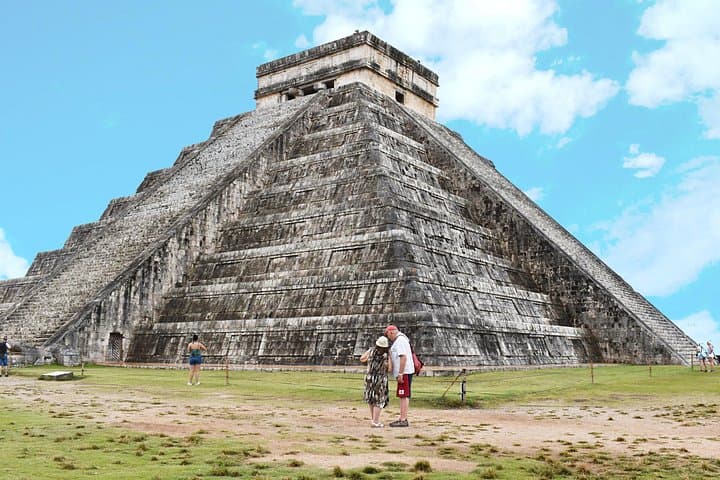
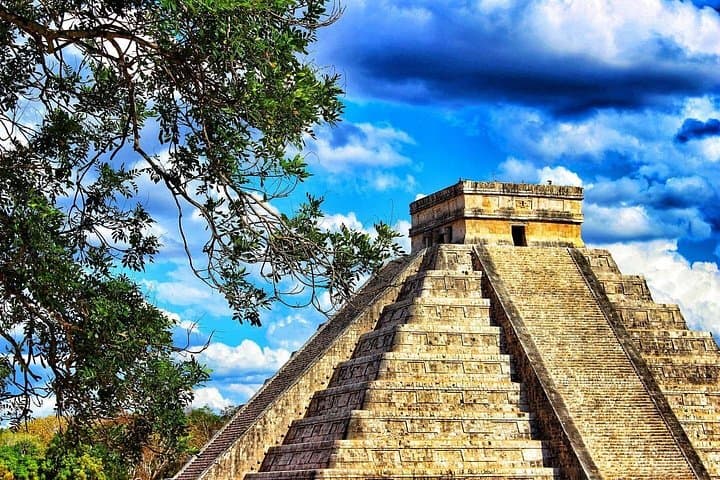
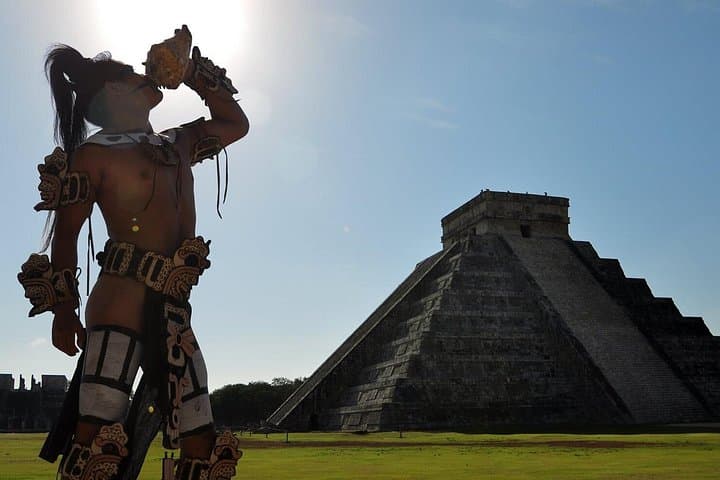

You step out of an air-conditioned van into a wide plaza of stone and sun; the Kukulcán Pyramid rises like a precise machine that still counts the seasons. The day begins with that visceral moment—ancient masonry, a breeze that seems to push visitors toward the shadowed stairways, and the guide's voice threading architecture with ritual.
You step out of an air-conditioned van into a wide plaza of stone and sun; the Kukulcán Pyramid rises like a precise machine that still counts the seasons. The day begins with that visceral moment—ancient masonry, a breeze that seems to push visitors toward the shadowed stairways, and the guide's voice threading architecture with ritual.
Chichén Itzá sits on low, flat limestone of the northern Yucatán Peninsula, about 30–40 m above sea level. The site was a major ceremonial center of the Classic and Postclassic Maya; its pyramid aligns to equinox light patterns and its ballcourt echoes a game with cosmological meaning. Geologically the region is porous karst—rainwater carved cenotes that the Maya treated as entrances to the underworld.
After ruins, the tour drops into a cenote—either the open, waterfall-creased Chichikan or the cave-like calm of Noolha—for a cooling swim in brilliantly clear groundwater guarded by roots and limestone. The final stop is Valladolid, a compact colonial city where pastel facades and the 16th-century Church of San Servacio deliver an easy urban contrast.
Practical edge: expect a long 13–15 hour day with roughly 2 hours of guided exploration at Chichén Itzá and light walking on uneven stone (plan for 1–2 km on-site). Bring swimwear, sun protection, and cash for photos or souvenirs. Start early to beat heat and crowds, and allow time to enjoy the cenote’s cool hush before the return drive.