THE ADVENTURE COLLECTIVE® · Independent discovery and booking for outdoor travel

Perched on a low volcanic ridge, Bukit Rhema’s dove-shaped prayer house offers close-up cultural interest and wide views over rice fields. Visit for short walks, local snacks, and a snapshot of community-led tourism near Borobudur.
Perched on a low volcanic ridge, Bukit Rhema’s dove-shaped prayer house offers close-up cultural interest and wide views over rice fields. Visit for short walks, local snacks, and a snapshot of community-led tourism near Borobudur.
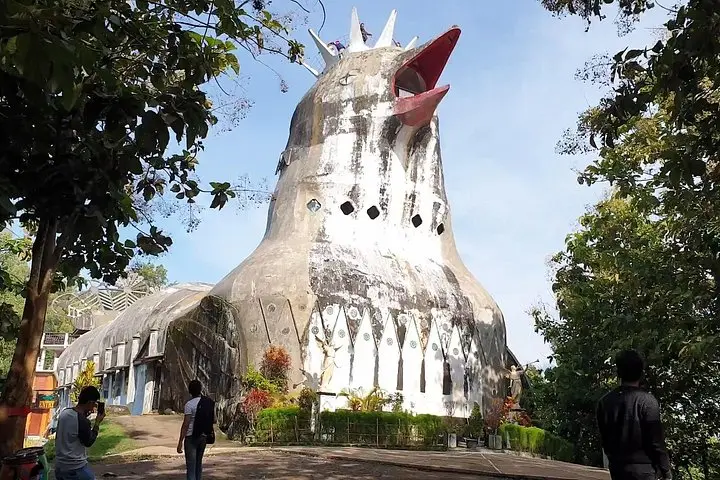
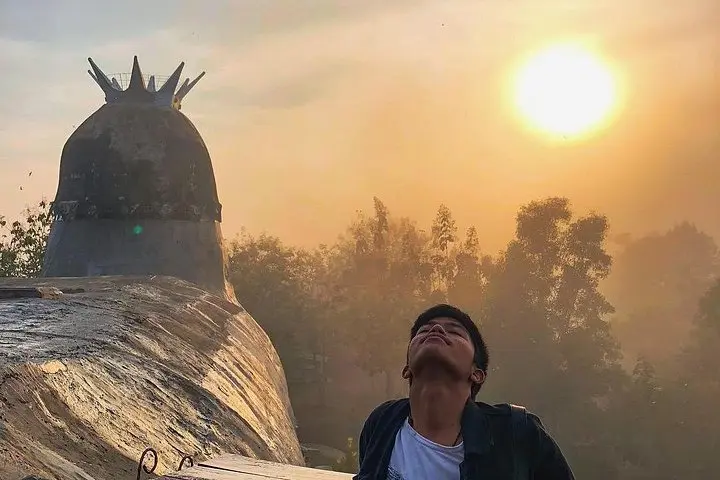
You climb a short, steep lane and the building appears—a concrete dove parked on a low volcanic ridge, wings folded toward the horizon. Wind cuts across tea-scented fields below and the structure’s curved silhouette frames distant rice terraces and the shadow of distant hills.
Verified experiences and guided adventures in the surrounding area.
Operated by Chicken Church · Borobudur, Central Java
You climb a short, steep lane and the building appears—a concrete dove parked on a low volcanic ridge, wings folded toward the horizon. Wind cuts across tea-scented fields below and the structure’s curved silhouette frames distant rice terraces and the shadow of distant hills.
Built as a House of Prayer for All Nations, Bukit Rhema (the “Chicken Church”) is a recent cultural landmark that reflects Indonesia’s religious diversity rather than functioning as a conventional denominational church. The shell-like form sits on volcanic soil laid down by ancient eruptions; the view from its upper platforms gives a clear sense of the region’s layered geology—terraces, river valleys, and low volcanic cones.
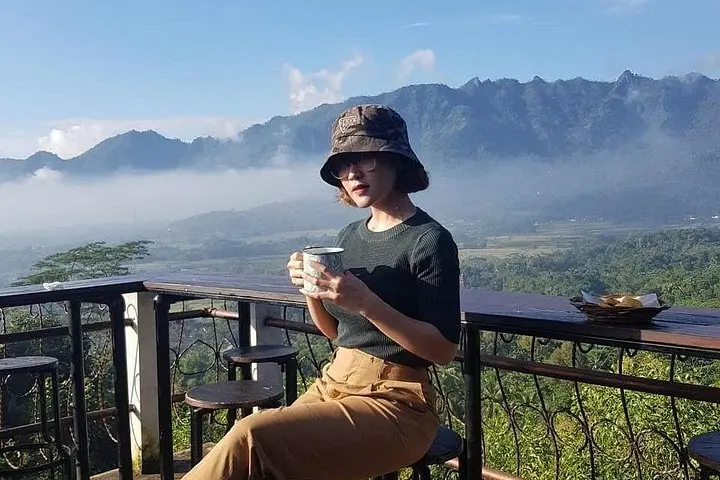
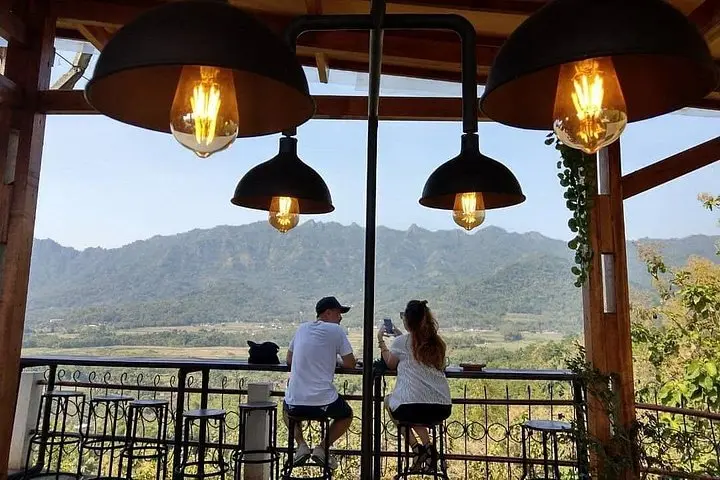
Locals operate a small coffee shop behind the building, Kedai Rakyat Bukit Rhema, where you can redeem a ticket for a free fried cassava snack produced by neighborhood vendors. The site’s informal economy benefits from visitation: entrance contributions help ongoing development and local livelihoods.
Practical note: visits are short—plan 20–90 minutes depending on crowds and how long you sit with a coffee. Paths are uneven and steep in sections; comfortable shoes and sun protection matter more than technical gear. Early morning and late afternoon offer the best light and cooler temperatures; mid-day can be hot and dusty.
Photography is straightforward—bring a wide lens or phone panorama. Respect prayer spaces and local customs: modest clothing is advised, and purchases at the coffee shop directly support nearby families.
Most visitors spend 20–90 minutes, enough for the climb, a lookout, and a coffee or snack.
Access is limited—paths include steep steps and uneven surfaces that make wheelchair access difficult.
Photography is generally allowed, but be respectful during prayer or small services and avoid using flash if people are present.
A small entrance contribution is collected; the ticket usually includes a complimentary local fried cassava snack redeemable at the coffee shop.
Chicken Church operates guided outdoor trips and adventures with an emphasis on safety, stewardship, and memorable experiences.
You climb a short, steep lane and the building appears—a concrete dove parked on a low volcanic ridge, wings folded toward the horizon. Wind cuts across tea-scented fields below and the structure’s curved silhouette frames distant rice terraces and the shadow of distant hills.
You climb a short, steep lane and the building appears—a concrete dove parked on a low volcanic ridge, wings folded toward the horizon. Wind cuts across tea-scented fields below and the structure’s curved silhouette frames distant rice terraces and the shadow of distant hills.
Built as a House of Prayer for All Nations, Bukit Rhema (the “Chicken Church”) is a recent cultural landmark that reflects Indonesia’s religious diversity rather than functioning as a conventional denominational church. The shell-like form sits on volcanic soil laid down by ancient eruptions; the view from its upper platforms gives a clear sense of the region’s layered geology—terraces, river valleys, and low volcanic cones.
Locals operate a small coffee shop behind the building, Kedai Rakyat Bukit Rhema, where you can redeem a ticket for a free fried cassava snack produced by neighborhood vendors. The site’s informal economy benefits from visitation: entrance contributions help ongoing development and local livelihoods.
Practical note: visits are short—plan 20–90 minutes depending on crowds and how long you sit with a coffee. Paths are uneven and steep in sections; comfortable shoes and sun protection matter more than technical gear. Early morning and late afternoon offer the best light and cooler temperatures; mid-day can be hot and dusty.
Photography is straightforward—bring a wide lens or phone panorama. Respect prayer spaces and local customs: modest clothing is advised, and purchases at the coffee shop directly support nearby families.