THE ADVENTURE COLLECTIVE® · Independent discovery and booking for outdoor travel

Race down the Chili River through the Chilina Valley—an 8 km, 1.5-hour whitewater descent that pairs safe, splashy rapids with volcanic scenery and easy hotel pickup in Arequipa. Ideal for travelers who want a short, high-energy outdoor fix with minimal fuss.
Race down the Chili River through the Chilina Valley—an 8 km, 1.5-hour whitewater descent that pairs safe, splashy rapids with volcanic scenery and easy hotel pickup in Arequipa. Ideal for travelers who want a short, high-energy outdoor fix with minimal fuss.
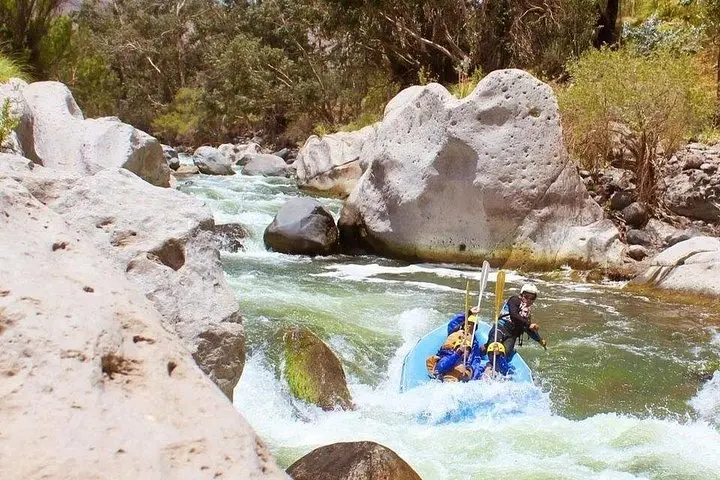
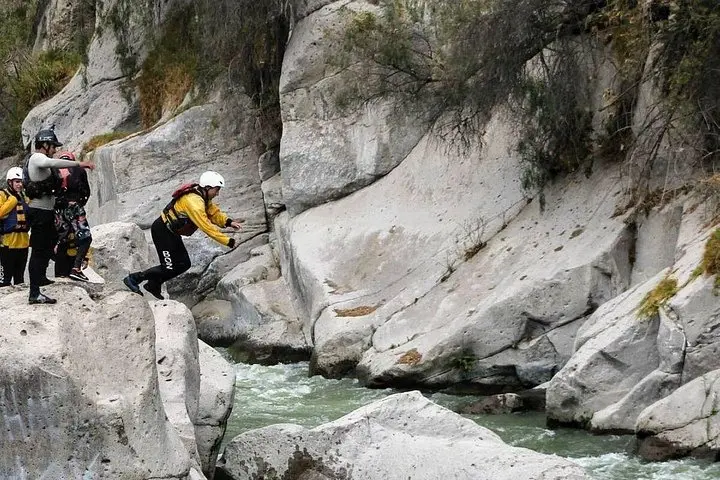
The Chili River arrives at the edge of Arequipa like an invitation—cold, fast, and impatient. Guides and rafts line a rocky shore beneath high, pale cliffs of sillar, the volcanic stone that shapes the city’s facades. Within minutes of leaving the hotel, the noise of the plaza melts into the river’s voice: a steady, chiseling rush that dares you to match its tempo.
Verified experiences and guided adventures in the surrounding area.
Operated by IZI PERU · Arequipa, Arequipa
The Chili River arrives at the edge of Arequipa like an invitation—cold, fast, and impatient. Guides and rafts line a rocky shore beneath high, pale cliffs of sillar, the volcanic stone that shapes the city’s facades. Within minutes of leaving the hotel, the noise of the plaza melts into the river’s voice: a steady, chiseling rush that dares you to match its tempo.
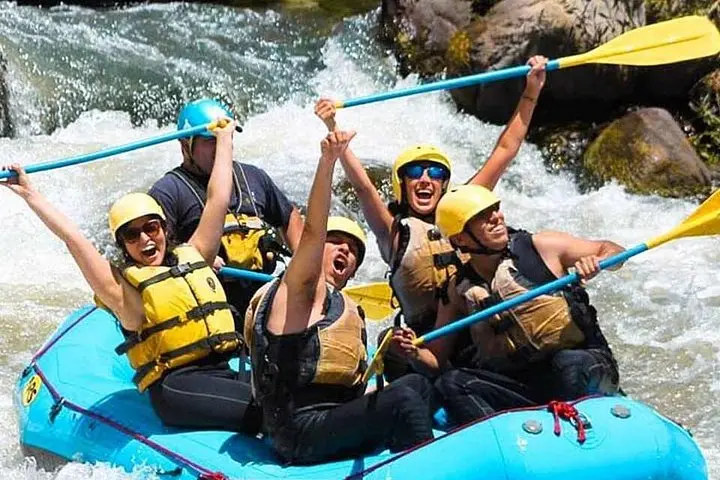
This rafting run follows roughly 8 km (about 5 miles) through the Chilina Valley, a tight, sunlit channel cut into the volcanic plateau east of Arequipa. The current tosses rafts through a string of Class II–III rapids, enough to earn sharp grins without requiring a whitewater résumé. Along the way the valley opens to terraced fields and scrubby, Andean foothills; condors are rare but the cliffs draw swifts and raptors that wheel overhead.
Arequipa’s story is writ in stone: the sillar quarries and colonial architecture reflect centuries of adaptation to a volcanic landscape. The Chili River has been the town’s lifeline—irrigating agave and alfalfa, powering mills, and shaping the routes that settlers and traders used. Geologically the river traces younger lava and ash deposits, cutting channels that reveal the city’s layered past.
Local culture arrives in small details. Farmers wave from irrigation channels. Guides—often bilingual and trained in swiftwater rescue—explain the subtle etiquette of Peruvian rivers: respect for seasonally shifting currents, a steady paddle cadence, and leaving the banks cleaner than you found them.
Practicalities are straightforward. The on-water portion runs about 1.5 hours; total excursion time with transfers is roughly 2–2.5 hours. Operators provide neoprene suits, boots, helmets, lifejackets and paddles; wear quick-dry layers beneath. Altitude matters—Arequipa sits around 2,300–2,500 meters (7,500–8,200 feet)—so hydrate and avoid a hard climb the morning of the trip.
Expect splashy fun rather than technical gorges. The guides run safety briefings before launch and lead the group; swimmers are briefed on throw-bag procedures and self-rescue. The take-out is convenient and the return typically drops you near the Plaza de Armas, an easy transition back into town for a post-trip pisco sour and roast cuy tasting.
Timing is key: Peru’s southern-hemisphere dry season (May–October) offers stable, lower flows—the rapids are playful. The rainy season (December–March) can raise levels and add punch. Bring sunscreen, a small dry bag for phone/ID, and footwear that won’t slip in a raft. For travelers who want a compact adrenaline fix with cultural texture, the Chili River descent is a crisp, efficient way to read Arequipa by water: fast, bright, and edged with volcanic rock.
The river descent is about 8 km (approx. 1.5 hours on the water); total door-to-door time is around 2–2.5 hours.
No prior experience is necessary—guides teach paddling technique and safety; the rapids are generally Class II–III.
Yes—neoprene suit, neoprene shoes, helmet, life jacket, and paddle jacket are included.
Yes—pickup from hotels within Arequipa’s historic center is included; operators confirm pickup details by WhatsApp the day before.
The tour is suitable for most healthy travelers; disclose any medical conditions when booking and avoid strenuous activity if you feel unwell at altitude.
Trips run year-round; operators monitor river conditions—heavy rains can increase flows, and guides may reschedule for safety.
IZI PERU operates guided outdoor trips and adventures with an emphasis on safety, stewardship, and memorable experiences.
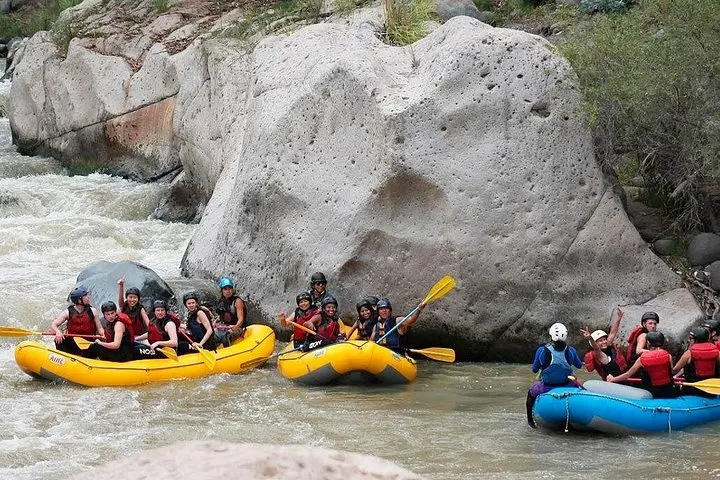
The Chili River arrives at the edge of Arequipa like an invitation—cold, fast, and impatient. Guides and rafts line a rocky shore beneath high, pale cliffs of sillar, the volcanic stone that shapes the city’s facades. Within minutes of leaving the hotel, the noise of the plaza melts into the river’s voice: a steady, chiseling rush that dares you to match its tempo.
The Chili River arrives at the edge of Arequipa like an invitation—cold, fast, and impatient. Guides and rafts line a rocky shore beneath high, pale cliffs of sillar, the volcanic stone that shapes the city’s facades. Within minutes of leaving the hotel, the noise of the plaza melts into the river’s voice: a steady, chiseling rush that dares you to match its tempo.
This rafting run follows roughly 8 km (about 5 miles) through the Chilina Valley, a tight, sunlit channel cut into the volcanic plateau east of Arequipa. The current tosses rafts through a string of Class II–III rapids, enough to earn sharp grins without requiring a whitewater résumé. Along the way the valley opens to terraced fields and scrubby, Andean foothills; condors are rare but the cliffs draw swifts and raptors that wheel overhead.
Arequipa’s story is writ in stone: the sillar quarries and colonial architecture reflect centuries of adaptation to a volcanic landscape. The Chili River has been the town’s lifeline—irrigating agave and alfalfa, powering mills, and shaping the routes that settlers and traders used. Geologically the river traces younger lava and ash deposits, cutting channels that reveal the city’s layered past.
Local culture arrives in small details. Farmers wave from irrigation channels. Guides—often bilingual and trained in swiftwater rescue—explain the subtle etiquette of Peruvian rivers: respect for seasonally shifting currents, a steady paddle cadence, and leaving the banks cleaner than you found them.
Practicalities are straightforward. The on-water portion runs about 1.5 hours; total excursion time with transfers is roughly 2–2.5 hours. Operators provide neoprene suits, boots, helmets, lifejackets and paddles; wear quick-dry layers beneath. Altitude matters—Arequipa sits around 2,300–2,500 meters (7,500–8,200 feet)—so hydrate and avoid a hard climb the morning of the trip.
Expect splashy fun rather than technical gorges. The guides run safety briefings before launch and lead the group; swimmers are briefed on throw-bag procedures and self-rescue. The take-out is convenient and the return typically drops you near the Plaza de Armas, an easy transition back into town for a post-trip pisco sour and roast cuy tasting.
Timing is key: Peru’s southern-hemisphere dry season (May–October) offers stable, lower flows—the rapids are playful. The rainy season (December–March) can raise levels and add punch. Bring sunscreen, a small dry bag for phone/ID, and footwear that won’t slip in a raft. For travelers who want a compact adrenaline fix with cultural texture, the Chili River descent is a crisp, efficient way to read Arequipa by water: fast, bright, and edged with volcanic rock.