THE ADVENTURE COLLECTIVE® · Independent discovery and booking for outdoor travel

Spend 2.5 hours with a naturalist guide at Chilkoot Lake State Park searching for bald eagles, harbor seals, and—when the salmon run—brown bears. This guided tour blends short walks, roadside viewing, and expert interpretation of local ecology.
Spend 2.5 hours with a naturalist guide at Chilkoot Lake State Park searching for bald eagles, harbor seals, and—when the salmon run—brown bears. This guided tour blends short walks, roadside viewing, and expert interpretation of local ecology.
A hush settles over the birch and spruce as your guide eases the group toward Chilkoot Lake. Mist lifts off the water and a bald eagle skirts the far treeline, wings cutting the air like a slow question. The guide trains a spotting scope on a distant headland where harbor seals haul out and, later in the season, brown bears pick the river edges for salmon.
Verified experiences and guided adventures in the surrounding area.
Operated by Rainbow Glacier Adventures · Haines, Alaska
A hush settles over the birch and spruce as your guide eases the group toward Chilkoot Lake. Mist lifts off the water and a bald eagle skirts the far treeline, wings cutting the air like a slow question. The guide trains a spotting scope on a distant headland where harbor seals haul out and, later in the season, brown bears pick the river edges for salmon.
This shoreline is carved by glaciers and fed by streams that pulse with life: the Chilkoot River swells each summer with migrating salmon, drawing predators and photographers alike. Indigenous Tlingit families have used these waters for generations, and Fort William H. Seward—an early 20th‑century Army post—anchors the modern history of Haines along Lynn Canal.
Expect a mix of roadside stops and short walks over uneven, rocky ground; the tour is driven by wildlife timing rather than distance. Guides interpret animal behavior, local ecology, and conservation issues, giving context to each sighting.
Practical guide: dress in layered, waterproof clothing and solid footwear; bring binoculars or use the guide’s spotting scope; keep cameras ready but respect viewing distances—bear safety is paramount. Morning and late afternoon are highest probability windows for active wildlife; July through September increases bear and salmon sightings, while spring focuses on nesting eagles and wildflowers. The tour balances easy access with the unpredictability of wild animals—come prepared, patient, and curious.
Common sightings include bald eagles, harbor seals, and seasonal brown bear activity; salmon runs (late July–September) increase bear presence.
Children are welcome but must be accompanied by an adult; some short walks occur on uneven surfaces so collapsible strollers may be limited.
Guides maintain safe distances and use spotting scopes; visitors must not approach or feed animals—safety and conservation are strictly enforced.
May–July is prime for nesting eagles and wildflowers; late July–September increases salmon and bear viewing opportunities.
Rainbow Glacier Adventures operates guided outdoor trips and adventures with an emphasis on safety, stewardship, and memorable experiences.
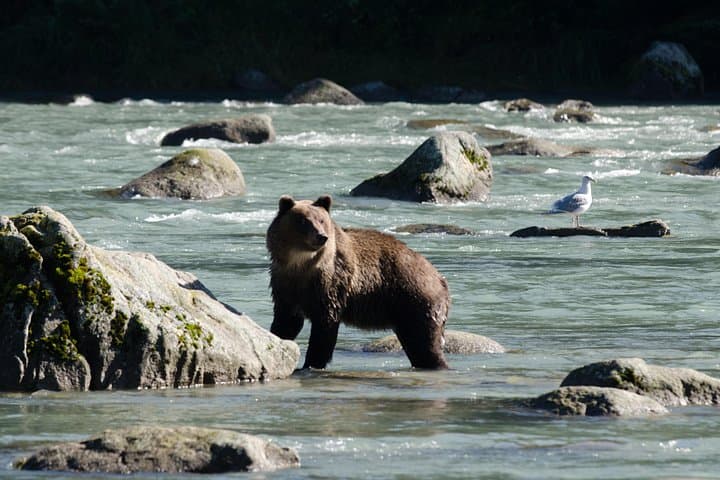

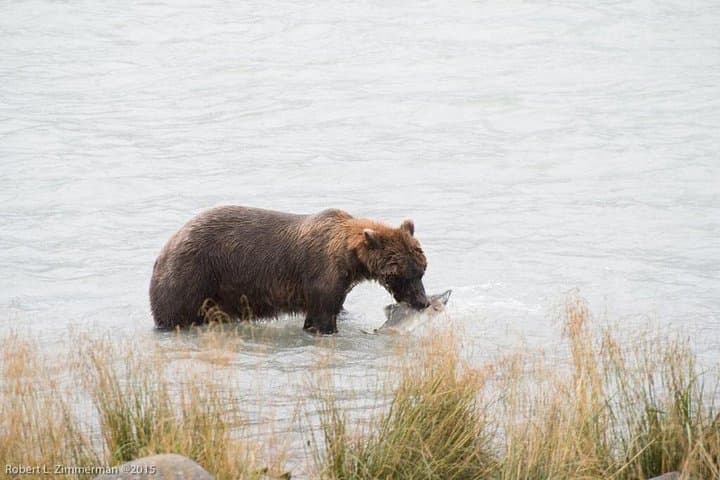

A hush settles over the birch and spruce as your guide eases the group toward Chilkoot Lake. Mist lifts off the water and a bald eagle skirts the far treeline, wings cutting the air like a slow question. The guide trains a spotting scope on a distant headland where harbor seals haul out and, later in the season, brown bears pick the river edges for salmon.
A hush settles over the birch and spruce as your guide eases the group toward Chilkoot Lake. Mist lifts off the water and a bald eagle skirts the far treeline, wings cutting the air like a slow question. The guide trains a spotting scope on a distant headland where harbor seals haul out and, later in the season, brown bears pick the river edges for salmon.
This shoreline is carved by glaciers and fed by streams that pulse with life: the Chilkoot River swells each summer with migrating salmon, drawing predators and photographers alike. Indigenous Tlingit families have used these waters for generations, and Fort William H. Seward—an early 20th‑century Army post—anchors the modern history of Haines along Lynn Canal.
Expect a mix of roadside stops and short walks over uneven, rocky ground; the tour is driven by wildlife timing rather than distance. Guides interpret animal behavior, local ecology, and conservation issues, giving context to each sighting.
Practical guide: dress in layered, waterproof clothing and solid footwear; bring binoculars or use the guide’s spotting scope; keep cameras ready but respect viewing distances—bear safety is paramount. Morning and late afternoon are highest probability windows for active wildlife; July through September increases bear and salmon sightings, while spring focuses on nesting eagles and wildflowers. The tour balances easy access with the unpredictability of wild animals—come prepared, patient, and curious.