THE ADVENTURE COLLECTIVE® · Independent discovery and booking for outdoor travel
Climb into high Andean air on a full‑day hike to Chimborazo’s 5,041 m base from Baños. Expect glacier miradors, vicuñas on the slopes and a steady focus on acclimatization for a demanding yet nontechnical alpine day.
Climb into high Andean air on a full‑day hike to Chimborazo’s 5,041 m base from Baños. Expect glacier miradors, vicuñas on the slopes and a steady focus on acclimatization for a demanding yet nontechnical alpine day.
Morning light cuts across high páramo as the van climbs from Baños toward the broad shoulders of Chimborazo. By the time travelers step out at the reserve, the air is thin and the peak—white with névé—seems to tilt toward the equator. The first station sits around 4,800 m; beyond it the trail nudges higher to a second base at 5,041 m with a small lagoon sitting like a cold mirror beneath a tongue of glacier.
Verified experiences and guided adventures in the surrounding area.
Operated by Kajol Lavan Travel · Riobamba, Chimborazo
Morning light cuts across high páramo as the van climbs from Baños toward the broad shoulders of Chimborazo. By the time travelers step out at the reserve, the air is thin and the peak—white with névé—seems to tilt toward the equator. The first station sits around 4,800 m; beyond it the trail nudges higher to a second base at 5,041 m with a small lagoon sitting like a cold mirror beneath a tongue of glacier.
Geology and human history meet on Chimborazo’s slopes. This eroded stratovolcano is Ecuador’s highest mountain and, because of Earth’s equatorial bulge, the point on the planet farthest from its center—an idiosyncratic superlative celebrated since Humboldt’s early 19th-century visits. Along the three‑hour approach from Baños, travelers pass indigenous fields, adobe homes and grazing vicuñas that give the landscape a working, lived-in quality.
Expect short, steep sections rather than technical climbing; the itinerary focuses on acclimatized walking, views of the glacier-lagoon and a guided descent before a box lunch. Winds can push hard above 4,500 m and sunlight is intense; the páramo’s grasses creak and sway like a living map leading you back to the vehicle.
Practical notes: leave from Baños at 8:30 a.m., be ready for a long day (about 10–11 hours round-trip), and plan at least moderate fitness for sustained high-altitude walking. Bring warm layers, waterproof shell, sturdy footwear and plenty of water. Respect fragile high‑altitude vegetation, pack out trash, and allow time for slow breathing—altitude is the real terrain here.
The walking is nontechnical but strenuous due to altitude; expect short steep sections and slow pacing—moderate to good fitness is recommended.
No technical climbing skills are required; this tour focuses on acclimatized hiking and viewpoints rather than summit attempts.
Clearer weather is more likely in the dry season (June–September), but Chimborazo can be visited year‑round; expect more cloud and precipitation in wetter months.
Yes—private transportation from Baños is provided and included in the tour package.
Kajol Lavan Travel operates guided outdoor trips and adventures with an emphasis on safety, stewardship, and memorable experiences.
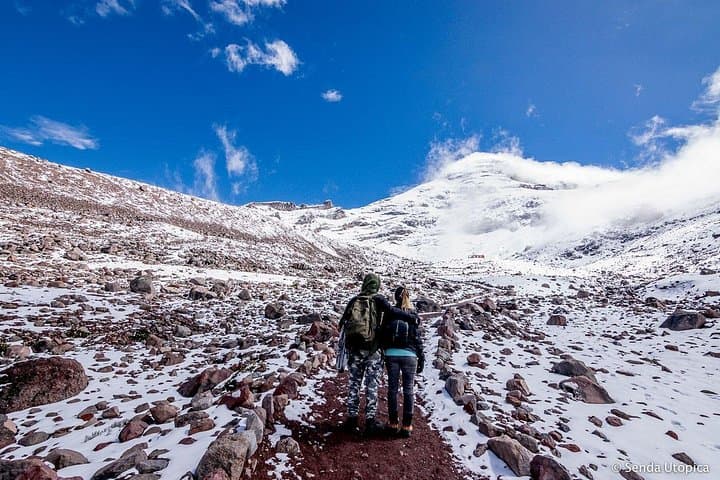
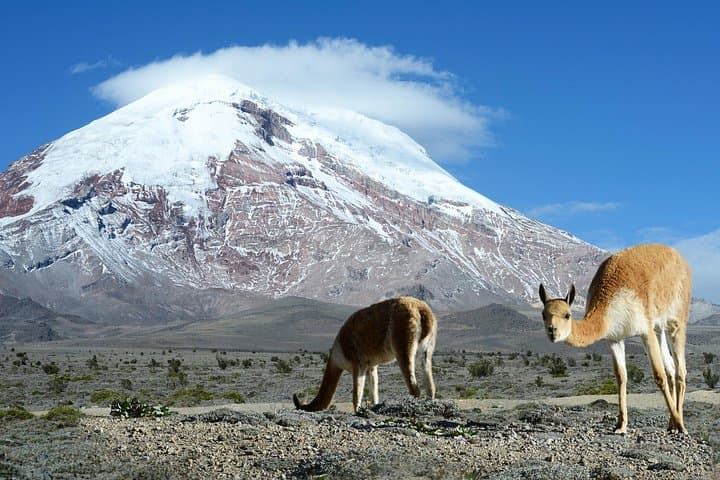
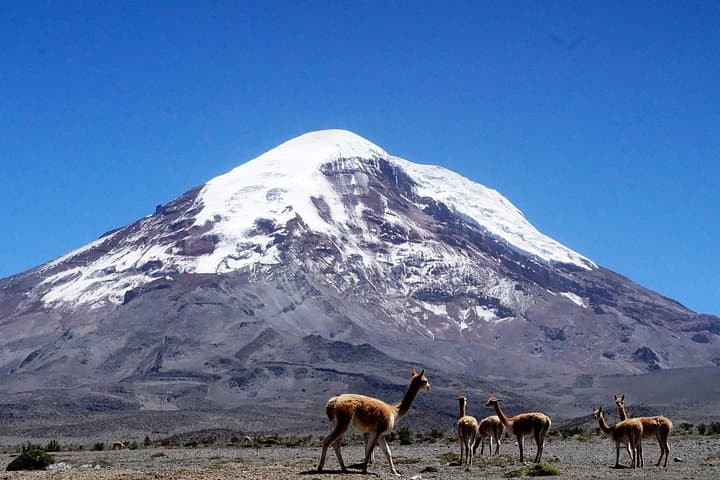
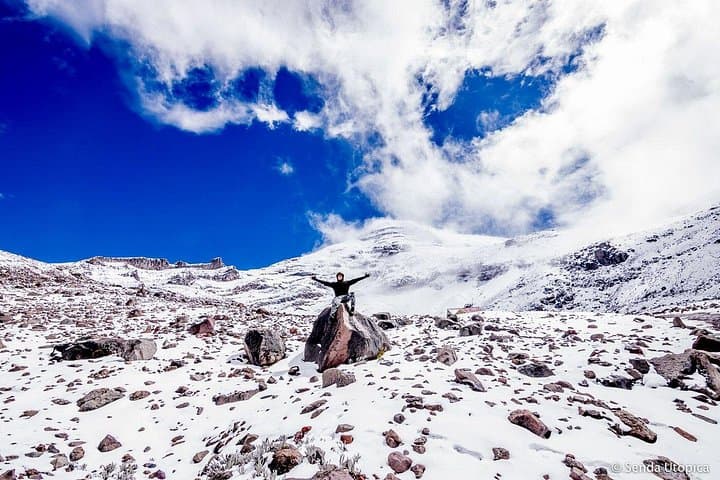
Morning light cuts across high páramo as the van climbs from Baños toward the broad shoulders of Chimborazo. By the time travelers step out at the reserve, the air is thin and the peak—white with névé—seems to tilt toward the equator. The first station sits around 4,800 m; beyond it the trail nudges higher to a second base at 5,041 m with a small lagoon sitting like a cold mirror beneath a tongue of glacier.
Morning light cuts across high páramo as the van climbs from Baños toward the broad shoulders of Chimborazo. By the time travelers step out at the reserve, the air is thin and the peak—white with névé—seems to tilt toward the equator. The first station sits around 4,800 m; beyond it the trail nudges higher to a second base at 5,041 m with a small lagoon sitting like a cold mirror beneath a tongue of glacier.
Geology and human history meet on Chimborazo’s slopes. This eroded stratovolcano is Ecuador’s highest mountain and, because of Earth’s equatorial bulge, the point on the planet farthest from its center—an idiosyncratic superlative celebrated since Humboldt’s early 19th-century visits. Along the three‑hour approach from Baños, travelers pass indigenous fields, adobe homes and grazing vicuñas that give the landscape a working, lived-in quality.
Expect short, steep sections rather than technical climbing; the itinerary focuses on acclimatized walking, views of the glacier-lagoon and a guided descent before a box lunch. Winds can push hard above 4,500 m and sunlight is intense; the páramo’s grasses creak and sway like a living map leading you back to the vehicle.
Practical notes: leave from Baños at 8:30 a.m., be ready for a long day (about 10–11 hours round-trip), and plan at least moderate fitness for sustained high-altitude walking. Bring warm layers, waterproof shell, sturdy footwear and plenty of water. Respect fragile high‑altitude vegetation, pack out trash, and allow time for slow breathing—altitude is the real terrain here.
