THE ADVENTURE COLLECTIVE® · Independent discovery and booking for outdoor travel

Explore Chinatown’s food and history on a focused two-hour walking tour that combines dumpling tastings with neighborhood stories. Perfect for curious eaters who want local context and efficient navigation of one of Manhattan’s most dynamic quarters.
Explore Chinatown’s food and history on a focused two-hour walking tour that combines dumpling tastings with neighborhood stories. Perfect for curious eaters who want local context and efficient navigation of one of Manhattan’s most dynamic quarters.
You step from the clatter of Canal Street into Columbus Park, where mah-jong tables click and elders move through morning exercises with purposeful calm. Steam rises from dumpling baskets two doors down; the scent of soy and five-spice threads through narrow streets that feel older than the skyscrapers visible a few blocks away.
Verified experiences and guided adventures in the surrounding area.
Operated by Best Tours New York · New York, New York
You step from the clatter of Canal Street into Columbus Park, where mah-jong tables click and elders move through morning exercises with purposeful calm. Steam rises from dumpling baskets two doors down; the scent of soy and five-spice threads through narrow streets that feel older than the skyscrapers visible a few blocks away.
Chinatown’s streets grew around 19th-century tenements and a bustling port economy; Columbus Park itself was redesigned in 1897 as part of efforts to improve living conditions in the Mulberry Bend. Geologically, you’re on Manhattan’s southern edge—streets overlaid on bedrock, then filled lots and commercial lots shaped by waves of immigrants from Guangdong, Fujian and beyond. The area’s culture is kitchen-first: family-run bakeries, herbal shops, and tea parlors that double as neighborhood meeting rooms.
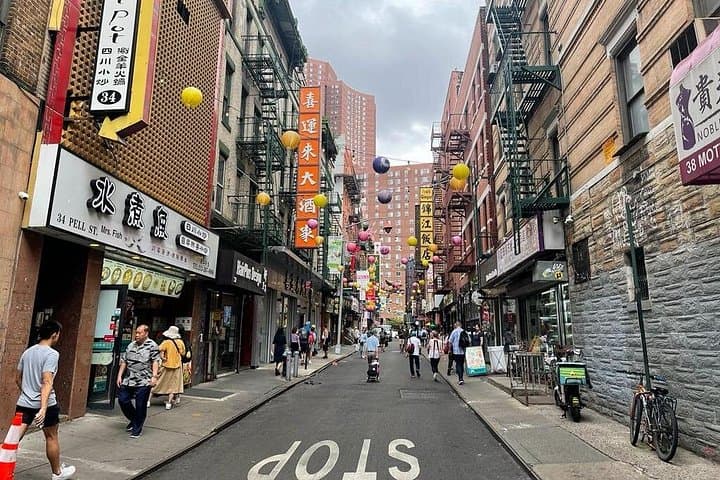
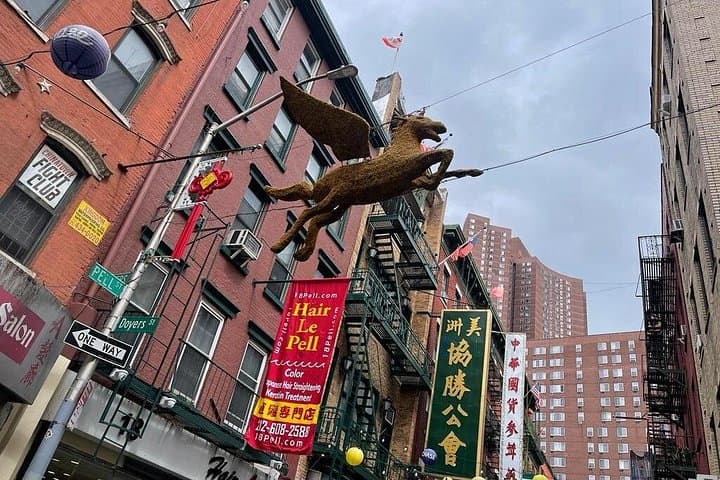
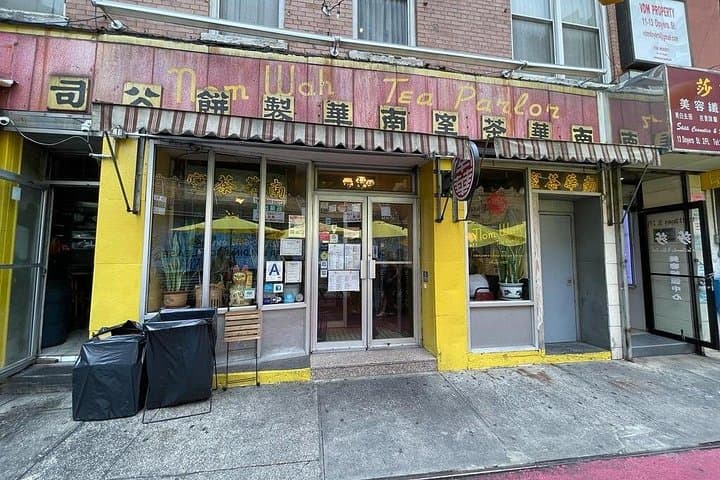
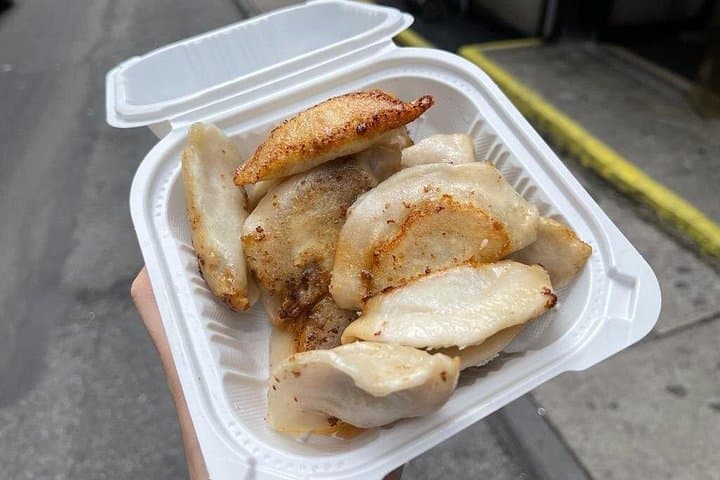
On a two-hour walking food tour you’ll move at a deliberate pace—stopping for fried dumplings, rice noodle plates, and historic dim sum at Nom Wah. Guides point out architectural oddities, Doyers Street’s curved turn, and markets where older techniques meet modern palates.
Practical notes: carry small bills, wear comfortable shoes for uneven sidewalks, and flag dietary needs before the tour. Public transit brings you close; the route weaves roughly from Mulberry and Bayard to Canal Street. Expect 1–2 small snacks per stop and a blend of tasting plus cultural context—this is equal parts eating and neighborhood orientation.
Yes—snacks and sample tastings at several stops are included; the tour is structured around shared small plates.
Tours begin at Columbus Park (corner of Mulberry and Bayard) and conclude near New Kam Man Supermarket at 200 Canal Street as listed in the itinerary.
Yes—bookers should indicate allergies or preferences in the special requirements field prior to departure so the guide can adjust stops where possible.
The route is generally stroller accessible and uses public sidewalks; however, uneven pavement and busy storefronts may limit full wheelchair accessibility—contact the operator for specifics.
Best Tours New York operates guided outdoor trips and adventures with an emphasis on safety, stewardship, and memorable experiences.
You step from the clatter of Canal Street into Columbus Park, where mah-jong tables click and elders move through morning exercises with purposeful calm. Steam rises from dumpling baskets two doors down; the scent of soy and five-spice threads through narrow streets that feel older than the skyscrapers visible a few blocks away.
You step from the clatter of Canal Street into Columbus Park, where mah-jong tables click and elders move through morning exercises with purposeful calm. Steam rises from dumpling baskets two doors down; the scent of soy and five-spice threads through narrow streets that feel older than the skyscrapers visible a few blocks away.
Chinatown’s streets grew around 19th-century tenements and a bustling port economy; Columbus Park itself was redesigned in 1897 as part of efforts to improve living conditions in the Mulberry Bend. Geologically, you’re on Manhattan’s southern edge—streets overlaid on bedrock, then filled lots and commercial lots shaped by waves of immigrants from Guangdong, Fujian and beyond. The area’s culture is kitchen-first: family-run bakeries, herbal shops, and tea parlors that double as neighborhood meeting rooms.
On a two-hour walking food tour you’ll move at a deliberate pace—stopping for fried dumplings, rice noodle plates, and historic dim sum at Nom Wah. Guides point out architectural oddities, Doyers Street’s curved turn, and markets where older techniques meet modern palates.
Practical notes: carry small bills, wear comfortable shoes for uneven sidewalks, and flag dietary needs before the tour. Public transit brings you close; the route weaves roughly from Mulberry and Bayard to Canal Street. Expect 1–2 small snacks per stop and a blend of tasting plus cultural context—this is equal parts eating and neighborhood orientation.