THE ADVENTURE COLLECTIVE® · Independent discovery and booking for outdoor travel

A compact, wildlife-focused escape from Kathmandu: two nights in Sauraha with jeep safaris, a canoe trip on the Rapti, and a cultural Tharu performance. Expect close rhino encounters, rich birdlife, and simple lodge comforts.
A compact, wildlife-focused escape from Kathmandu: two nights in Sauraha with jeep safaris, a canoe trip on the Rapti, and a cultural Tharu performance. Expect close rhino encounters, rich birdlife, and simple lodge comforts.
Dust from the Kathmandu road gives way to a green, flat plain where tall sal and riverine forest crowd the horizon. On arrival at Chitwan, the Narayani River cuts a bright line through the park and dares you to look closer; egrets and kingfishers flit while crocodiles warm on exposed sandbars. The first evening often ends with a Tharu dance—local rhythms that mark the human side of a landscape shaped by monsoon and river.
Verified experiences and guided adventures in the surrounding area.
Operated by My Dream Adventure (MDA) · Sauraha, Bagmati Province
Dust from the Kathmandu road gives way to a green, flat plain where tall sal and riverine forest crowd the horizon. On arrival at Chitwan, the Narayani River cuts a bright line through the park and dares you to look closer; egrets and kingfishers flit while crocodiles warm on exposed sandbars. The first evening often ends with a Tharu dance—local rhythms that mark the human side of a landscape shaped by monsoon and river.
Chitwan National Park, created in the 1970s and designated a UNESCO World Heritage Site in 1984, protects lowland Terai forest and floodplain ecosystems. Geologically, the park sits on alluvial plains fed by Himalayan rivers; soils are rich, and seasonal floods rework channels and create oxbow lakes that attract waterbirds. Cultural threads run through the experience—Tharu communities have lived here for generations, adapting rice agriculture and river fishing to the park’s rhythms.
Practical guidance: expect shared jeep safaris that cover several hours each morning and late afternoon when wildlife is most active, plus a calm canoe ride on the Rapti. Accommodations are basic two-star lodges in Sauraha, and transport is by tourist bus. Pack light, quick-dry clothing, mosquito protection, and a good pair of walking shoes for short forest walks. Carry cash for small purchases in the village, and plan early starts—heat and insects rise by midday. Guides are experienced at spotting one-horned rhinos, deer, and birdlife; sightings of elusive species like Bengal tiger are rare but possible. Respect park rules, keep distance from wildlife, and follow your guide’s instructions for a safe, memorable stay.
Most tours provide round-trip transport by tourist bus; the drive is about 5–6 hours depending on traffic and road conditions.
One-horned rhinos and common deer are frequently seen; tigers are present but sightings are rare—jeep safaris maximize chances but cannot guarantee encounters.
The itinerary includes two-star lodges in Sauraha with basic amenities, meals included during the Chitwan stay; expect simple but serviceable rooms.
The tour is generally suitable for many ages, but not recommended for travelers with serious back or heart problems; infants must sit on laps per operator policy.
My Dream Adventure (MDA) operates guided outdoor trips and adventures with an emphasis on safety, stewardship, and memorable experiences.
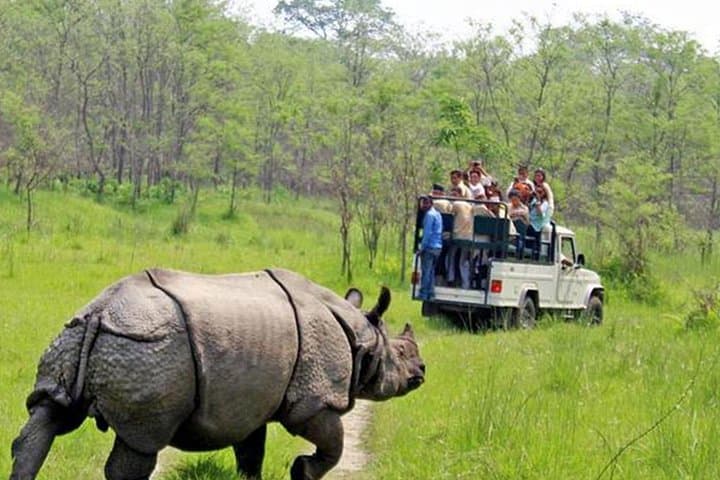


Dust from the Kathmandu road gives way to a green, flat plain where tall sal and riverine forest crowd the horizon. On arrival at Chitwan, the Narayani River cuts a bright line through the park and dares you to look closer; egrets and kingfishers flit while crocodiles warm on exposed sandbars. The first evening often ends with a Tharu dance—local rhythms that mark the human side of a landscape shaped by monsoon and river.
Dust from the Kathmandu road gives way to a green, flat plain where tall sal and riverine forest crowd the horizon. On arrival at Chitwan, the Narayani River cuts a bright line through the park and dares you to look closer; egrets and kingfishers flit while crocodiles warm on exposed sandbars. The first evening often ends with a Tharu dance—local rhythms that mark the human side of a landscape shaped by monsoon and river.
Chitwan National Park, created in the 1970s and designated a UNESCO World Heritage Site in 1984, protects lowland Terai forest and floodplain ecosystems. Geologically, the park sits on alluvial plains fed by Himalayan rivers; soils are rich, and seasonal floods rework channels and create oxbow lakes that attract waterbirds. Cultural threads run through the experience—Tharu communities have lived here for generations, adapting rice agriculture and river fishing to the park’s rhythms.
Practical guidance: expect shared jeep safaris that cover several hours each morning and late afternoon when wildlife is most active, plus a calm canoe ride on the Rapti. Accommodations are basic two-star lodges in Sauraha, and transport is by tourist bus. Pack light, quick-dry clothing, mosquito protection, and a good pair of walking shoes for short forest walks. Carry cash for small purchases in the village, and plan early starts—heat and insects rise by midday. Guides are experienced at spotting one-horned rhinos, deer, and birdlife; sightings of elusive species like Bengal tiger are rare but possible. Respect park rules, keep distance from wildlife, and follow your guide’s instructions for a safe, memorable stay.