THE ADVENTURE COLLECTIVE® · Independent discovery and booking for outdoor travel

Powerful chutes, tight canyons and Class IV–V drops make the Chorro section on Costa Rica’s Naranjo River a high-adrenaline day trip from Manuel Antonio. Expect technical rapids, bilingual guides, and a roughly 4.5-hour outing with lunch and hotel transfers included.
Powerful chutes, tight canyons and Class IV–V drops make the Chorro section on Costa Rica’s Naranjo River a high-adrenaline day trip from Manuel Antonio. Expect technical rapids, bilingual guides, and a roughly 4.5-hour outing with lunch and hotel transfers included.
Mist bites your forearms as the raft drops into the first Chorro rapid, water exploding off jagged boulders while the canyon walls close like a challenge. The Naranjo River doesn’t beg for attention — it forces it, carving a narrow channel through volcanic rock and rainforest, sending sheets of spray that dare you to hold on.
Verified experiences and guided adventures in the surrounding area.
Operated by Amigos del Rio · Quepos, Puntarenas
Mist bites your forearms as the raft drops into the first Chorro rapid, water exploding off jagged boulders while the canyon walls close like a challenge. The Naranjo River doesn’t beg for attention — it forces it, carving a narrow channel through volcanic rock and rainforest, sending sheets of spray that dare you to hold on.
The river runs on geology as much as gravity: volcanic flows and uplifted bedrock create the steep drops and tight chutes that define the Chorro section. Local communities once used river corridors for transport and small-scale agriculture; modern rafting here is part of Puntarenas’s evolution toward adventure ecotourism, with operators working to keep villages and habitat connected.
Birdsong and monkey calls punctuate the descent; the guides point out limestone shelves, root-tangled banks and a waterfall that threads into the canyon like a seam. Expect technical lines, powerful hydraulics and brief calm pools where the guides reset and you practice strokes — this is not a float, it’s a mission.
Practical side: the full outing is roughly 4.5 hours with about 90 minutes on the water. Operators include safety kayakers, helmets, lifejackets, bilingual guides and lunch; pickups run from Manuel Antonio and Quepos. Bring secure water shoes, sunscreen, a change of clothes and a good level of fitness — strong swimmers and experienced paddlers will get the most from Class IV–V rapids. Follow the guides’ commands, hydrate before launch, and keep your camera with the photographer or in a dry case. When the river quiets, you’ll remember why you answered its call.
Expect about 1.5 hours on the river within a roughly 4–4.5 hour total tour including transfers and lunch.
Minimum age is typically 15; participants should be in strong physical condition with no serious heart or spinal issues and able to swim.
Yes — the operator supplies helmets, lifejackets, safety kayakers and bilingual guides; a safety briefing and swim practice are included.
Yes — A/C transport for hotel pickup and drop‑off in Manuel Antonio or Quepos is included for selected hotels.
Amigos del Rio operates guided outdoor trips and adventures with an emphasis on safety, stewardship, and memorable experiences.
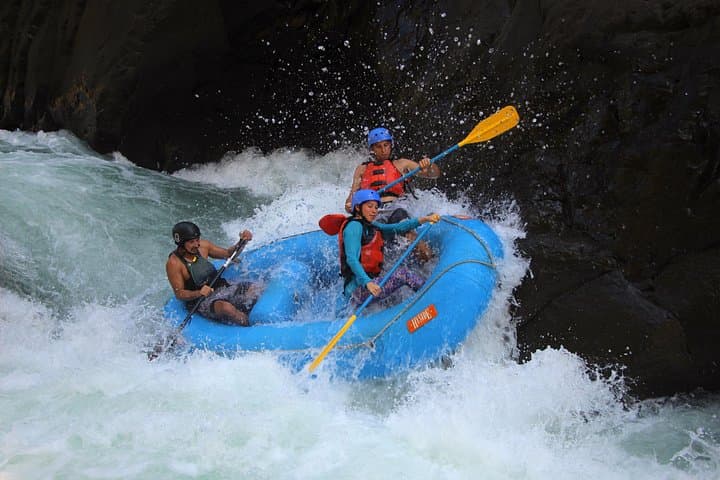
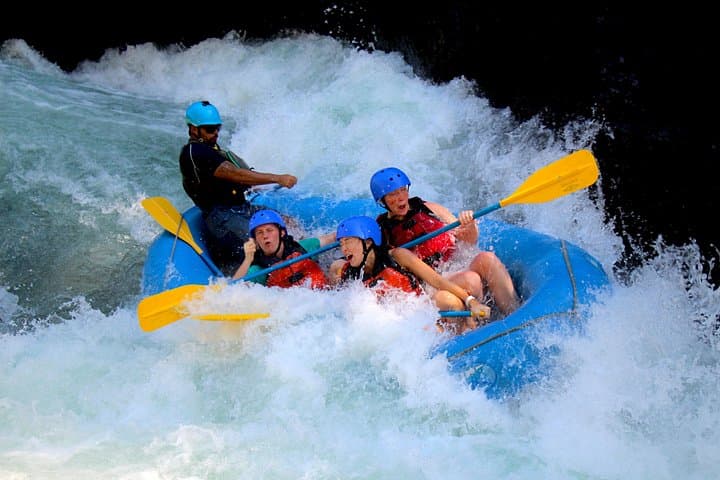
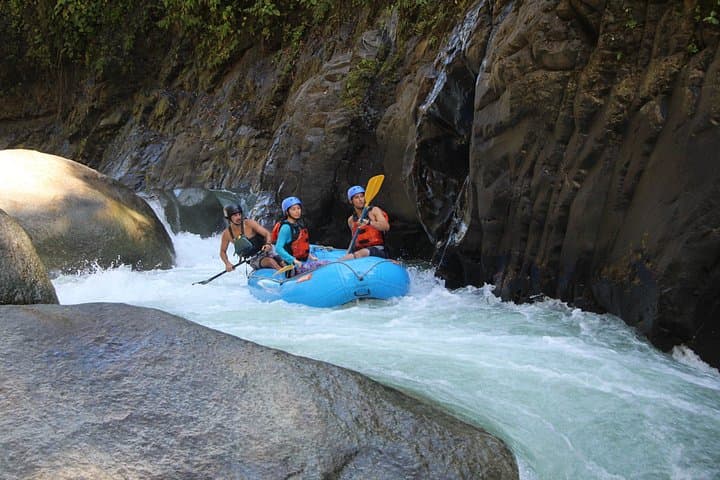
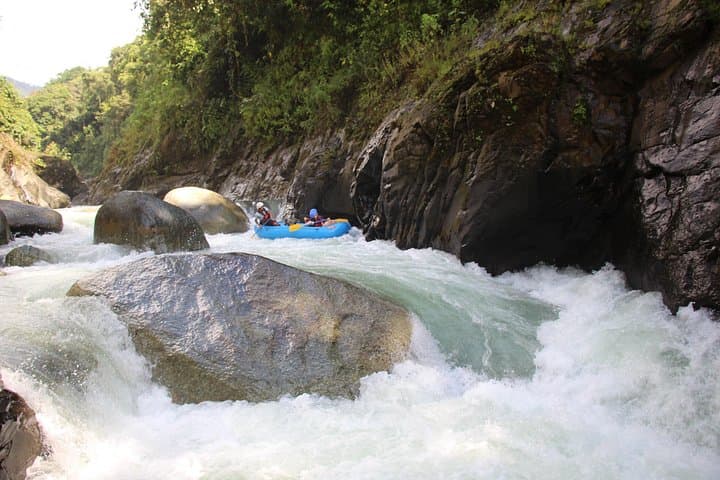
Mist bites your forearms as the raft drops into the first Chorro rapid, water exploding off jagged boulders while the canyon walls close like a challenge. The Naranjo River doesn’t beg for attention — it forces it, carving a narrow channel through volcanic rock and rainforest, sending sheets of spray that dare you to hold on.
Mist bites your forearms as the raft drops into the first Chorro rapid, water exploding off jagged boulders while the canyon walls close like a challenge. The Naranjo River doesn’t beg for attention — it forces it, carving a narrow channel through volcanic rock and rainforest, sending sheets of spray that dare you to hold on.
The river runs on geology as much as gravity: volcanic flows and uplifted bedrock create the steep drops and tight chutes that define the Chorro section. Local communities once used river corridors for transport and small-scale agriculture; modern rafting here is part of Puntarenas’s evolution toward adventure ecotourism, with operators working to keep villages and habitat connected.
Birdsong and monkey calls punctuate the descent; the guides point out limestone shelves, root-tangled banks and a waterfall that threads into the canyon like a seam. Expect technical lines, powerful hydraulics and brief calm pools where the guides reset and you practice strokes — this is not a float, it’s a mission.
Practical side: the full outing is roughly 4.5 hours with about 90 minutes on the water. Operators include safety kayakers, helmets, lifejackets, bilingual guides and lunch; pickups run from Manuel Antonio and Quepos. Bring secure water shoes, sunscreen, a change of clothes and a good level of fitness — strong swimmers and experienced paddlers will get the most from Class IV–V rapids. Follow the guides’ commands, hydrate before launch, and keep your camera with the photographer or in a dry case. When the river quiets, you’ll remember why you answered its call.