
Church Street Heritage Walk: Self-Guided Audio Tour of Historic Tulbagh
Walk Church Street at your own pace with a downloadable audio guide that traces Tulbagh’s Cape Dutch façades, earthquake history, and local museums. Start at the Earthquake Museum and plan 60–75 minutes to complete the route with stops.
An Adventure In Tulbagh.
Walk Church Street at your own pace with a downloadable audio guide that traces Tulbagh’s Cape Dutch façades, earthquake history, and local museums. Start at the Earthquake Museum and plan 60–75 minutes to complete the route with stops.
Read the full experience
On a cool morning the slate roofs of Church Street catch the light and the street seems to watch you as you walk. Stone gutters whisper the history of settlers, and the gabled façades line up like chapters waiting to be read. Start at the Earthquake Museum, slip on headphones, and let Jayson Augustyn-Clark steer you past restored cottages, Victorian shopfronts and quiet garden gates.
On a cool morning the slate roofs of Church Street catch the light and the street seems to watch you as you walk. Stone gutters whisper the history of settlers, and the gabled façades line up like chapters waiting to be read. Start at the Earthquake Museum, slip on headphones, and let Jayson Augustyn-Clark steer you past restored cottages, Victorian shopfronts and quiet garden gates.
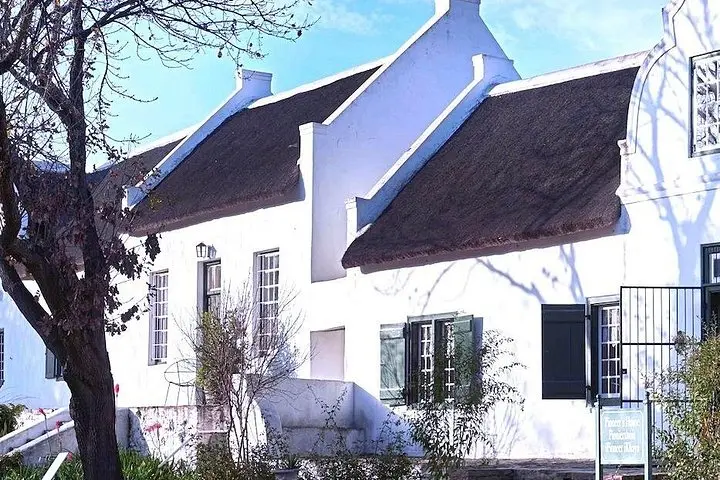
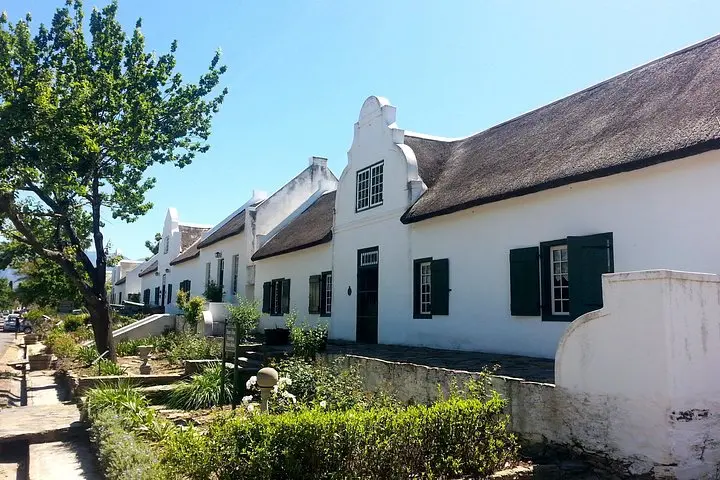
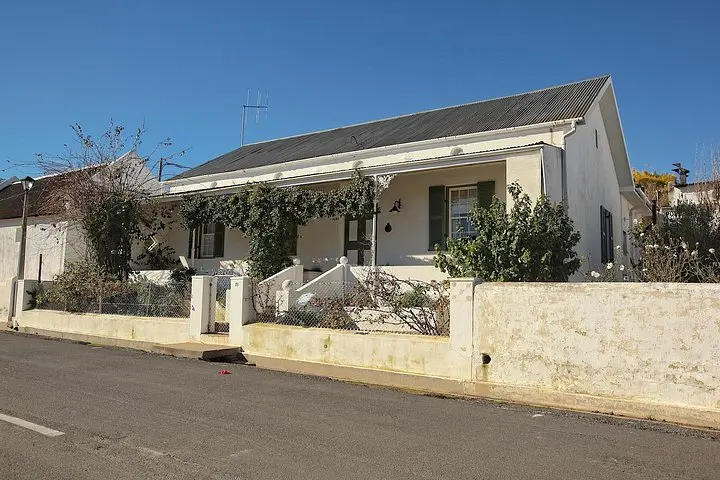
Tulbagh sits at the foot of the Witzenberg range; its soils and tectonic quirks were made plain by the 1969 earthquake that shattered roofs and, paradoxically, set in motion an ambitious conservation program. The rebuilt Church Street is an architectural classroom: Cape Dutch gables, Georgian proportions and later Victorian accretions tell the story of Dutch and British occupation, Afrikaans political currents and local craftspeople who rebuilt with care.
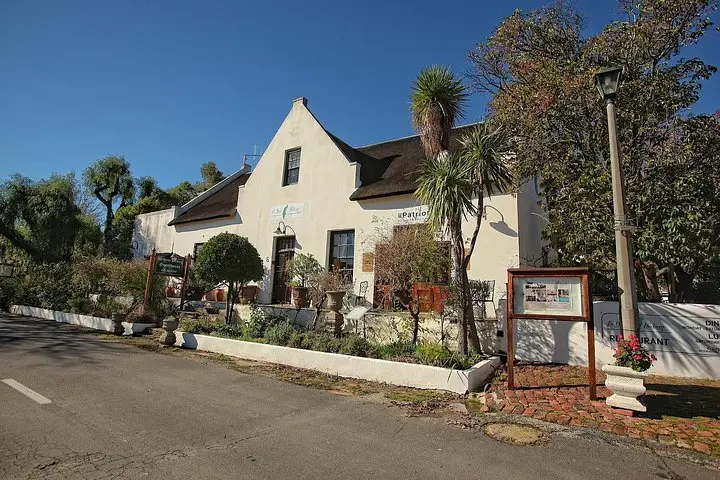
Culturally, the walk stitches museums, churches and private homesteads into a single narrative; geology anchors the town in a narrow valley where mountains still shape weather and vineyards. Pause at the Paddagang or the Kitchen Gardens to feel how public and private spaces cohere here.
Practical guidance: the route is flat and compact—expect 60–75 minutes with stops. Purchase combined museum entry at the Earthquake Museum if you plan to enter all four sites. The audio and maps work offline in the VoiceMap app; bring headphones, a charged phone and comfortable shoes. Midday sun can be strong—carry water and sun protection—and respect garden privacy and posted opening hours as you explore.
Frequently asked questions
The tour starts at the Earthquake Museum on Church Street and typically takes 60–75 minutes depending on stops.
Combined tickets for the four museums are sold at the Earthquake Museum at the start of the tour—buy there if you plan to enter them.
Yes—the tour includes offline audio, maps and geodata via the VoiceMap app so you can use it without mobile data.
Church Street is largely stroller-accessible and the tour is rated physically easy, but some paving can be uneven; check specific museum accessibility on arrival.
About This Experience
VoiceMap Audio Tours operates guided outdoor trips and adventures with an emphasis on safety, stewardship, and memorable experiences.
Adventure tips
Recommended gear
- Smartphone with VoiceMap app: Required to play the self-guided audio and access offline maps and geodata.
- Comfortable walking shoes: Flat, supportive shoes help on uneven paving and cobbled sections.
- Water bottle (refillable): Staying hydrated is important, especially during warm months when shade is limited.
- Earbuds or headphones: Good audio quality improves narration and helps you hear context while walking.
Photos of the experience
Related adventures & guides
Read the full experience
On a cool morning the slate roofs of Church Street catch the light and the street seems to watch you as you walk. Stone gutters whisper the history of settlers, and the gabled façades line up like chapters waiting to be read. Start at the Earthquake Museum, slip on headphones, and let Jayson Augustyn-Clark steer you past restored cottages, Victorian shopfronts and quiet garden gates.
On a cool morning the slate roofs of Church Street catch the light and the street seems to watch you as you walk. Stone gutters whisper the history of settlers, and the gabled façades line up like chapters waiting to be read. Start at the Earthquake Museum, slip on headphones, and let Jayson Augustyn-Clark steer you past restored cottages, Victorian shopfronts and quiet garden gates.
Tulbagh sits at the foot of the Witzenberg range; its soils and tectonic quirks were made plain by the 1969 earthquake that shattered roofs and, paradoxically, set in motion an ambitious conservation program. The rebuilt Church Street is an architectural classroom: Cape Dutch gables, Georgian proportions and later Victorian accretions tell the story of Dutch and British occupation, Afrikaans political currents and local craftspeople who rebuilt with care.
Culturally, the walk stitches museums, churches and private homesteads into a single narrative; geology anchors the town in a narrow valley where mountains still shape weather and vineyards. Pause at the Paddagang or the Kitchen Gardens to feel how public and private spaces cohere here.
Practical guidance: the route is flat and compact—expect 60–75 minutes with stops. Purchase combined museum entry at the Earthquake Museum if you plan to enter all four sites. The audio and maps work offline in the VoiceMap app; bring headphones, a charged phone and comfortable shoes. Midday sun can be strong—carry water and sun protection—and respect garden privacy and posted opening hours as you explore.
Make a day of it nearby.
Verified experiences and guided adventures in the surrounding area.