THE ADVENTURE COLLECTIVE® · Independent discovery and booking for outdoor travel

Cycle the historic Ćiro Trail from Mostar to Dubrovnik over six days: river valleys, karst plains and UNESCO-adjacent sites connect Ottoman bridges, Roman villas and coastal views. This self-guided route blends manageable daily distances with local culture and straightforward navigation.
Cycle the historic Ćiro Trail from Mostar to Dubrovnik over six days: river valleys, karst plains and UNESCO-adjacent sites connect Ottoman bridges, Roman villas and coastal views. This self-guided route blends manageable daily distances with local culture and straightforward navigation.
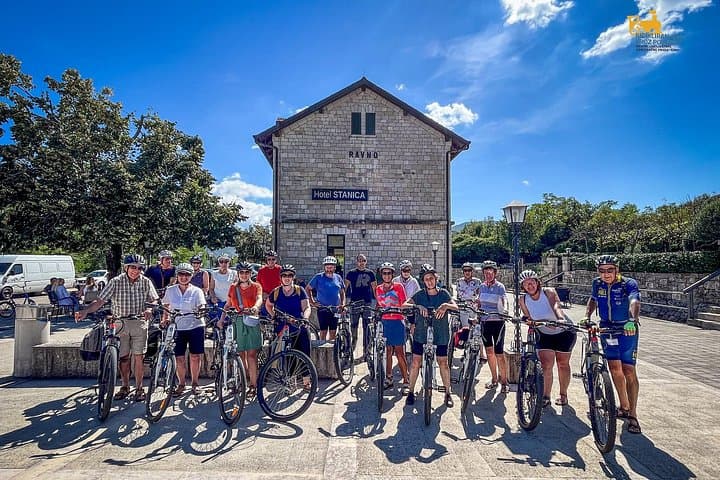
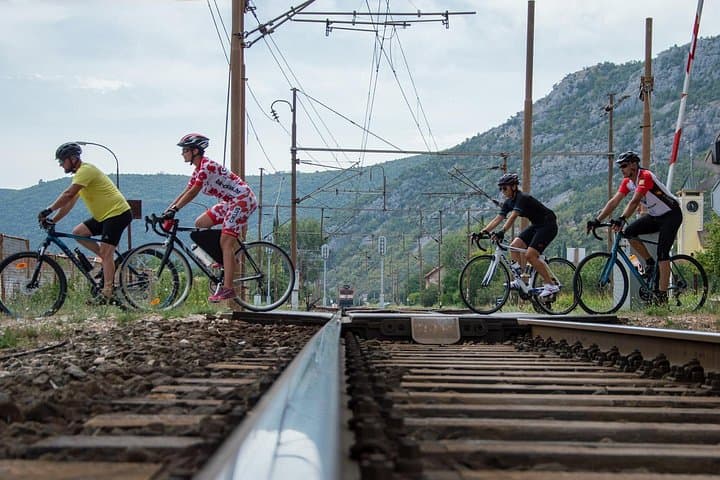
A slate-gray morning at Mostar’s Old Bridge, the Neretva river daring you to follow its green current south, sets the scene for six days of pedal and place. Riders leave Ottoman alleys and stone bridges behind, tracing the old Ćiro railway bed through river valleys, karst fields and villages where steam engines once dictated the tempo.
Verified experiences and guided adventures in the surrounding area.
Operated by Ero Travel · Mostar, Herzegovina-Neretva Canton
A slate-gray morning at Mostar’s Old Bridge, the Neretva river daring you to follow its green current south, sets the scene for six days of pedal and place. Riders leave Ottoman alleys and stone bridges behind, tracing the old Ćiro railway bed through river valleys, karst fields and villages where steam engines once dictated the tempo.
The route threads through Ottoman-era Mostar, Roman ruins at Mogorjelo, the karst sinkholes of Popovo Polje and the wind-carved mouth of Vjetrenica Cave—landforms shaped by limestone, underground rivers and centuries of human passage. Cultural waypoints include Blagaj’s Buna spring and tekke, Tvrdoš Monastery’s ancient cellars, and Trebinje’s preserved steam locomotive that marks the railway’s memory.
Expect mixed surfaces: paved secondary roads, compact gravel on former rail grades, and short stretches of rougher farm tracks. Elevation is steady rather than violent—daily stages run 42–65 km with cumulative climbs up to ~610 m on the hardest day—so pacing and hydration matter more than sprint power. Border formalities are simple but require valid passports; GPX tracks simplify navigation.
Practical guidance: opt for an e‑assist if you’re carrying luggage or want easier climbs; carry a basic repair kit and know how to change a tube. Ride early to avoid midday heat along exposed karst plains, and plan café stops—villages supply hearty food and local wines. The Ćiro Trail rewards steady effort with coastal views, quiet lanes and the curious feel of a landscape where rails once pulled the region together.
Bike rentals are offered (MTB €15/day, E‑bike €30/day) and include helmet, lock and basic repair kit; reserve in advance for e‑bikes.
Daily stages range 42–65 km; beginners with regular riding experience can manage most days, but e‑bikes or luggage transfers ease the load.
Crossings are straightforward with a valid passport and standard visa rules—allow a few extra minutes at the border and carry identification at all times.
The operator provides luggage safeguarding and local transfers on request; check options when booking to avoid carrying heavy bags.
Ero Travel operates guided outdoor trips and adventures with an emphasis on safety, stewardship, and memorable experiences.


A slate-gray morning at Mostar’s Old Bridge, the Neretva river daring you to follow its green current south, sets the scene for six days of pedal and place. Riders leave Ottoman alleys and stone bridges behind, tracing the old Ćiro railway bed through river valleys, karst fields and villages where steam engines once dictated the tempo.
A slate-gray morning at Mostar’s Old Bridge, the Neretva river daring you to follow its green current south, sets the scene for six days of pedal and place. Riders leave Ottoman alleys and stone bridges behind, tracing the old Ćiro railway bed through river valleys, karst fields and villages where steam engines once dictated the tempo.
The route threads through Ottoman-era Mostar, Roman ruins at Mogorjelo, the karst sinkholes of Popovo Polje and the wind-carved mouth of Vjetrenica Cave—landforms shaped by limestone, underground rivers and centuries of human passage. Cultural waypoints include Blagaj’s Buna spring and tekke, Tvrdoš Monastery’s ancient cellars, and Trebinje’s preserved steam locomotive that marks the railway’s memory.
Expect mixed surfaces: paved secondary roads, compact gravel on former rail grades, and short stretches of rougher farm tracks. Elevation is steady rather than violent—daily stages run 42–65 km with cumulative climbs up to ~610 m on the hardest day—so pacing and hydration matter more than sprint power. Border formalities are simple but require valid passports; GPX tracks simplify navigation.
Practical guidance: opt for an e‑assist if you’re carrying luggage or want easier climbs; carry a basic repair kit and know how to change a tube. Ride early to avoid midday heat along exposed karst plains, and plan café stops—villages supply hearty food and local wines. The Ćiro Trail rewards steady effort with coastal views, quiet lanes and the curious feel of a landscape where rails once pulled the region together.