THE ADVENTURE COLLECTIVE® · Independent discovery and booking for outdoor travel

Spend a full day around Mount Patuha visiting Kawah Putih crater, soaking in natural hot springs, trying a mud bath and touring tea plantations. This busy shared-day tour mixes short hikes, scenic viewpoints and hands-on local experiences.
Spend a full day around Mount Patuha visiting Kawah Putih crater, soaking in natural hot springs, trying a mud bath and touring tea plantations. This busy shared-day tour mixes short hikes, scenic viewpoints and hands-on local experiences.
You step off the air-conditioned van into a cool, wind-scoured plain below Mount Patuha; the crater’s sulfur-scented breath tugs at your jacket and the lake gleams an impossible turquoise. The group assembles quickly — this is a full, shared-day circuit through Ciwidey’s volcanic rim, lakeside fields and steaming spas.
Verified experiences and guided adventures in the surrounding area.
Operated by All in Bandung · Ciwidey, West Java
You step off the air-conditioned van into a cool, wind-scoured plain below Mount Patuha; the crater’s sulfur-scented breath tugs at your jacket and the lake gleams an impossible turquoise. The group assembles quickly — this is a full, shared-day circuit through Ciwidey’s volcanic rim, lakeside fields and steaming spas.
Geology here is blunt: Kawah Putih is a shallow crater lake formed by a phreatic eruption on Mount Patuha, its pale waters colored by dissolved sulfur and minerals. The wider landscape is a mosaic of tea terraces planted in the Dutch colonial era, punctuated by peat-fed lakes and hot springs where groundwater meets residual volcanic heat.
Local culture leans agricultural and service-oriented; family-run warungs serve Sundanese lunches, and tea workers trace a daily rhythm through misty rows of Camellia sinensis. You’ll pass a suspension bridge and a cable-car attraction built for sightseers, and end with a restorative dip and mud bath — popular, earthy, and social.
Practical guide: plan for a 9–11 hour day with short hikes (a steep 15–20 minute climb to the crater rim), uneven paths, and steps. Wear closed shoes with grip for crater ash and slick boardwalks, bring swimwear and a towel for the hot springs and mud bath, and pack layers for sudden wind and rain. Hydrate before the hike; those with heart or spinal issues should skip the closer crater approach and the baths. Expect shared facilities and basic local food at lunch.
Timing matters: arrive early to beat crowds at Kawah Putih and to catch calmer steam over the lake. Keep waste with you and follow ranger signs—this landscape recovers slowly when trampled.
The tour runs about 9–11 hours total (including travel time); most departures are early morning with return to Bandung in the late afternoon or early evening.
The walk to the Kawah Putih rim is short (about 15–20 minutes) but can be steep and on loose ash—comfortable shoes and a steady pace make it manageable for most people.
Yes—admission for the hot springs and the communal mud bath is included; bring swimwear and a towel as facilities are basic and shared.
The tour is not recommended for travelers with serious heart or spinal conditions, pregnant travelers, or those sensitive to volcanic gases; consult the operator for specific concerns.
All in Bandung operates guided outdoor trips and adventures with an emphasis on safety, stewardship, and memorable experiences.
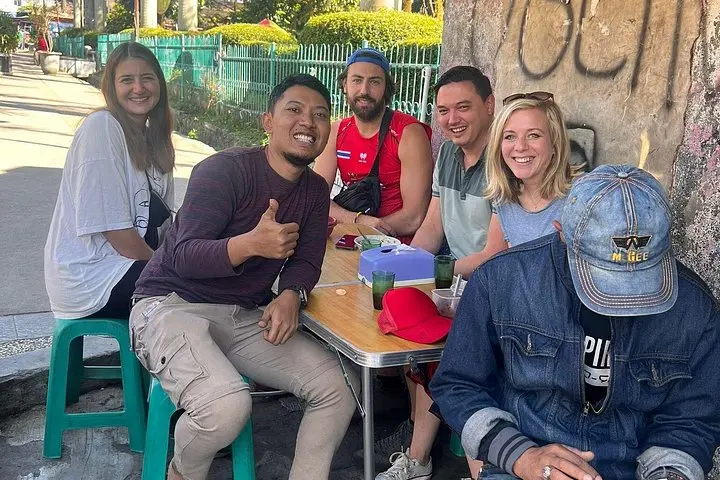
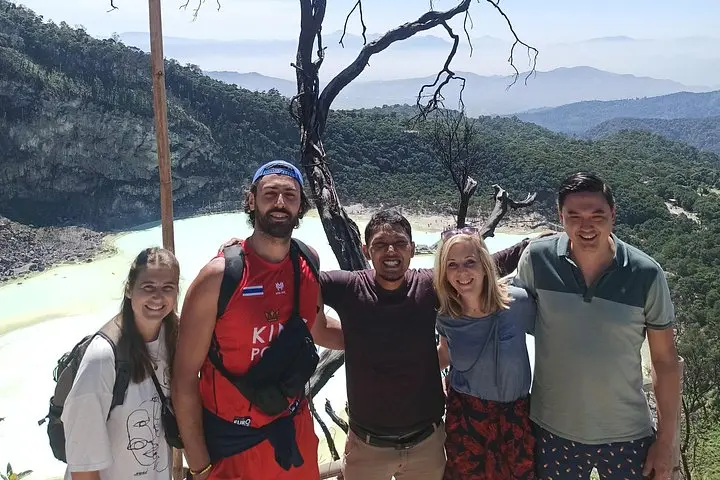
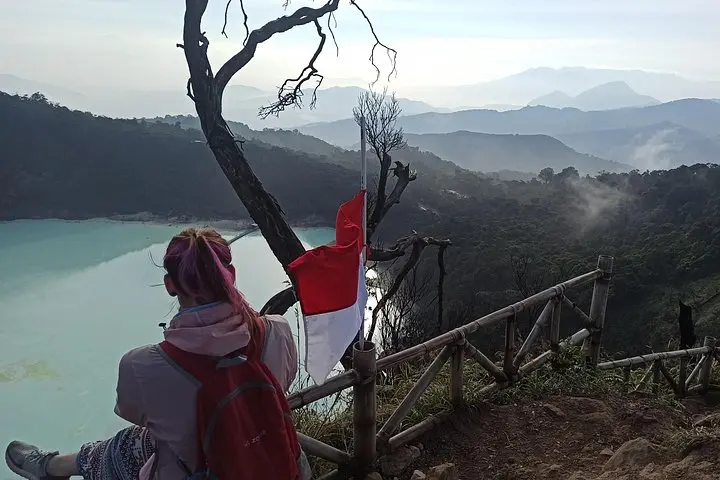
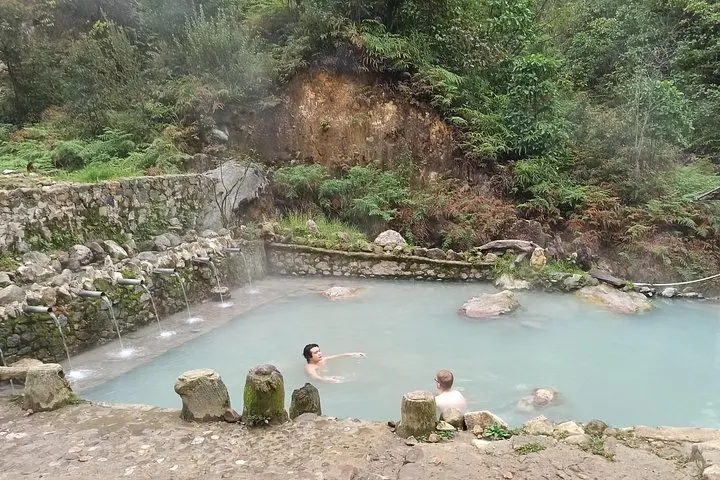
You step off the air-conditioned van into a cool, wind-scoured plain below Mount Patuha; the crater’s sulfur-scented breath tugs at your jacket and the lake gleams an impossible turquoise. The group assembles quickly — this is a full, shared-day circuit through Ciwidey’s volcanic rim, lakeside fields and steaming spas.
You step off the air-conditioned van into a cool, wind-scoured plain below Mount Patuha; the crater’s sulfur-scented breath tugs at your jacket and the lake gleams an impossible turquoise. The group assembles quickly — this is a full, shared-day circuit through Ciwidey’s volcanic rim, lakeside fields and steaming spas.
Geology here is blunt: Kawah Putih is a shallow crater lake formed by a phreatic eruption on Mount Patuha, its pale waters colored by dissolved sulfur and minerals. The wider landscape is a mosaic of tea terraces planted in the Dutch colonial era, punctuated by peat-fed lakes and hot springs where groundwater meets residual volcanic heat.
Local culture leans agricultural and service-oriented; family-run warungs serve Sundanese lunches, and tea workers trace a daily rhythm through misty rows of Camellia sinensis. You’ll pass a suspension bridge and a cable-car attraction built for sightseers, and end with a restorative dip and mud bath — popular, earthy, and social.
Practical guide: plan for a 9–11 hour day with short hikes (a steep 15–20 minute climb to the crater rim), uneven paths, and steps. Wear closed shoes with grip for crater ash and slick boardwalks, bring swimwear and a towel for the hot springs and mud bath, and pack layers for sudden wind and rain. Hydrate before the hike; those with heart or spinal issues should skip the closer crater approach and the baths. Expect shared facilities and basic local food at lunch.
Timing matters: arrive early to beat crowds at Kawah Putih and to catch calmer steam over the lake. Keep waste with you and follow ranger signs—this landscape recovers slowly when trampled.