THE ADVENTURE COLLECTIVE® · Independent discovery and booking for outdoor travel

An 8-day loop through Paro, Thimphu, Punakha and Phobjikha that combines easy daily hikes with visits to Bhutan’s most iconic dzongs and monasteries — including a climb to Tiger’s Nest. Ideal for travelers who want active cultural immersion with minimal driving.
An 8-day loop through Paro, Thimphu, Punakha and Phobjikha that combines easy daily hikes with visits to Bhutan’s most iconic dzongs and monasteries — including a climb to Tiger’s Nest. Ideal for travelers who want active cultural immersion with minimal driving.
You step off the tarmac into a thin, cool air and the Paro valley opens like a folded map — rivers carving silver lines, terraced fields stepping down the slopes, prayer flags snapping at ridgelines. The first drive to Thimphu introduces you to Bhutan’s compact mix of alpine ridges and cultivated lowlands, and each day the landscape shifts: rhododendron forests high on Dochula Pass, rice flats around Punakha, a glacial hollow at Phobjikha where cranes glide in winter.
Verified experiences and guided adventures in the surrounding area.
Operated by Bhutan Travel Club · Thimphu, Thimphu District
You step off the tarmac into a thin, cool air and the Paro valley opens like a folded map — rivers carving silver lines, terraced fields stepping down the slopes, prayer flags snapping at ridgelines. The first drive to Thimphu introduces you to Bhutan’s compact mix of alpine ridges and cultivated lowlands, and each day the landscape shifts: rhododendron forests high on Dochula Pass, rice flats around Punakha, a glacial hollow at Phobjikha where cranes glide in winter.
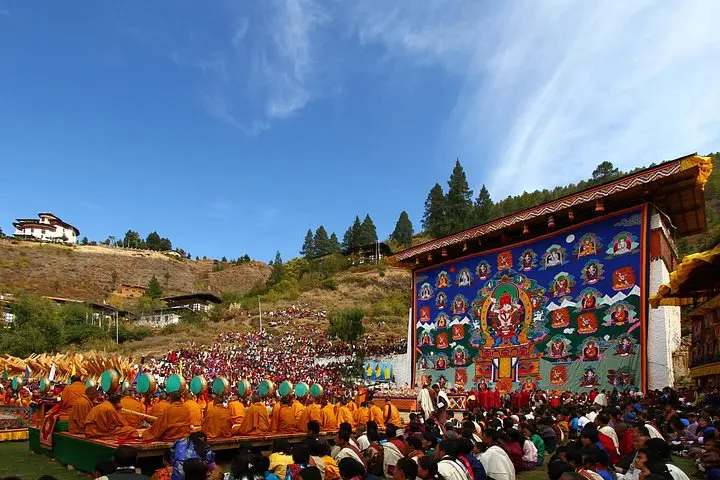
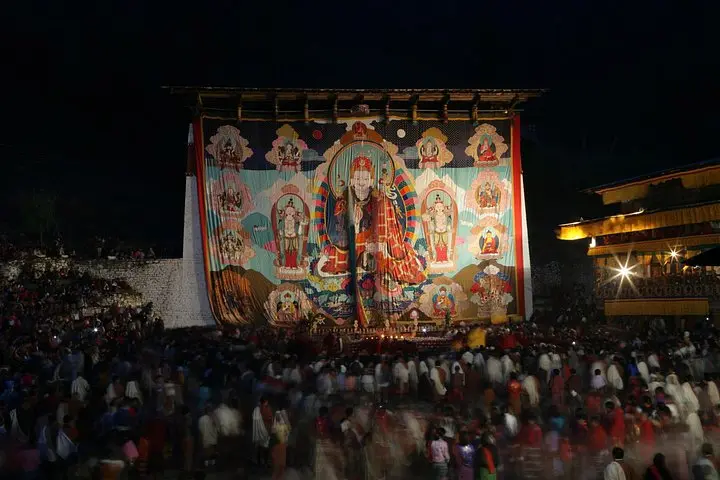
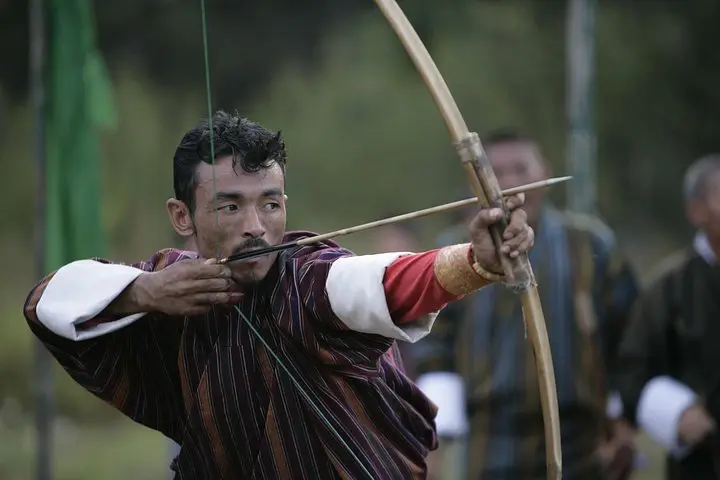
Bhutan’s history is written in whitewashed dzongs, wooden temples and prayer wheels; many sites on this route date to the 7th–17th centuries and illustrate the nation’s unique Vajrayana Buddhist culture. Geologically, you’re in the southern fringe of the Eastern Himalaya — steep, young mountains under rapid erosion that feed the rivers below. Local life remains village-focused: archery on riverbanks, women weaving textiles the old way, monks tending schools at remote gompas.
Practically, this is a culturally rich, low-impact active tour with daily easy-to-moderate walks (6 km in Thimphu, a 2-hour climb at Tiger’s Nest). Expect short drives, altitude changes up to ~3,800 m at higher passes, and scenic stops that reward slow pacing. Carry layered clothing, a sturdy pair of hiking shoes and a small daypack for water and rain protection. Guides manage permits, local access and transfers, so you can focus on the trails, temples and quieter corners where Bhutan’s landscape and people still set the pace.
Yes — all visitors enter Bhutan under a government-authorized tour with permitted fees included by the operator; passports are required for permit processing.
It’s a steep 2–3 hour round-trip climb for most people; the trail is well maintained but involves sustained uphill sections and uneven stone steps.
You may spot birds, Himalayan civet and, in winter at Phobjikha, the endangered black-necked crane; sightings are seasonal and never guaranteed.
Daily elevations vary — Paro and Thimphu sit around 2,200–2,600 m; Dochula Pass reaches ~3,140 m and some viewpoints approach 3,800 m, so plan for mild altitude acclimatization.
Bhutan Travel Club operates guided outdoor trips and adventures with an emphasis on safety, stewardship, and memorable experiences.
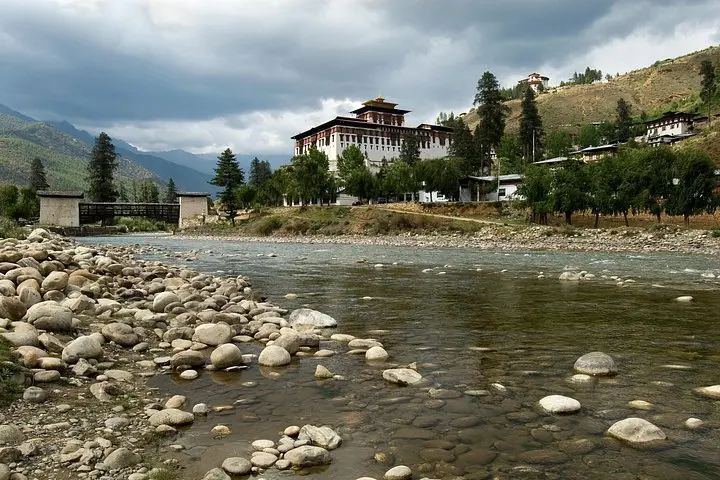
You step off the tarmac into a thin, cool air and the Paro valley opens like a folded map — rivers carving silver lines, terraced fields stepping down the slopes, prayer flags snapping at ridgelines. The first drive to Thimphu introduces you to Bhutan’s compact mix of alpine ridges and cultivated lowlands, and each day the landscape shifts: rhododendron forests high on Dochula Pass, rice flats around Punakha, a glacial hollow at Phobjikha where cranes glide in winter.
You step off the tarmac into a thin, cool air and the Paro valley opens like a folded map — rivers carving silver lines, terraced fields stepping down the slopes, prayer flags snapping at ridgelines. The first drive to Thimphu introduces you to Bhutan’s compact mix of alpine ridges and cultivated lowlands, and each day the landscape shifts: rhododendron forests high on Dochula Pass, rice flats around Punakha, a glacial hollow at Phobjikha where cranes glide in winter.
Bhutan’s history is written in whitewashed dzongs, wooden temples and prayer wheels; many sites on this route date to the 7th–17th centuries and illustrate the nation’s unique Vajrayana Buddhist culture. Geologically, you’re in the southern fringe of the Eastern Himalaya — steep, young mountains under rapid erosion that feed the rivers below. Local life remains village-focused: archery on riverbanks, women weaving textiles the old way, monks tending schools at remote gompas.
Practically, this is a culturally rich, low-impact active tour with daily easy-to-moderate walks (6 km in Thimphu, a 2-hour climb at Tiger’s Nest). Expect short drives, altitude changes up to ~3,800 m at higher passes, and scenic stops that reward slow pacing. Carry layered clothing, a sturdy pair of hiking shoes and a small daypack for water and rain protection. Guides manage permits, local access and transfers, so you can focus on the trails, temples and quieter corners where Bhutan’s landscape and people still set the pace.