THE ADVENTURE COLLECTIVE® · Independent discovery and booking for outdoor travel

See Cancun from a clear-hulled boat as mangrove channels give way to shallow reefs and submerged sculptures. This 75‑minute tour blends wildlife viewing, local geology, and accessible marine interpretation for visitors of all ages.
See Cancun from a clear-hulled boat as mangrove channels give way to shallow reefs and submerged sculptures. This 75‑minute tour blends wildlife viewing, local geology, and accessible marine interpretation for visitors of all ages.
Step aboard a clear-hulled boat and let the water do the talking: the lagoon’s mangroves slide past in bands of muted green, the hotel‑zone skyline recedes, and beneath the transparent floor the Caribbean unspools in aquamarine. The vessel moves quietly out of Nichupté, an expansive mangrove estuary whose shallow channels have sheltered birds, fish and the occasional crocodile for millennia.
Verified experiences and guided adventures in the surrounding area.
Operated by Vuela Viajero · Cancun, Quintana Roo
Step aboard a clear-hulled boat and let the water do the talking: the lagoon’s mangroves slide past in bands of muted green, the hotel‑zone skyline recedes, and beneath the transparent floor the Caribbean unspools in aquamarine. The vessel moves quietly out of Nichupté, an expansive mangrove estuary whose shallow channels have sheltered birds, fish and the occasional crocodile for millennia.
Geology here is Yucatán karst—limestone platforms and shallow reefs created by coral growth and currents that shape sand spits like the Blanquizal. Culturally the corridor between lagoon and sea has shifted from Maya fishing grounds to a planned 1970s resort strip, but traditional fishing and conservation efforts persist; you may spot markers of the nearby Underwater Museum (MUSA), a human-made reef of submerged sculptures placed to divert pressure from living coral.
Expect close-up encounters through the hull: schooling fish, rays gliding below 3–4 meters, and shallow reef life where visibility depends on wind and swell. Guides often point out turtle haul-outs and explain the mangrove’s role as nursery habitat.
Practical note: the outing is short—about 75 minutes—and designed for all fitness levels. Visibility can drop with waves; bring reef‑safe sunscreen, a hat, and sunglasses for comfort and protection. Photography through glass benefits from a polarizer or waiting for calm water. Follow crew safety briefings when moving around the boat and avoid tapping the hull—marine animals react to vibration. This tour is an easy, low‑impact way to read the coastline and marine life of Cancun without getting wet, ideal for families and anyone who prefers observation over snorkeling.
The tour lasts about 75 minutes and is family‑friendly; children and older adults can enjoy the clear views without swimming.
Wildlife sightings are common—sea turtles and rays frequent the shallow reefs—but sightings aren’t guaranteed and depend on season and sea conditions.
This itinerary emphasizes observation from a transparent boat; snorkeling or diving is typically not included—check operator options for dedicated snorkeling excursions.
Wind, swell and recent rain influence turbidity; mornings and calm seas offer the best visibility for viewing reef life and submerged sculptures.
Vuela Viajero operates guided outdoor trips and adventures with an emphasis on safety, stewardship, and memorable experiences.
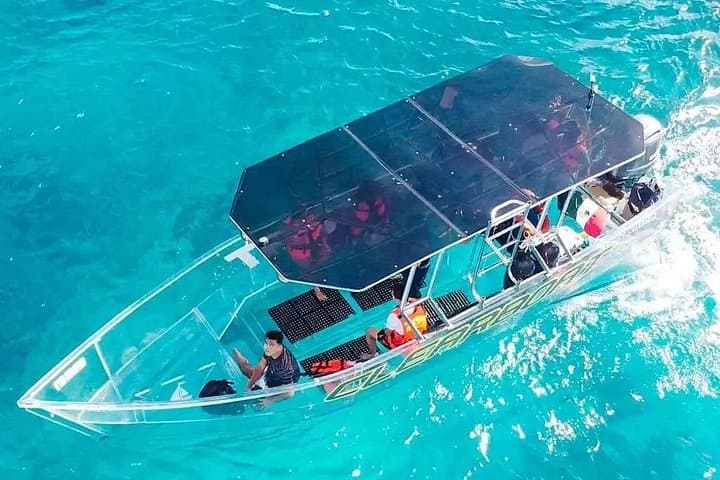


Step aboard a clear-hulled boat and let the water do the talking: the lagoon’s mangroves slide past in bands of muted green, the hotel‑zone skyline recedes, and beneath the transparent floor the Caribbean unspools in aquamarine. The vessel moves quietly out of Nichupté, an expansive mangrove estuary whose shallow channels have sheltered birds, fish and the occasional crocodile for millennia.
Step aboard a clear-hulled boat and let the water do the talking: the lagoon’s mangroves slide past in bands of muted green, the hotel‑zone skyline recedes, and beneath the transparent floor the Caribbean unspools in aquamarine. The vessel moves quietly out of Nichupté, an expansive mangrove estuary whose shallow channels have sheltered birds, fish and the occasional crocodile for millennia.
Geology here is Yucatán karst—limestone platforms and shallow reefs created by coral growth and currents that shape sand spits like the Blanquizal. Culturally the corridor between lagoon and sea has shifted from Maya fishing grounds to a planned 1970s resort strip, but traditional fishing and conservation efforts persist; you may spot markers of the nearby Underwater Museum (MUSA), a human-made reef of submerged sculptures placed to divert pressure from living coral.
Expect close-up encounters through the hull: schooling fish, rays gliding below 3–4 meters, and shallow reef life where visibility depends on wind and swell. Guides often point out turtle haul-outs and explain the mangrove’s role as nursery habitat.
Practical note: the outing is short—about 75 minutes—and designed for all fitness levels. Visibility can drop with waves; bring reef‑safe sunscreen, a hat, and sunglasses for comfort and protection. Photography through glass benefits from a polarizer or waiting for calm water. Follow crew safety briefings when moving around the boat and avoid tapping the hull—marine animals react to vibration. This tour is an easy, low‑impact way to read the coastline and marine life of Cancun without getting wet, ideal for families and anyone who prefers observation over snorkeling.