THE ADVENTURE COLLECTIVE® · Independent discovery and booking for outdoor travel

Glide in a transparent kayak beneath Austin’s skyline and trade the city’s noise for glints of limestone, herons, and downtown reflections. This 2½-hour paddle on Lady Bird Lake mixes easy flatwater paddling with stories of bridges, bats, and springs.
Glide in a transparent kayak beneath Austin’s skyline and trade the city’s noise for glints of limestone, herons, and downtown reflections. This 2½-hour paddle on Lady Bird Lake mixes easy flatwater paddling with stories of bridges, bats, and springs.
You push off from the shore and the city tilts into view: glass towers flicker, a lone heron lifts off the edge of a reed bed, and beneath you the hull of a transparent kayak slices the still water so the lake seems to float beneath your feet. For the next two and a half hours Lady Bird Lake becomes both a corridor through Austin’s urban core and a quiet, watery lens on the city’s natural story.
Verified experiences and guided adventures in the surrounding area.
Operated by Get Up and Go Kayaking - ATX · Austin, Texas
You push off from the shore and the city tilts into view: glass towers flicker, a lone heron lifts off the edge of a reed bed, and beneath you the hull of a transparent kayak slices the still water so the lake seems to float beneath your feet. For the next two and a half hours Lady Bird Lake becomes both a corridor through Austin’s urban core and a quiet, watery lens on the city’s natural story.
Lady Bird Lake is a widened stretch of the Colorado River created by Longhorn Dam in 1960. The lake’s surface reflects Austin’s growth—bridges and bike paths map decades of civic investment—while its shallows reveal older geology: limestone bedrock and springs that feed tributaries like Barton Creek. The tour threads past the Ann and Roy Butler Hike-and-Bike Trail, the steel truss profile of the MoPac Railroad bridge, and the Congress Avenue Bridge, home to North America’s largest urban bat colony each summer. Guides weave local lore with practical notes: how the clear kayak changes sightlines, where spring-fed creeks keep the water cool, and why the sandbar is a reliable place to stop and wade.
The route is flatwater paddling, roughly 4–5 miles total depending on currents and group pace. Expect calm strokes, panoramic skyline views, and a close look at Barton Creek’s mouth where the water runs clearer and cooler—habitat for the endangered Barton Springs Salamander. Guides provide lifejackets, paddles, and dry bags; instruction is geared to beginners but keeps pace with confident paddlers. Nature here is active: gulls skirmish, turtles sun on logs, and the water itself seems to steer you toward the best views.
Practical notes: meet at the large black trailer near the launch; check-in is straightforward and tours run rain or shine unless conditions are hazardous. Wear breathable sun protection, fast-drying layers, and shoes you dont mind getting wet. Bring a water bottle (hands-free hydration is ideal) and a waterproof case for phones—the clear hull is photographic gold, but spray and paddle splashes are real. If you want sunset light and bat emergence, book the evening tour well in advance; daytime trips are quieter for wildlife viewing.
Why take this trip? It’s an accessible, civic-scale paddle that connects you to Austin’s geology, ecology, and urban life without requiring technical skills. For visitors who want a quick but substantive outdoor experience, the transparent kayak is more than a novelty: it changes how you read the city and the river beneath it.
No—guided instruction is provided for beginners and the flatwater conditions make this an easy introduction.
Quick-dry clothing, a sun hat, and water shoes; bring a lightweight wind layer for cooler mornings or evenings.
Yes—lifejackets and safety whistles are supplied and must be worn during the tour.
Yes—use a waterproof case or dry bag; the clear kayak provides unique photo opportunities of both the skyline and under-hull views.
Children are welcome but age/weight restrictions may apply—check booking requirements and consider tandem kayaks for younger paddlers.
Tours may be canceled for lightning, high winds, or unsafe conditions—bookings follow a strict safety policy and rain is tolerable if conditions remain safe.
Get Up and Go Kayaking - ATX operates guided outdoor trips and adventures with an emphasis on safety, stewardship, and memorable experiences.
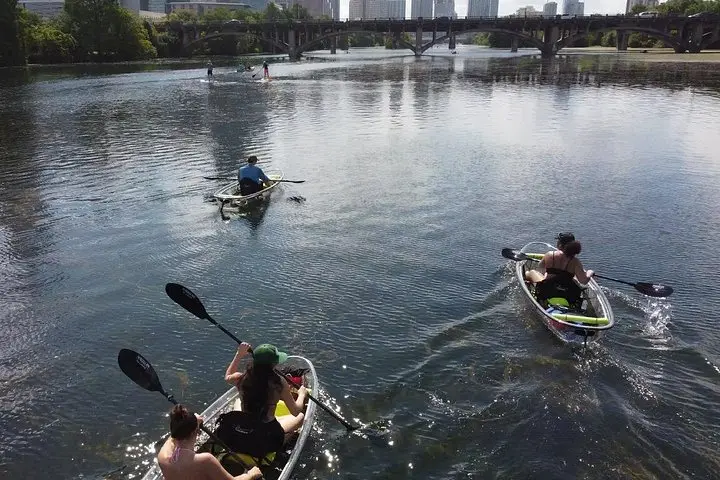
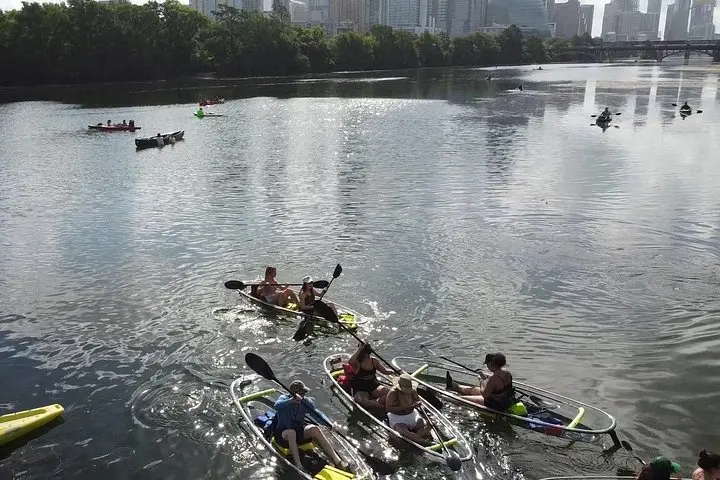
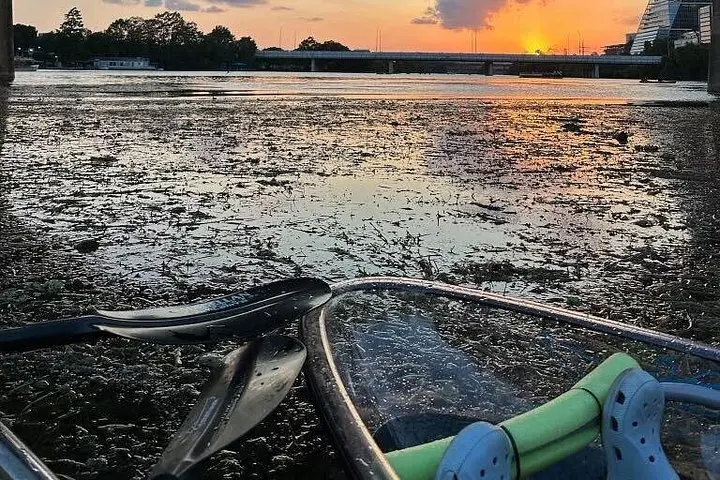
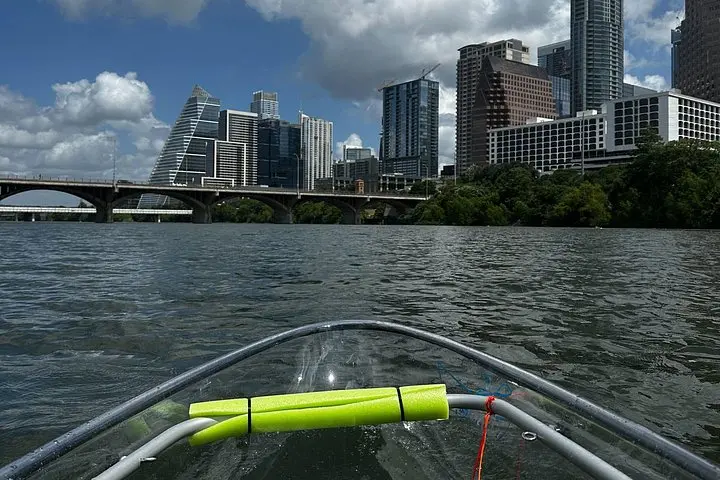
You push off from the shore and the city tilts into view: glass towers flicker, a lone heron lifts off the edge of a reed bed, and beneath you the hull of a transparent kayak slices the still water so the lake seems to float beneath your feet. For the next two and a half hours Lady Bird Lake becomes both a corridor through Austin’s urban core and a quiet, watery lens on the city’s natural story.
You push off from the shore and the city tilts into view: glass towers flicker, a lone heron lifts off the edge of a reed bed, and beneath you the hull of a transparent kayak slices the still water so the lake seems to float beneath your feet. For the next two and a half hours Lady Bird Lake becomes both a corridor through Austin’s urban core and a quiet, watery lens on the city’s natural story.
Lady Bird Lake is a widened stretch of the Colorado River created by Longhorn Dam in 1960. The lake’s surface reflects Austin’s growth—bridges and bike paths map decades of civic investment—while its shallows reveal older geology: limestone bedrock and springs that feed tributaries like Barton Creek. The tour threads past the Ann and Roy Butler Hike-and-Bike Trail, the steel truss profile of the MoPac Railroad bridge, and the Congress Avenue Bridge, home to North America’s largest urban bat colony each summer. Guides weave local lore with practical notes: how the clear kayak changes sightlines, where spring-fed creeks keep the water cool, and why the sandbar is a reliable place to stop and wade.
The route is flatwater paddling, roughly 4–5 miles total depending on currents and group pace. Expect calm strokes, panoramic skyline views, and a close look at Barton Creek’s mouth where the water runs clearer and cooler—habitat for the endangered Barton Springs Salamander. Guides provide lifejackets, paddles, and dry bags; instruction is geared to beginners but keeps pace with confident paddlers. Nature here is active: gulls skirmish, turtles sun on logs, and the water itself seems to steer you toward the best views.
Practical notes: meet at the large black trailer near the launch; check-in is straightforward and tours run rain or shine unless conditions are hazardous. Wear breathable sun protection, fast-drying layers, and shoes you dont mind getting wet. Bring a water bottle (hands-free hydration is ideal) and a waterproof case for phones—the clear hull is photographic gold, but spray and paddle splashes are real. If you want sunset light and bat emergence, book the evening tour well in advance; daytime trips are quieter for wildlife viewing.
Why take this trip? It’s an accessible, civic-scale paddle that connects you to Austin’s geology, ecology, and urban life without requiring technical skills. For visitors who want a quick but substantive outdoor experience, the transparent kayak is more than a novelty: it changes how you read the city and the river beneath it.