THE ADVENTURE COLLECTIVE® · Independent discovery and booking for outdoor travel

Ride quiet roads at the foot of Mount Fuji on a 2.5‑hour winter e‑bike tour from Shin‑Fuji Station. Expect clear mountain vistas, coastal stretches, and spring water stops with local guide insights.
Ride quiet roads at the foot of Mount Fuji on a 2.5‑hour winter e‑bike tour from Shin‑Fuji Station. Expect clear mountain vistas, coastal stretches, and spring water stops with local guide insights.
A low winter sun slants across rice paddies as riders kick off at Shin‑Fuji Station and roll into air so clear Mount Fuji seems to be posing for every frame. The route threads quiet rural roads, a stretch of Suruga Bay coastline and compact villages where household shrines and spring taps angle toward the mountain’s runoff. The e-bike’s assist smooths the climbs; the group moves at a conversational pace, pausing at temple gates and spring water fountains fed directly from Fuji’s aquifer.
Verified experiences and guided adventures in the surrounding area.
Operated by Ninomaru Village · Fuji, Shizuoka
A low winter sun slants across rice paddies as riders kick off at Shin‑Fuji Station and roll into air so clear Mount Fuji seems to be posing for every frame. The route threads quiet rural roads, a stretch of Suruga Bay coastline and compact villages where household shrines and spring taps angle toward the mountain’s runoff. The e-bike’s assist smooths the climbs; the group moves at a conversational pace, pausing at temple gates and spring water fountains fed directly from Fuji’s aquifer.
This area sits on the flanks of an active volcanic massif whose andesitic flows and ash layers shaped fertile plains and deep bays like Suruga. Fuji City has long been a passage between coast and mountain — a working landscape of fishermen, rice farmers and small shrines whose histories are tied to the volcano and its seasonal worship.
Practical guidance is direct: winter brings the best visibility but colder temperatures, so dress in layers, use provided heat packs, and expect short photo stops and a final staircase of about 50 steps at Yumeno Ohashi. The tour is roughly 2½ hours, with mostly paved, low-traffic roads and short urban segments. Guides point out freshwater springs, explain local irrigation and suggest quiet detours if conditions allow.
For planners: arrive early at Shin‑Fuji Station (one hour by Shinkansen from Tokyo), charge devices beforehand, and allow flexibility—the mountain’s appearance depends on the weather. The experience combines lightweight cycling with cultural stops and natural observation suited to travelers who want a grounded, active encounter with Mt. Fuji’s foothills.
Winter gives the best chance due to drier air, but visibility still depends on weather—guides will adjust photo stops when views clear.
No—electric assist makes climbs manageable; basic bike handling and balance for about 2–3 hours is sufficient.
Meet at the south exit of Shin‑Fuji Station, which is about one hour from Tokyo by Shinkansen and easily accessible by public transit.
Helmets are provided and use is required; the operator also supplies heat packs in winter for added comfort.
Ninomaru Village operates guided outdoor trips and adventures with an emphasis on safety, stewardship, and memorable experiences.


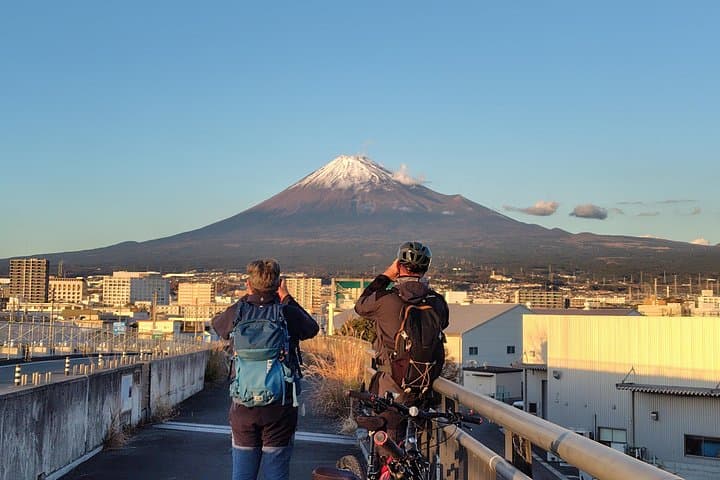
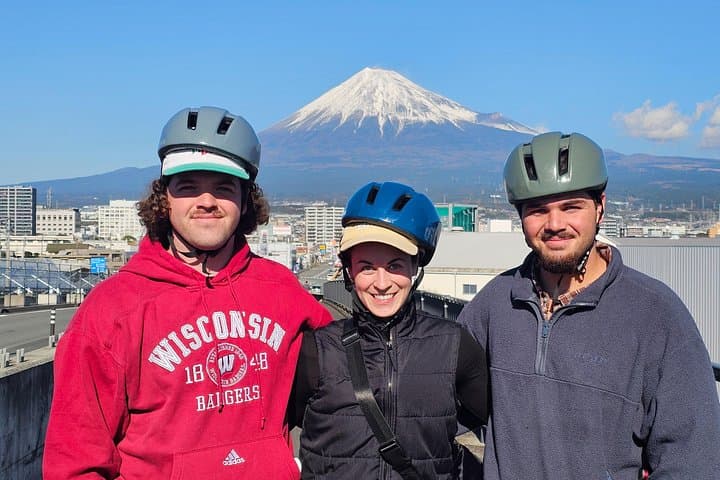
A low winter sun slants across rice paddies as riders kick off at Shin‑Fuji Station and roll into air so clear Mount Fuji seems to be posing for every frame. The route threads quiet rural roads, a stretch of Suruga Bay coastline and compact villages where household shrines and spring taps angle toward the mountain’s runoff. The e-bike’s assist smooths the climbs; the group moves at a conversational pace, pausing at temple gates and spring water fountains fed directly from Fuji’s aquifer.
A low winter sun slants across rice paddies as riders kick off at Shin‑Fuji Station and roll into air so clear Mount Fuji seems to be posing for every frame. The route threads quiet rural roads, a stretch of Suruga Bay coastline and compact villages where household shrines and spring taps angle toward the mountain’s runoff. The e-bike’s assist smooths the climbs; the group moves at a conversational pace, pausing at temple gates and spring water fountains fed directly from Fuji’s aquifer.
This area sits on the flanks of an active volcanic massif whose andesitic flows and ash layers shaped fertile plains and deep bays like Suruga. Fuji City has long been a passage between coast and mountain — a working landscape of fishermen, rice farmers and small shrines whose histories are tied to the volcano and its seasonal worship.
Practical guidance is direct: winter brings the best visibility but colder temperatures, so dress in layers, use provided heat packs, and expect short photo stops and a final staircase of about 50 steps at Yumeno Ohashi. The tour is roughly 2½ hours, with mostly paved, low-traffic roads and short urban segments. Guides point out freshwater springs, explain local irrigation and suggest quiet detours if conditions allow.
For planners: arrive early at Shin‑Fuji Station (one hour by Shinkansen from Tokyo), charge devices beforehand, and allow flexibility—the mountain’s appearance depends on the weather. The experience combines lightweight cycling with cultural stops and natural observation suited to travelers who want a grounded, active encounter with Mt. Fuji’s foothills.