THE ADVENTURE COLLECTIVE® · Independent discovery and booking for outdoor travel

Take a full-day coach tour from Cork to the Cliffs of Moher, combining dramatic coastal scenery, a visit to the Burren and a stop at Bunratty Castle. This itinerary offers an easy way to experience Ireland’s rugged west in one long, scenic day.
Take a full-day coach tour from Cork to the Cliffs of Moher, combining dramatic coastal scenery, a visit to the Burren and a stop at Bunratty Castle. This itinerary offers an easy way to experience Ireland’s rugged west in one long, scenic day.
The coach pulls out of Cork before dawn and the landscape opens like a map unrolling: low hedgerows, patchwork fields, and the occasional stone cottage. By mid-morning the road tightens toward County Clare and the Atlantic begins to claim the horizon, wind sharpening the air and waves below daring you to look down.
Verified experiences and guided adventures in the surrounding area.
Operated by Paddywagon Tours · Liscannor, County Clare
The coach pulls out of Cork before dawn and the landscape opens like a map unrolling: low hedgerows, patchwork fields, and the occasional stone cottage. By mid-morning the road tightens toward County Clare and the Atlantic begins to claim the horizon, wind sharpening the air and waves below daring you to look down.
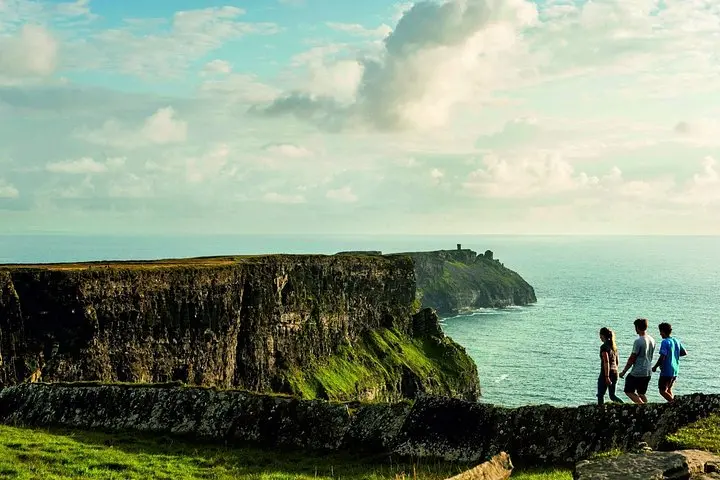
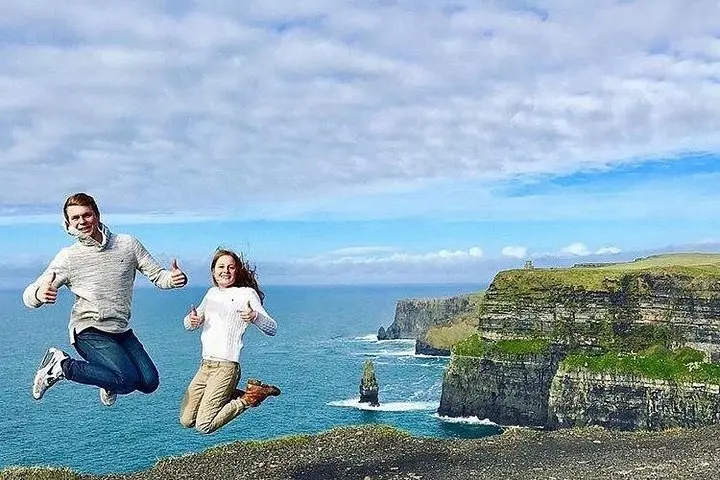
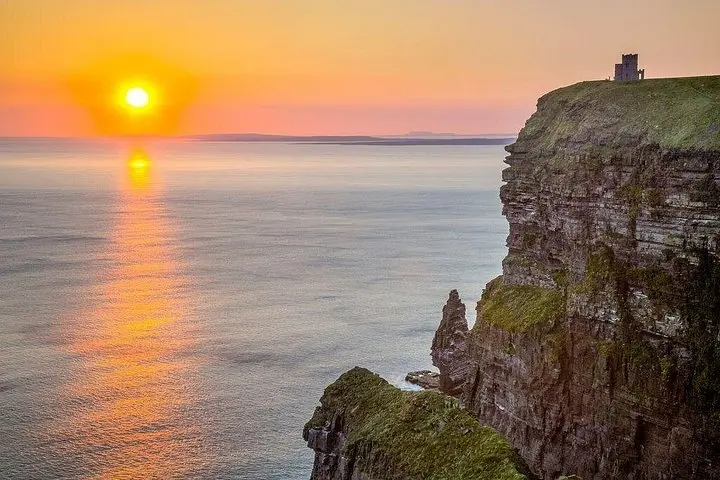
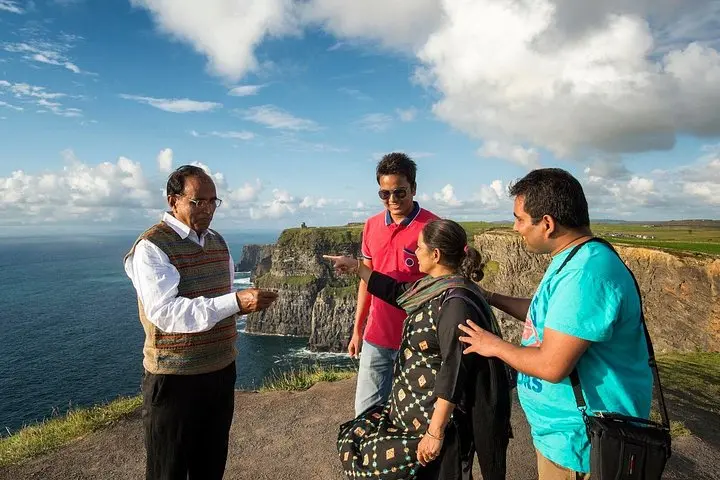
At the Cliffs of Moher the rock rises sheer from the sea—Carboniferous shale and sandstone laid down 300 million years ago and carved by relentless Atlantic winter. The visitor centre at Hag’s Head frames the geology with interactive exhibits; the cliffs themselves host fulmars, razorbills and, in season, colonies of puffins that dot the sea-spray with movement. Nearby, the Burren’s exposed limestone pavements read like an ancient lunar map where rare orchids and dry-stone walls hint at human survival here for millennia.
The tour weaves history and landscape: a drive past Limerick and King John’s Castle, a stop for lunch in Doolin or Liscannor, then a photo pause at medieval Bunratty Castle on the return. It’s an accessible way to see big-country coastlines without a multi-day commitment.
Practical side: expect a 10–11 hour day with about 1–2 hours of walking at the cliffs on mostly paved paths; strong winds can make exposed sections feel much colder. Bring layered weatherproof clothing, sturdy shoes, sun protection for bright days, and cash or card for cafés in small villages. Plan your camera and timing—late afternoon light softens the cliff faces, but mornings are quieter. Respect marked barriers and wildlife—these cliffs are dramatic and fragile.
The tour allows approximately 90 minutes at the visitor centre and cliff walk—enough for a short hike and the Atlantic Edge exhibition.
Yes; the coach tour is family-friendly and the visitor centre is accessible, though exposed cliff edges have steps and uneven sections—strollers and collapsible wheelchairs can be accommodated on the coach.
Yes, admission to the Cliffs of Moher visitor centre is included in the tour price.
Meet at the Bridge Street Tourist Office (next to St Patrick’s Bridge); arrive at least 15 minutes before the scheduled departure.
Paddywagon Tours operates guided outdoor trips and adventures with an emphasis on safety, stewardship, and memorable experiences.
The coach pulls out of Cork before dawn and the landscape opens like a map unrolling: low hedgerows, patchwork fields, and the occasional stone cottage. By mid-morning the road tightens toward County Clare and the Atlantic begins to claim the horizon, wind sharpening the air and waves below daring you to look down.
The coach pulls out of Cork before dawn and the landscape opens like a map unrolling: low hedgerows, patchwork fields, and the occasional stone cottage. By mid-morning the road tightens toward County Clare and the Atlantic begins to claim the horizon, wind sharpening the air and waves below daring you to look down.
At the Cliffs of Moher the rock rises sheer from the sea—Carboniferous shale and sandstone laid down 300 million years ago and carved by relentless Atlantic winter. The visitor centre at Hag’s Head frames the geology with interactive exhibits; the cliffs themselves host fulmars, razorbills and, in season, colonies of puffins that dot the sea-spray with movement. Nearby, the Burren’s exposed limestone pavements read like an ancient lunar map where rare orchids and dry-stone walls hint at human survival here for millennia.
The tour weaves history and landscape: a drive past Limerick and King John’s Castle, a stop for lunch in Doolin or Liscannor, then a photo pause at medieval Bunratty Castle on the return. It’s an accessible way to see big-country coastlines without a multi-day commitment.
Practical side: expect a 10–11 hour day with about 1–2 hours of walking at the cliffs on mostly paved paths; strong winds can make exposed sections feel much colder. Bring layered weatherproof clothing, sturdy shoes, sun protection for bright days, and cash or card for cafés in small villages. Plan your camera and timing—late afternoon light softens the cliff faces, but mornings are quieter. Respect marked barriers and wildlife—these cliffs are dramatic and fragile.