THE ADVENTURE COLLECTIVE® · Independent discovery and booking for outdoor travel

Stand atop El Salvador’s highest point and trade the city’s heat for crisp alpine air. This private ecotour to Cerro El Pital combines forest hikes, panoramic border views and a taste of local mountain culture.
Stand atop El Salvador’s highest point and trade the city’s heat for crisp alpine air. This private ecotour to Cerro El Pital combines forest hikes, panoramic border views and a taste of local mountain culture.
Dawn arrives cold and clean at Cerro El Pital. Mist threads through tall pines and vegetable terraces, and the path hums with insect life and the distant cluck of farm hens. At 2,730 meters the air is noticeably thinner; each step feels like an exchange with the mountain itself.
Verified experiences and guided adventures in the surrounding area.
Operated by Fácil Travel El Salvador · La Palma, Chalatenango
Dawn arrives cold and clean at Cerro El Pital. Mist threads through tall pines and vegetable terraces, and the path hums with insect life and the distant cluck of farm hens. At 2,730 meters the air is noticeably thinner; each step feels like an exchange with the mountain itself.
The ridge that forms El Pital is a geological edge between volcanic highlands and the Central American spine. The massif has long been a seasonal refuge for indigenous farmers and later a strategic border landmark with Honduras; nearby Peñón de Cayaguanca is a rock outcrop whose cracked face has cultural layering from both sides of the divide. Today small cooperatives grow strawberries and vegetables on the slopes, and a handful of family-run restaurants serve the mountain’s simple, hearty fare.
Expect a mix of pine forest, damp understory and open viewpoints. Trails range from packed dirt to rock-and-root sections, with a 5 km forest approach to the campsite between two peaks that channels wind and mist. Hikes described on local itineraries include a border walk toward Honduras, Peña Rajada’s suspension bridge and views over Ocotepeque.
Practical notes: acclimatize to altitude, wear stiff-soled hiking boots for roots and rock, and bring layers—temperatures swing rapidly. Water and a warm midlayer are essential; rain is common in the wet season. The full-day private tour typically runs about 10–12 hours round-trip from San Salvador with vehicle transfer to San Ignacio, a 2-hour drive, then roughly one hour of ascent. Respect local farms, pack out waste, and give wildlife distance—these highlands are fragile and rewarding when treated thoughtfully.
The approach to the campsite is about 5 km through forest; overall activity time on the private tour is typically 10–12 hours including transfers and breaks.
Sections are moderate; beginners with reasonable fitness can join but should be prepared for uneven terrain and altitude effects.
Expect small mammals, birds such as tanagers and hummingbirds, and occasional deer; larger mammals are uncommon and shy.
The tour includes a campground area between peaks; confirm specific gear provisions with the operator as tenting and sleeping kits may be optional.
Fácil Travel El Salvador operates guided outdoor trips and adventures with an emphasis on safety, stewardship, and memorable experiences.
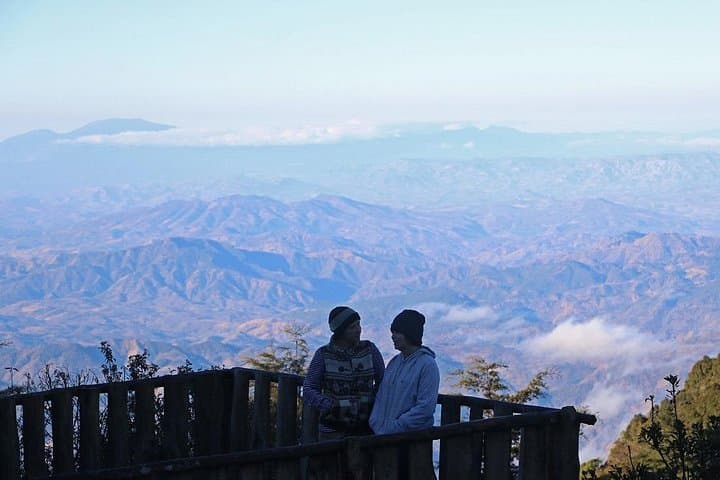


Dawn arrives cold and clean at Cerro El Pital. Mist threads through tall pines and vegetable terraces, and the path hums with insect life and the distant cluck of farm hens. At 2,730 meters the air is noticeably thinner; each step feels like an exchange with the mountain itself.
Dawn arrives cold and clean at Cerro El Pital. Mist threads through tall pines and vegetable terraces, and the path hums with insect life and the distant cluck of farm hens. At 2,730 meters the air is noticeably thinner; each step feels like an exchange with the mountain itself.
The ridge that forms El Pital is a geological edge between volcanic highlands and the Central American spine. The massif has long been a seasonal refuge for indigenous farmers and later a strategic border landmark with Honduras; nearby Peñón de Cayaguanca is a rock outcrop whose cracked face has cultural layering from both sides of the divide. Today small cooperatives grow strawberries and vegetables on the slopes, and a handful of family-run restaurants serve the mountain’s simple, hearty fare.
Expect a mix of pine forest, damp understory and open viewpoints. Trails range from packed dirt to rock-and-root sections, with a 5 km forest approach to the campsite between two peaks that channels wind and mist. Hikes described on local itineraries include a border walk toward Honduras, Peña Rajada’s suspension bridge and views over Ocotepeque.
Practical notes: acclimatize to altitude, wear stiff-soled hiking boots for roots and rock, and bring layers—temperatures swing rapidly. Water and a warm midlayer are essential; rain is common in the wet season. The full-day private tour typically runs about 10–12 hours round-trip from San Salvador with vehicle transfer to San Ignacio, a 2-hour drive, then roughly one hour of ascent. Respect local farms, pack out waste, and give wildlife distance—these highlands are fragile and rewarding when treated thoughtfully.