THE ADVENTURE COLLECTIVE® · Independent discovery and booking for outdoor travel

A two-day guided ascent of Huayna Potosí takes you from the Zongo moraine to a 6,094 m summit with steep ice pitches and a sunrise view over La Paz. Ideal for acclimatized climbers with basic glacier skills.
A two-day guided ascent of Huayna Potosí takes you from the Zongo moraine to a 6,094 m summit with steep ice pitches and a sunrise view over La Paz. Ideal for acclimatized climbers with basic glacier skills.
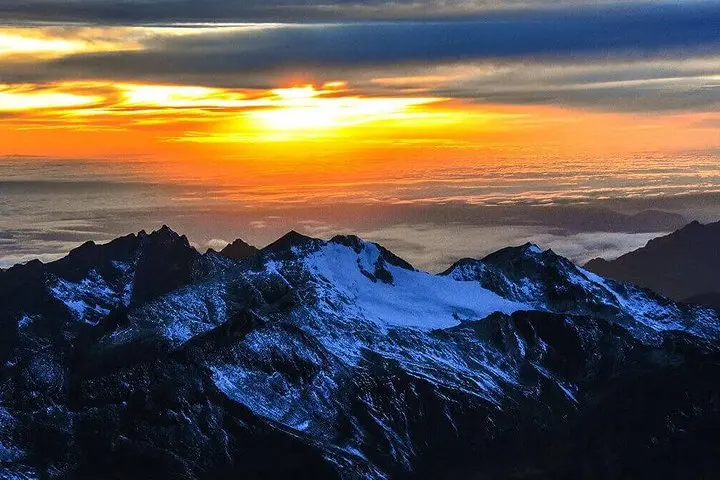
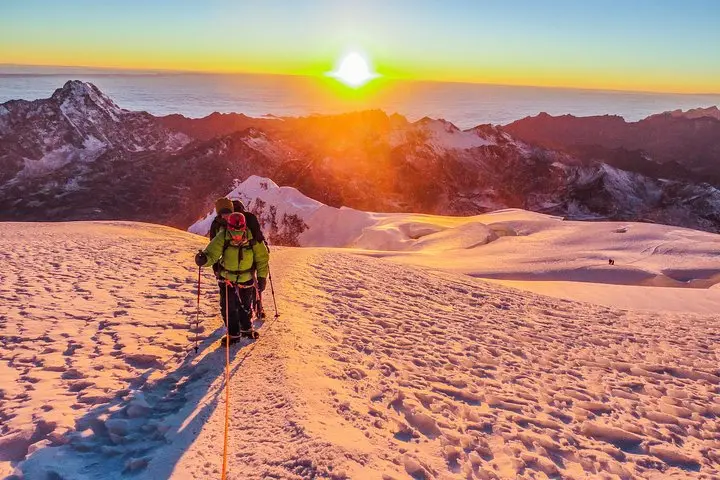
You wake before dawn in the refuge, the sharp cold of the Andean night pushing at the tent walls while stars spin above the ridge. Headlamps pick out a line of harnessed climbers moving across firm snow toward a horizon that will soon blush with sunrise over La Paz and Lake Titicaca.
Verified experiences and guided adventures in the surrounding area.
Operated by Andinist Bolivia · La Paz, La Paz
You wake before dawn in the refuge, the sharp cold of the Andean night pushing at the tent walls while stars spin above the ridge. Headlamps pick out a line of harnessed climbers moving across firm snow toward a horizon that will soon blush with sunrise over La Paz and Lake Titicaca.
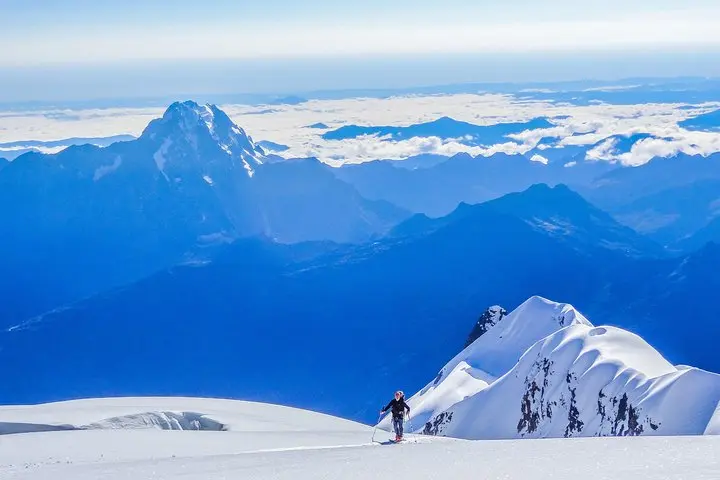
Huayna Potosí (6,094 m) stands as one of the most accessible high-altitude summits in the Cordillera Real. The route follows a moraine out of the Zongo Valley, climbs from Base Camp at ~4,780 m to High Camp at ~5,270 m (≈490 m gain), then a steep boot-and-crampon ascent of roughly 820 m to the north summit. Geologically it’s a glaciated granite massif shaped by repeated glaciations; culturally the mountain sits on land long used by Aymara communities and now serves both local climbers and international visitors.
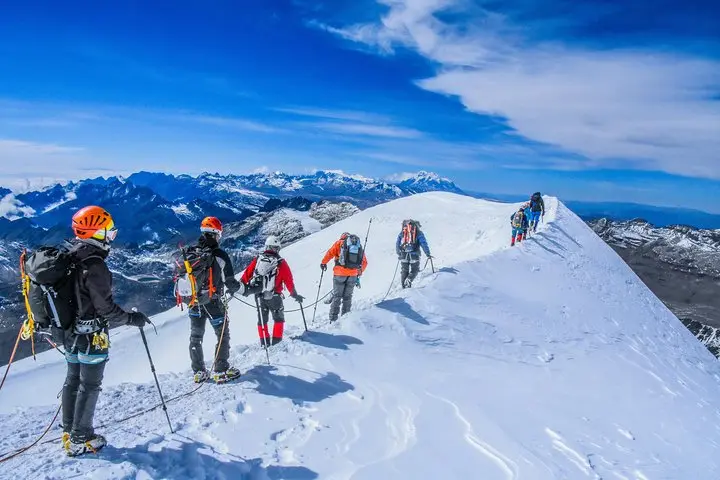
Expect two technical pitches — Pala Chica (≈30 m at ~50°) and the Pala Grande (steeper section to the summit) — where fixed rope, crampons and ice axe work are routine. Weather is the decisive factor: condensed snow and wind can slow progress quickly.
Practical guidance: arrive in La Paz with at least 48–72 hours of acclimatization, hydrate and eat carbohydrate-rich meals, and use layered, windproof clothing. Guided parties supply rope systems, helmets and basic mountaineering kit, but bring well-broken-in mountaineering boots and be prepared for early starts (3:00 a.m.). If you have any cardiovascular concerns, consult a physician — altitude is unforgiving.
Prior experience with crampons, ice axe use, and steep snow is highly recommended; guided groups include instruction but the route is technical at altitude.
Summit success depends on fitness, acclimatization and weather; guide-run success rates vary but unfavorable weather or insufficient acclimatization can force turnaround.
Consult a physician about altitude; bring medication for altitude headaches, and inform guides of any cardiovascular or spinal issues—this climb is not recommended for those conditions.
Guides typically provide refuge accommodation, dinner, breakfast, lunch, helmets, harnesses, ropes and basic technical kit—bring personal clothing, boots and smaller personal items.
Andinist Bolivia operates guided outdoor trips and adventures with an emphasis on safety, stewardship, and memorable experiences.
You wake before dawn in the refuge, the sharp cold of the Andean night pushing at the tent walls while stars spin above the ridge. Headlamps pick out a line of harnessed climbers moving across firm snow toward a horizon that will soon blush with sunrise over La Paz and Lake Titicaca.
You wake before dawn in the refuge, the sharp cold of the Andean night pushing at the tent walls while stars spin above the ridge. Headlamps pick out a line of harnessed climbers moving across firm snow toward a horizon that will soon blush with sunrise over La Paz and Lake Titicaca.
Huayna Potosí (6,094 m) stands as one of the most accessible high-altitude summits in the Cordillera Real. The route follows a moraine out of the Zongo Valley, climbs from Base Camp at ~4,780 m to High Camp at ~5,270 m (≈490 m gain), then a steep boot-and-crampon ascent of roughly 820 m to the north summit. Geologically it’s a glaciated granite massif shaped by repeated glaciations; culturally the mountain sits on land long used by Aymara communities and now serves both local climbers and international visitors.
Expect two technical pitches — Pala Chica (≈30 m at ~50°) and the Pala Grande (steeper section to the summit) — where fixed rope, crampons and ice axe work are routine. Weather is the decisive factor: condensed snow and wind can slow progress quickly.
Practical guidance: arrive in La Paz with at least 48–72 hours of acclimatization, hydrate and eat carbohydrate-rich meals, and use layered, windproof clothing. Guided parties supply rope systems, helmets and basic mountaineering kit, but bring well-broken-in mountaineering boots and be prepared for early starts (3:00 a.m.). If you have any cardiovascular concerns, consult a physician — altitude is unforgiving.