THE ADVENTURE COLLECTIVE® · Independent discovery and booking for outdoor travel

Set off from Moshi and move through rainforest, moorland and a volcanic saddle to stand on Uhuru Peak. This six‑day Marangu Route guide blends sensory detail and practical advice to help you plan the climb and improve your summit chances.
Set off from Moshi and move through rainforest, moorland and a volcanic saddle to stand on Uhuru Peak. This six‑day Marangu Route guide blends sensory detail and practical advice to help you plan the climb and improve your summit chances.
On a cool pre-dawn outside Moshi, headlamps blink like a string of fireflies as guides and porters tighten pack straps and sort oxygen masks and thermoses. The Marangu Route begins below a humid canopy where mist clings to giant ferns and the trail smells of wet earth. By midday the forest opens to lobelia-strewn moorland and, by the summit push, a lunar saddle of volcanic rock and wind—Kibo’s glaciers daring you to keep moving.
Verified experiences and guided adventures in the surrounding area.
Operated by Furaha Adventures · Moshi, Kilimanjaro Region
On a cool pre-dawn outside Moshi, headlamps blink like a string of fireflies as guides and porters tighten pack straps and sort oxygen masks and thermoses. The Marangu Route begins below a humid canopy where mist clings to giant ferns and the trail smells of wet earth. By midday the forest opens to lobelia-strewn moorland and, by the summit push, a lunar saddle of volcanic rock and wind—Kibo’s glaciers daring you to keep moving.
The Marangu Route, often called the Coca‑Cola Route, is the oldest established trail up Kilimanjaro. It follows a gradual, well-worn spine used since early European explorations; Hans Meyer and Ludwig Purtscheller made the first recorded ascent in 1889. Geologically, Kilimanjaro is a three‑peak volcanic massif: Shira, Mawenzi and Kibo. The climb rides their weather zones—rainforest, heath and moorland, alpine desert and finally the glaciated summit, where the air thins and the last remnants of ice press sunlight into sharp contrast.
Local Chagga communities outside Moshi have long been active on the mountain as guides, cooks and porters, and their knowledge shapes the climb from trail etiquette to early‑morning tea rituals. Conservation measures are strict: park fees fund trail maintenance and porter welfare initiatives, and the route’s popularity has pushed operators to limit waste and encourage Leave No Trace practices.
Practical planning defines success here. The itinerary runs six days with hut accommodation at Mandara, Horombo and Kibo—allowing for an extra acclimatization day at Horombo to increase summit odds. Expect daily mileage in the 5–13 km range but pay attention to elevation change: you’ll gain roughly 1,800–2,200 meters between lower gate and Uhuru Peak. The true difficulty is altitude, not technical terrain; crampons are rarely needed on Marangu but gaiters, insulated layers and trekking poles are essential.
Timing matters: start the summit push between midnight and 2 a.m. for a sunrise that turns the glacier rim gold, and pace the ascent—short steps, steady breathing, experience the mountain rather than race it. Hydrate constantly with purified water provided on the trek and carry electrolytes; acclimatize with the optional day at Horombo and monitor symptoms of acute mountain sickness.
Logistics are straightforward: transfers from Moshi (roughly 45 minutes) and permits are handled by most operators. Tip staff at the end of the descent where the crew is presented with a small, heartfelt ceremony: it’s customary and helps sustain livelihoods. Finally, prepare for dramatic weather swings—warm afternoons in the forest, bone‑cold summit nights—so layer deliberately and protect electronics from condensation. Kilimanjaro rewards measured effort: the summit is less a single triumph than the sum of steady, intentional days on the trail.
June–October and late December–February are the drier months with more stable summit windows; avoid the long rains (March–May) if possible.
Most operators include park fees and permits in the package—confirm before booking and carry ID for permit checks.
No technical gear is required on the Marangu Route; the climb is a demanding hike, not a technical ascent.
Marangu traditionally offers hut accommodation at Mandara, Horombo and Kibo Huts; confirm with your operator whether tents or huts are provided.
AMS is common; prevention includes slow ascent, extra rest days, hydration, and awareness—guides can administer oxygen and advise descent if symptoms worsen.
Tipping varies; a common guideline is US$150–200 per climber divided among guides, cooks and porters for a 6‑day climb—adjust for service and group size.
Furaha Adventures operates guided outdoor trips and adventures with an emphasis on safety, stewardship, and memorable experiences.

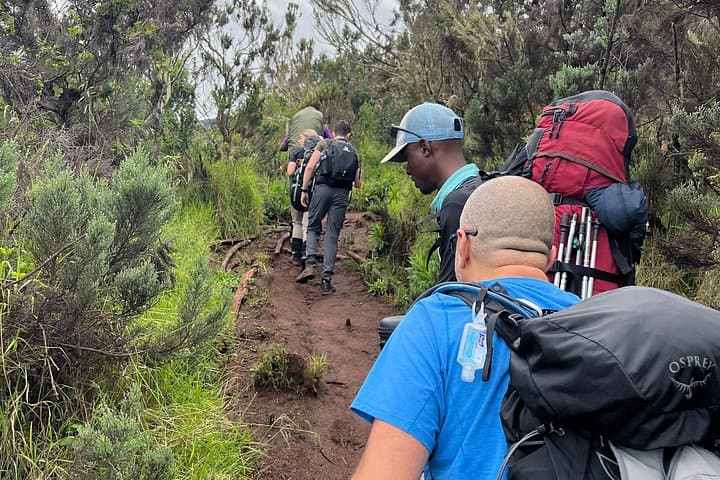
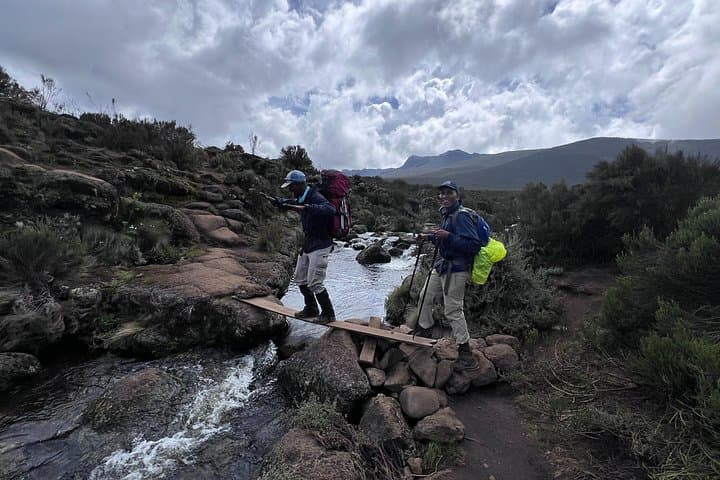

On a cool pre-dawn outside Moshi, headlamps blink like a string of fireflies as guides and porters tighten pack straps and sort oxygen masks and thermoses. The Marangu Route begins below a humid canopy where mist clings to giant ferns and the trail smells of wet earth. By midday the forest opens to lobelia-strewn moorland and, by the summit push, a lunar saddle of volcanic rock and wind—Kibo’s glaciers daring you to keep moving.
On a cool pre-dawn outside Moshi, headlamps blink like a string of fireflies as guides and porters tighten pack straps and sort oxygen masks and thermoses. The Marangu Route begins below a humid canopy where mist clings to giant ferns and the trail smells of wet earth. By midday the forest opens to lobelia-strewn moorland and, by the summit push, a lunar saddle of volcanic rock and wind—Kibo’s glaciers daring you to keep moving.
The Marangu Route, often called the Coca‑Cola Route, is the oldest established trail up Kilimanjaro. It follows a gradual, well-worn spine used since early European explorations; Hans Meyer and Ludwig Purtscheller made the first recorded ascent in 1889. Geologically, Kilimanjaro is a three‑peak volcanic massif: Shira, Mawenzi and Kibo. The climb rides their weather zones—rainforest, heath and moorland, alpine desert and finally the glaciated summit, where the air thins and the last remnants of ice press sunlight into sharp contrast.
Local Chagga communities outside Moshi have long been active on the mountain as guides, cooks and porters, and their knowledge shapes the climb from trail etiquette to early‑morning tea rituals. Conservation measures are strict: park fees fund trail maintenance and porter welfare initiatives, and the route’s popularity has pushed operators to limit waste and encourage Leave No Trace practices.
Practical planning defines success here. The itinerary runs six days with hut accommodation at Mandara, Horombo and Kibo—allowing for an extra acclimatization day at Horombo to increase summit odds. Expect daily mileage in the 5–13 km range but pay attention to elevation change: you’ll gain roughly 1,800–2,200 meters between lower gate and Uhuru Peak. The true difficulty is altitude, not technical terrain; crampons are rarely needed on Marangu but gaiters, insulated layers and trekking poles are essential.
Timing matters: start the summit push between midnight and 2 a.m. for a sunrise that turns the glacier rim gold, and pace the ascent—short steps, steady breathing, experience the mountain rather than race it. Hydrate constantly with purified water provided on the trek and carry electrolytes; acclimatize with the optional day at Horombo and monitor symptoms of acute mountain sickness.
Logistics are straightforward: transfers from Moshi (roughly 45 minutes) and permits are handled by most operators. Tip staff at the end of the descent where the crew is presented with a small, heartfelt ceremony: it’s customary and helps sustain livelihoods. Finally, prepare for dramatic weather swings—warm afternoons in the forest, bone‑cold summit nights—so layer deliberately and protect electronics from condensation. Kilimanjaro rewards measured effort: the summit is less a single triumph than the sum of steady, intentional days on the trail.