THE ADVENTURE COLLECTIVE® · Independent discovery and booking for outdoor travel

Move steadily from rainforest to alpine desert on the classic Marangu route, where dormitory huts and a straightforward line to Uhuru Peak make a 5‑day summit possible. This guide explains what to expect each day, how to prepare for altitude, and the practical kit you’ll need.
Move steadily from rainforest to alpine desert on the classic Marangu route, where dormitory huts and a straightforward line to Uhuru Peak make a 5‑day summit possible. This guide explains what to expect each day, how to prepare for altitude, and the practical kit you’ll need.
A cold, star-heavy sky presses down as a headlamp bobbing through the saddle becomes the only steady light. The group moves in a slow, methodical cadence—one foot, breathe, one foot—while Kibo's dark silhouette waits above. That midnight climb from Kibo Hut toward Gillman's Point is the spine of the Marangu route: straightforward, brutally honest, and framed by the shifting life zones of Africa’s tallest mountain.
Verified experiences and guided adventures in the surrounding area.
Operated by Exceed Expectations Tours & Safari · Moshi, Kilimanjaro Region
A cold, star-heavy sky presses down as a headlamp bobbing through the saddle becomes the only steady light. The group moves in a slow, methodical cadence—one foot, breathe, one foot—while Kibo's dark silhouette waits above. That midnight climb from Kibo Hut toward Gillman's Point is the spine of the Marangu route: straightforward, brutally honest, and framed by the shifting life zones of Africa’s tallest mountain.
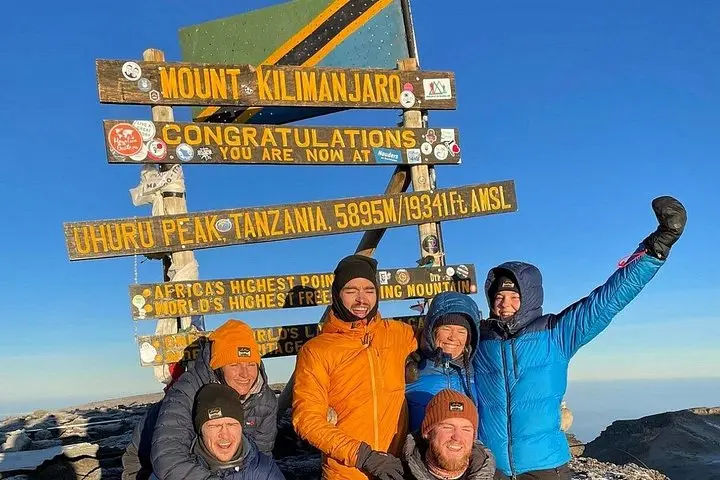
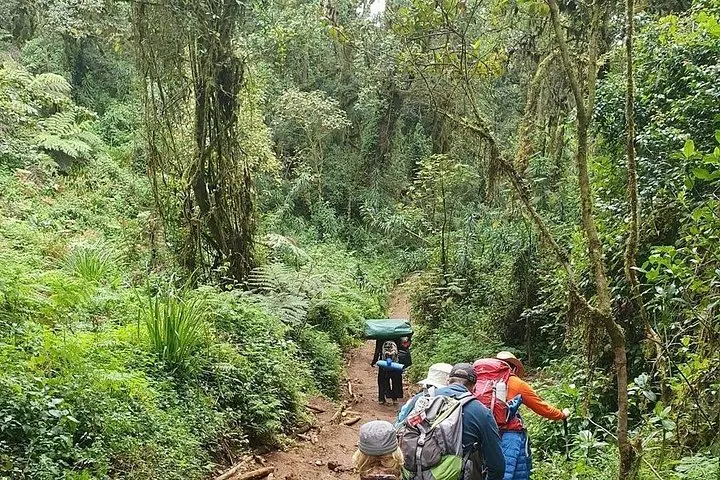
The Marangu route, often called the "Coca‑Cola" route for its relative accessibility and hut accommodations, begins at Marangu Gate (≈1,860 m) and slices through dense rainforest before rising into heath, moorland, and the high alpine desert. Over five days you gain roughly 4,035 m to reach Uhuru Peak at 5,895 m, then descend back along the same trail. Geologically Kilimanjaro is a stratovolcano composed of three cones—Kibo, Mawenzi, and Shira—with Kibo’s crater rim offering that defining high‑altitude panorama at sunrise.
Along the lower forested pitches, keep an eye out for colobus and blue monkeys and the chatter of birdlife. Above 3,700 m the vegetation thins to lobelia and giant groundsels, plants adapted to daily freeze–thaw cycles. The Chaga people of the slopes have long managed coffee farms and orchards that feed Moshi, the town most travelers use as basecamp; culturally the mountain blends local livelihoods with a colonial exploration history—Hans Meyer reached the crater rim in the late 19th century, and modern conservation efforts run through the national park’s fee structure.
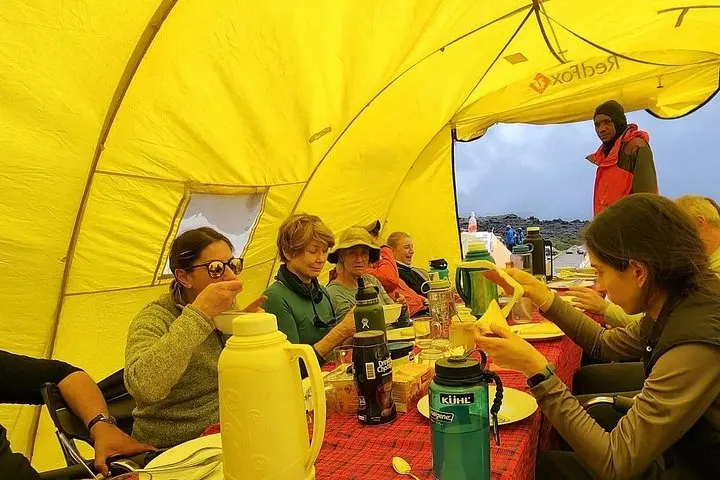
Practical guide: the standard itinerary moves you Mandara Hut (2,700 m) to Horombo Hut (3,700 m), then to Kibo Hut (≈4,700 m), a midnight summit push, and a descent back to Marangu Gate. Expect 4–8 hours of trekking on most days, with the summit day stretching to 14–16 hours including ascent and descent. Dormitory huts mean shared sleeping space and basic amenities—bring a good sleeping liner. Acclimatization matters: success rates rise sharply with an extra night on the mountain; if possible extend to 6 or 7 days.
Gear and pacing: waterproof layers, a warm insulated jacket, a sturdy pair of trekking boots broken in beforehand, and trekking poles for the long descents are non-negotiable. Hydrate and eat consistently—altitude robs appetite and energy. The summit is a pre-dawn slog—headlamp, layered gloves, and a lightweight down shell make the difference at the crater rim.
Permits and logistics: Kilimanjaro National Park permits are required, park fees contribute to conservation and local communities, and guides and porters are mandatory. Plan your arrival into Moshi at least 24–48 hours before the trek to resolve logistics and rest. Done with respect and realistic expectations, the Marangu route is a direct, social route to one of the world’s great summits.
It’s often called the easiest due to gentler grades and hut accommodation, but altitude still makes it challenging; success improves with an extra acclimatization day.
No technical equipment is required—the route is a non‑technical trek, though warm clothing and a headlamp for the summit night are essential.
A 5‑day schedule has a lower summit success rate because of limited acclimatization; adding a day increases success and safety.
The Marangu route uses dormitory‑style mountain huts with basic bunks, communal dining, and simple facilities—bring a sleeping liner and personal items.
The most reliable weather windows are January–February and June–October; September often offers a balance of clear skies and fewer crowds.
Yes, Kilimanjaro National Park requires permits that fund conservation, and climbs must be led by licensed guides with support staff (porters and cooks).
Exceed Expectations Tours & Safari operates guided outdoor trips and adventures with an emphasis on safety, stewardship, and memorable experiences.
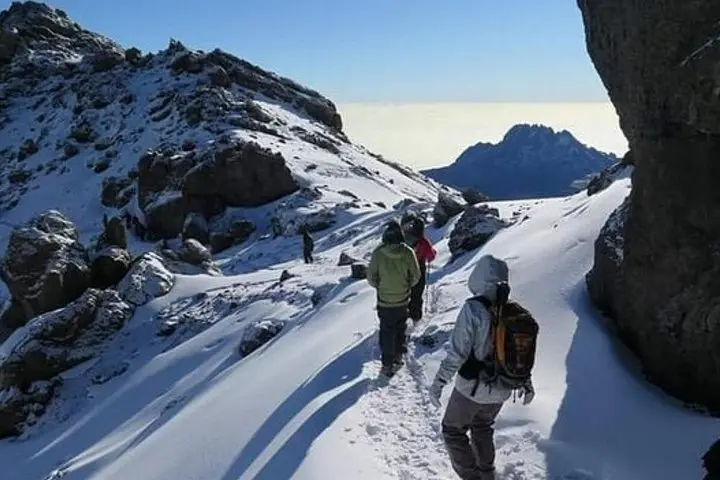
A cold, star-heavy sky presses down as a headlamp bobbing through the saddle becomes the only steady light. The group moves in a slow, methodical cadence—one foot, breathe, one foot—while Kibo's dark silhouette waits above. That midnight climb from Kibo Hut toward Gillman's Point is the spine of the Marangu route: straightforward, brutally honest, and framed by the shifting life zones of Africa’s tallest mountain.
A cold, star-heavy sky presses down as a headlamp bobbing through the saddle becomes the only steady light. The group moves in a slow, methodical cadence—one foot, breathe, one foot—while Kibo's dark silhouette waits above. That midnight climb from Kibo Hut toward Gillman's Point is the spine of the Marangu route: straightforward, brutally honest, and framed by the shifting life zones of Africa’s tallest mountain.
The Marangu route, often called the "Coca‑Cola" route for its relative accessibility and hut accommodations, begins at Marangu Gate (≈1,860 m) and slices through dense rainforest before rising into heath, moorland, and the high alpine desert. Over five days you gain roughly 4,035 m to reach Uhuru Peak at 5,895 m, then descend back along the same trail. Geologically Kilimanjaro is a stratovolcano composed of three cones—Kibo, Mawenzi, and Shira—with Kibo’s crater rim offering that defining high‑altitude panorama at sunrise.
Along the lower forested pitches, keep an eye out for colobus and blue monkeys and the chatter of birdlife. Above 3,700 m the vegetation thins to lobelia and giant groundsels, plants adapted to daily freeze–thaw cycles. The Chaga people of the slopes have long managed coffee farms and orchards that feed Moshi, the town most travelers use as basecamp; culturally the mountain blends local livelihoods with a colonial exploration history—Hans Meyer reached the crater rim in the late 19th century, and modern conservation efforts run through the national park’s fee structure.
Practical guide: the standard itinerary moves you Mandara Hut (2,700 m) to Horombo Hut (3,700 m), then to Kibo Hut (≈4,700 m), a midnight summit push, and a descent back to Marangu Gate. Expect 4–8 hours of trekking on most days, with the summit day stretching to 14–16 hours including ascent and descent. Dormitory huts mean shared sleeping space and basic amenities—bring a good sleeping liner. Acclimatization matters: success rates rise sharply with an extra night on the mountain; if possible extend to 6 or 7 days.
Gear and pacing: waterproof layers, a warm insulated jacket, a sturdy pair of trekking boots broken in beforehand, and trekking poles for the long descents are non-negotiable. Hydrate and eat consistently—altitude robs appetite and energy. The summit is a pre-dawn slog—headlamp, layered gloves, and a lightweight down shell make the difference at the crater rim.
Permits and logistics: Kilimanjaro National Park permits are required, park fees contribute to conservation and local communities, and guides and porters are mandatory. Plan your arrival into Moshi at least 24–48 hours before the trek to resolve logistics and rest. Done with respect and realistic expectations, the Marangu route is a direct, social route to one of the world’s great summits.