THE ADVENTURE COLLECTIVE® · Independent discovery and booking for outdoor travel

Walk from equatorial farmlands through alpine desert to Africa’s highest summit on an 8-day Rongai route trek. This guided climb balances gradual acclimatization with rugged, shifting terrain and a midnight summit push to Uhuru Peak.
Walk from equatorial farmlands through alpine desert to Africa’s highest summit on an 8-day Rongai route trek. This guided climb balances gradual acclimatization with rugged, shifting terrain and a midnight summit push to Uhuru Peak.
A thin, cold light finds you on the eastern shoulder of Kilimanjaro as porters tighten tent guylines and headlamps bob like moths in the dark. The Rongai route begins at Nale Moru (≈1,950 m) and threads from cultivated slopes into dense montane forest, then to moorland, alpine desert and finally scree under the shadow of Kibo’s ice cliffs—an ascent that will take you from equatorial warmth to polar cold in little more than a week.
Verified experiences and guided adventures in the surrounding area.
Operated by Game Africa Safaris · Moshi, Kilimanjaro Region
A thin, cold light finds you on the eastern shoulder of Kilimanjaro as porters tighten tent guylines and headlamps bob like moths in the dark. The Rongai route begins at Nale Moru (≈1,950 m) and threads from cultivated slopes into dense montane forest, then to moorland, alpine desert and finally scree under the shadow of Kibo’s ice cliffs—an ascent that will take you from equatorial warmth to polar cold in little more than a week.
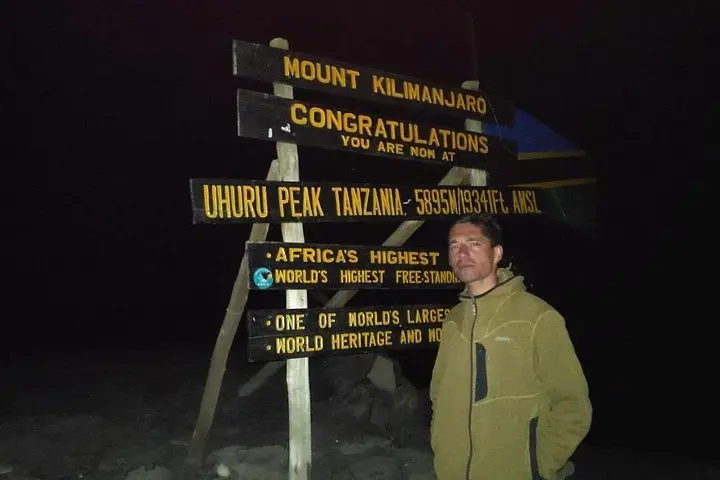
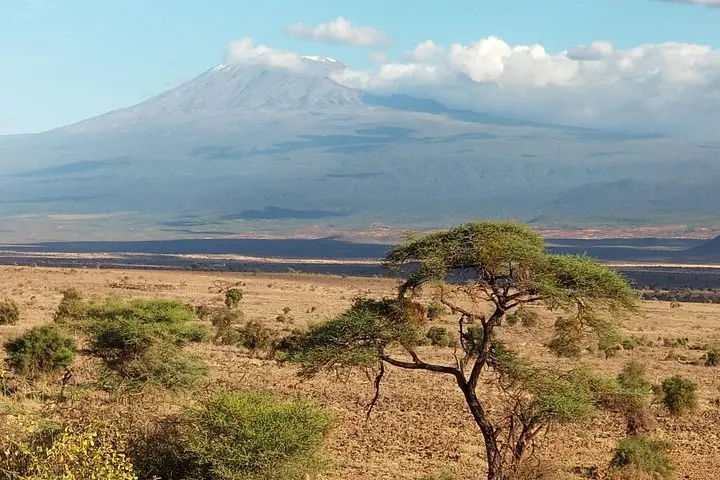
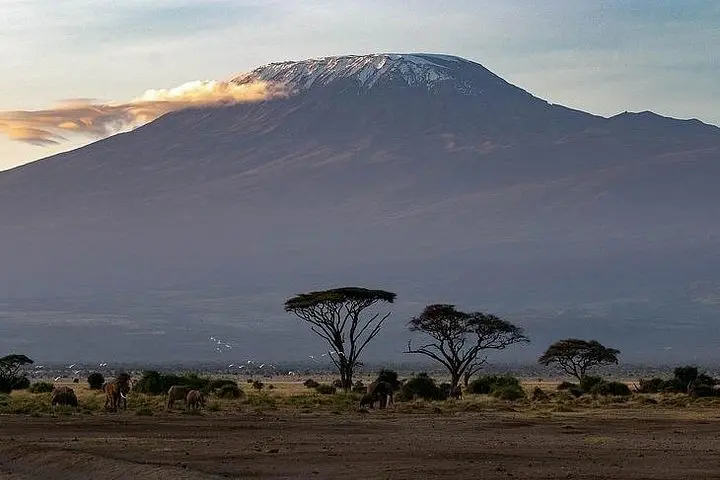
Kilimanjaro is a dormant stratovolcano whose three cones—Kibo, Mawenzi and Shira—record volcanic episodes that created an isolated “sky island” ecosystem. Local Chagga communities have long farmed the foothills; their terraces and trails form the route’s human history. Geologically, the summit region still hosts remnant glaciers and ice cliffs that are retreating; culturally, summit day carries local rituals of respect and celebration when climbers reach Uhuru Peak (5,895 m).
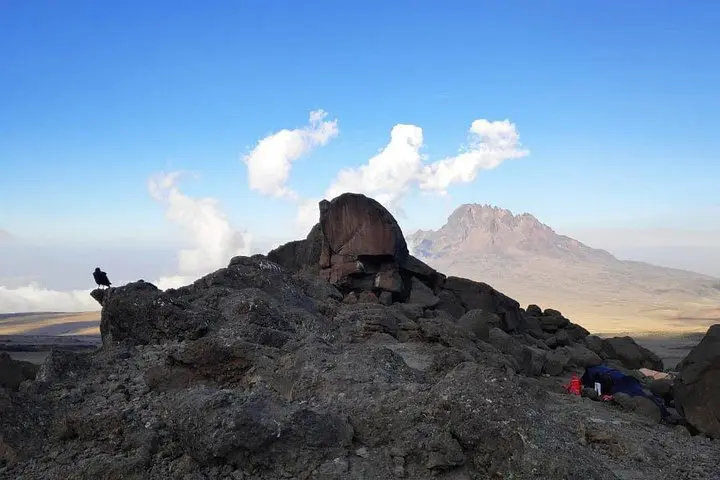
Expect daily hikes of 4–8 hours with one long summit push from Kibo Hut around midnight; elevation gain from gate to Uhuru is roughly 3,900–4,000 m spread over the itinerary. Terrain shifts from slippery forest roots to tussock grass, loose scree and steep volcanic ash—good boots and poles are essential. Carry layered insulation, a high-quality sleeping bag, and emphasize slow, steady pacing to aid acclimatization. Hydrate constantly and monitor for AMS symptoms; professional guides, porters and park permits are standard and typically included in guided packages. Summit weather can drop below -20°C with strong winds—timing your attempt in the drier months improves odds. Respect the mountain: leave no trace, tip porters fairly, and give yourself a buffer day in Moshi or Arusha after descent to recover and celebrate.
No technical ice-climbing skills are required on the standard Rongai route; crampons are generally not needed, though conditions near the summit can be icy and guides will advise if additional gear is required.
June–October and late December–February are the driest months and offer the most stable conditions for summit attempts; the long rains (March–May) make trails muddier and less predictable.
Success depends on fitness, acclimatization, weather and pacing; guided groups on 7–9 day itineraries typically see good summit rates, but there are no guarantees—safety and altitude tolerance determine the outcome.
Reputable guided packages usually include park entry, rescue fees, experienced guides, porters and most meals on the mountain—confirm specifics before booking.
Game Africa Safaris operates guided outdoor trips and adventures with an emphasis on safety, stewardship, and memorable experiences.
A thin, cold light finds you on the eastern shoulder of Kilimanjaro as porters tighten tent guylines and headlamps bob like moths in the dark. The Rongai route begins at Nale Moru (≈1,950 m) and threads from cultivated slopes into dense montane forest, then to moorland, alpine desert and finally scree under the shadow of Kibo’s ice cliffs—an ascent that will take you from equatorial warmth to polar cold in little more than a week.
A thin, cold light finds you on the eastern shoulder of Kilimanjaro as porters tighten tent guylines and headlamps bob like moths in the dark. The Rongai route begins at Nale Moru (≈1,950 m) and threads from cultivated slopes into dense montane forest, then to moorland, alpine desert and finally scree under the shadow of Kibo’s ice cliffs—an ascent that will take you from equatorial warmth to polar cold in little more than a week.
Kilimanjaro is a dormant stratovolcano whose three cones—Kibo, Mawenzi and Shira—record volcanic episodes that created an isolated “sky island” ecosystem. Local Chagga communities have long farmed the foothills; their terraces and trails form the route’s human history. Geologically, the summit region still hosts remnant glaciers and ice cliffs that are retreating; culturally, summit day carries local rituals of respect and celebration when climbers reach Uhuru Peak (5,895 m).
Expect daily hikes of 4–8 hours with one long summit push from Kibo Hut around midnight; elevation gain from gate to Uhuru is roughly 3,900–4,000 m spread over the itinerary. Terrain shifts from slippery forest roots to tussock grass, loose scree and steep volcanic ash—good boots and poles are essential. Carry layered insulation, a high-quality sleeping bag, and emphasize slow, steady pacing to aid acclimatization. Hydrate constantly and monitor for AMS symptoms; professional guides, porters and park permits are standard and typically included in guided packages. Summit weather can drop below -20°C with strong winds—timing your attempt in the drier months improves odds. Respect the mountain: leave no trace, tip porters fairly, and give yourself a buffer day in Moshi or Arusha after descent to recover and celebrate.