THE ADVENTURE COLLECTIVE® · Independent discovery and booking for outdoor travel

Five days, hut sleeps and a midnight summit push: the Marangu Route offers a classic, guided climb to Uhuru Peak. This hut-based itinerary moves through rainforest, moorland and alpine desert with professional guides, cooks and porters to support your summit bid.
Five days, hut sleeps and a midnight summit push: the Marangu Route offers a classic, guided climb to Uhuru Peak. This hut-based itinerary moves through rainforest, moorland and alpine desert with professional guides, cooks and porters to support your summit bid.
The headlamp slices a thin line through the dark as your group files out of Kibo Huts at 2 a.m. The wind on the saddle feels like a living thing, pushing and testing each step as you pick a path up loose scree toward Gillman’s Point and the crater rim. For five days the mountain gives and takes—rainforest roots that want you to slip, sweeping moorland that opens toward Mawenzi, and at the top, a knife-edge sunrise that makes every early morning and every breath worth it.
Verified experiences and guided adventures in the surrounding area.
Operated by Kilimanjaro Umoja Tours · Moshi, Kilimanjaro Region
The headlamp slices a thin line through the dark as your group files out of Kibo Huts at 2 a.m. The wind on the saddle feels like a living thing, pushing and testing each step as you pick a path up loose scree toward Gillman’s Point and the crater rim. For five days the mountain gives and takes—rainforest roots that want you to slip, sweeping moorland that opens toward Mawenzi, and at the top, a knife-edge sunrise that makes every early morning and every breath worth it.
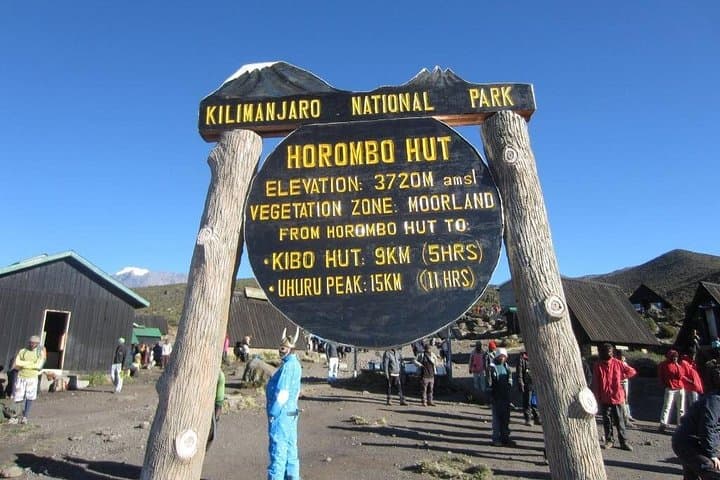
The Marangu Route is the classic, hut-based ascent of Kilimanjaro, trading campsites for concrete sleeping rooms at Mandara, Horombo and Kibo Huts. The route follows a steadily rising profile: Day 1 walks roughly 7 km through rainforest to Mandara (1,830→2,740 m); Day 2 gains to Horombo (11 km to 3,690 m); Day 3 crosses to Kibo Huts (10 km to 4,695 m); Day 4 is the midnight summit push (≈1,200 m up to Uhuru Peak, 5,895 m) and a long descent to Mweka/ Horombo; Day 5 returns to Marangu Gate (≈18 km descent) and a transfer back to Moshi.
Geologically, Kilimanjaro is a three-peaked stratovolcano—Mawenzi and Shira bracket the broad cone of Kibo, whose crater still carries relic glaciers. The mountain’s ecology changes fast: you move from humid montane forest—home to black-and-white colobus and a chorus of sunbirds—into heath and then the stark alpine desert where lobelia and giant groundsels look like otherworldly sculptures.
Culturally, the climb winds through Chagga farmland and Marangu village life; experienced Maasai and Chagga guides explain local coffee-growing, land tenure, and traditional herbal uses for high-altitude plants. Kilimanjaro National Park is a UNESCO site, and responsible trekking—using certified guides, proper waste practices, and fair tipping—is central to sustaining the local economy and the fragile ice fields above.
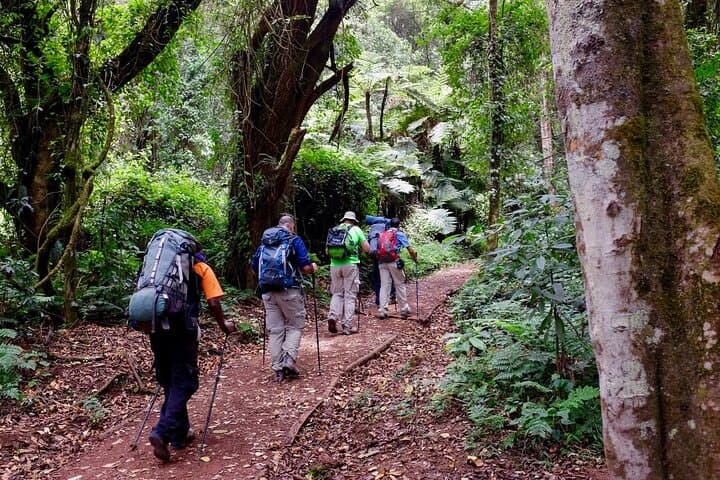
Practicalities: this itinerary is five days and demanding mostly because of altitude, not technical difficulty. Expect muddy, steep trails in the forest—gaiters and poles are useful—and loose scree higher up where pace and breathing matter more than speed. The summit push begins between midnight and 2 a.m.; bring layered insulation, a reliable headlamp, and high-calorie snacks. The operator provides guides, cooks, porters, government fees, and basic hut accommodation; they carry oxygen and a pulse oximeter for monitoring.
Preparation tips: train with long uphill hikes and back-to-back days, acclimatize as much as you can beforehand, and sleep hygiene matters—hydrate and avoid alcohol before summit night. Plan for variable weather: daytime can be warm on descent but brutally cold above 4,500 m. Finally, tip your crew—porters and cooks are essential to your summit success.
If you want a high-altitude peak with a human rhythm—hut beds, steaming food, and a disciplined, guide-led push to Uhuru—Marangu delivers the full story of Kilimanjaro in five compact, memorable days.
Marangu is one of the shorter, more direct routes and the only hut-based option—less camping logistics but with fewer days for acclimatization, so altitude remains the main challenge.
Success varies by fitness and acclimatization; the 5-day schedule is tighter than longer routes, so rates are lower than 6–8 day options—proper pacing and guide support improve odds.
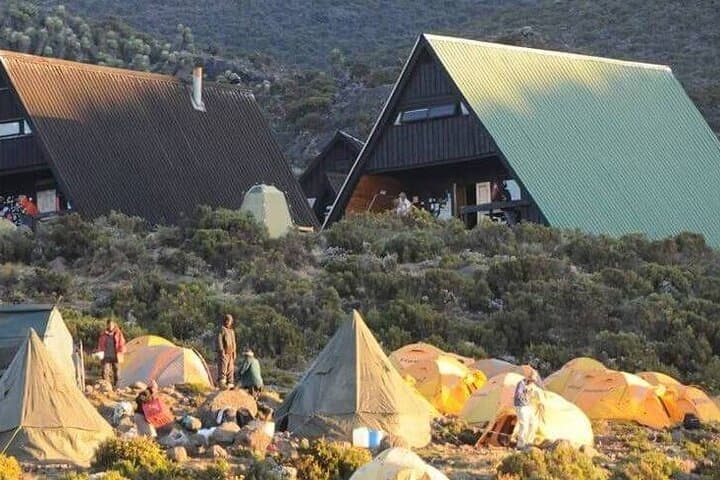
Huts are basic concrete dormitories with bunk beds, shared sanitary facilities and communal dining; they provide shelter and warmth but not luxury.
Yes—climbers must enter Kilimanjaro National Park and pay government park fees and rescue fees; these are typically included in the tour price.
Guides carry oxygen cylinders and a pulse oximeter and follow acclimatization protocols; communicate symptoms early and follow guide instructions.
This itinerary includes professional guides, cooks, porters, hut accommodation, most meals on the mountain, government fees, and basic medical monitoring; check your provider for exact inclusions.
Kilimanjaro Umoja Tours operates guided outdoor trips and adventures with an emphasis on safety, stewardship, and memorable experiences.

The headlamp slices a thin line through the dark as your group files out of Kibo Huts at 2 a.m. The wind on the saddle feels like a living thing, pushing and testing each step as you pick a path up loose scree toward Gillman’s Point and the crater rim. For five days the mountain gives and takes—rainforest roots that want you to slip, sweeping moorland that opens toward Mawenzi, and at the top, a knife-edge sunrise that makes every early morning and every breath worth it.
The headlamp slices a thin line through the dark as your group files out of Kibo Huts at 2 a.m. The wind on the saddle feels like a living thing, pushing and testing each step as you pick a path up loose scree toward Gillman’s Point and the crater rim. For five days the mountain gives and takes—rainforest roots that want you to slip, sweeping moorland that opens toward Mawenzi, and at the top, a knife-edge sunrise that makes every early morning and every breath worth it.
The Marangu Route is the classic, hut-based ascent of Kilimanjaro, trading campsites for concrete sleeping rooms at Mandara, Horombo and Kibo Huts. The route follows a steadily rising profile: Day 1 walks roughly 7 km through rainforest to Mandara (1,830→2,740 m); Day 2 gains to Horombo (11 km to 3,690 m); Day 3 crosses to Kibo Huts (10 km to 4,695 m); Day 4 is the midnight summit push (≈1,200 m up to Uhuru Peak, 5,895 m) and a long descent to Mweka/ Horombo; Day 5 returns to Marangu Gate (≈18 km descent) and a transfer back to Moshi.
Geologically, Kilimanjaro is a three-peaked stratovolcano—Mawenzi and Shira bracket the broad cone of Kibo, whose crater still carries relic glaciers. The mountain’s ecology changes fast: you move from humid montane forest—home to black-and-white colobus and a chorus of sunbirds—into heath and then the stark alpine desert where lobelia and giant groundsels look like otherworldly sculptures.
Culturally, the climb winds through Chagga farmland and Marangu village life; experienced Maasai and Chagga guides explain local coffee-growing, land tenure, and traditional herbal uses for high-altitude plants. Kilimanjaro National Park is a UNESCO site, and responsible trekking—using certified guides, proper waste practices, and fair tipping—is central to sustaining the local economy and the fragile ice fields above.
Practicalities: this itinerary is five days and demanding mostly because of altitude, not technical difficulty. Expect muddy, steep trails in the forest—gaiters and poles are useful—and loose scree higher up where pace and breathing matter more than speed. The summit push begins between midnight and 2 a.m.; bring layered insulation, a reliable headlamp, and high-calorie snacks. The operator provides guides, cooks, porters, government fees, and basic hut accommodation; they carry oxygen and a pulse oximeter for monitoring.
Preparation tips: train with long uphill hikes and back-to-back days, acclimatize as much as you can beforehand, and sleep hygiene matters—hydrate and avoid alcohol before summit night. Plan for variable weather: daytime can be warm on descent but brutally cold above 4,500 m. Finally, tip your crew—porters and cooks are essential to your summit success.
If you want a high-altitude peak with a human rhythm—hut beds, steaming food, and a disciplined, guide-led push to Uhuru—Marangu delivers the full story of Kilimanjaro in five compact, memorable days.