THE ADVENTURE COLLECTIVE® · Independent discovery and booking for outdoor travel

Take the Rongai route for a quieter, northeastern ascent of Kilimanjaro that trades crowds for rugged Mawenzi views and steady acclimatization. This seven-day itinerary balances short daily distances with significant altitude gains, ideal for hikers focused on a non-technical summit.
Take the Rongai route for a quieter, northeastern ascent of Kilimanjaro that trades crowds for rugged Mawenzi views and steady acclimatization. This seven-day itinerary balances short daily distances with significant altitude gains, ideal for hikers focused on a non-technical summit.
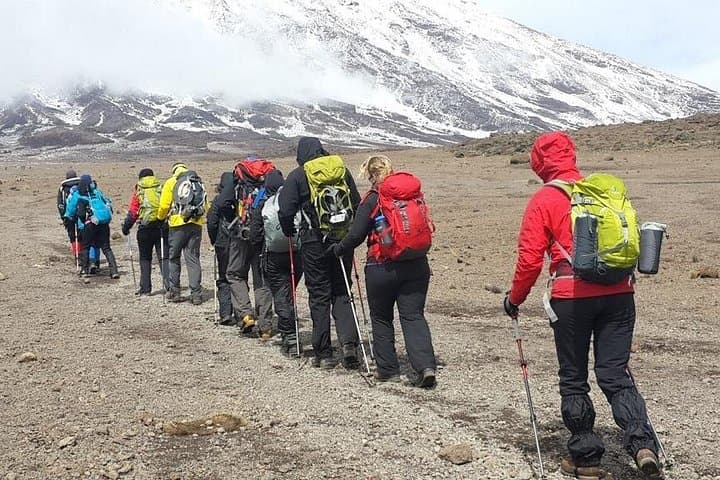
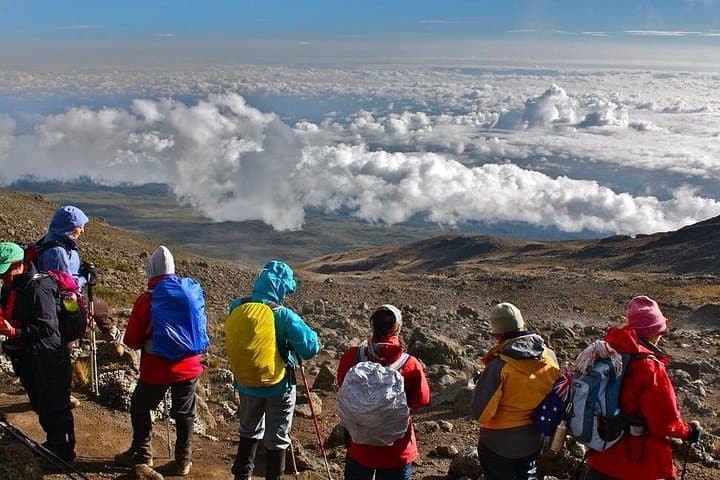
Before dawn on the saddle between Mawenzi and Kibo, headlamps bob like slow fireflies against the lunar desert. The air is thin and brittle; each breath tastes like metal and cold. Porters move silently, steam rising from their cooking pots, while guides check layers and crampons. This is the Rongai route—Kilimanjaro’s quieter, northeastern approach—where the climb begins through cornfields and rainforest and finishes above the clouds on a rim that overlooks all of East Africa.
Verified experiences and guided adventures in the surrounding area.
Operated by Guide Private · Moshi, Kilimanjaro Region
Before dawn on the saddle between Mawenzi and Kibo, headlamps bob like slow fireflies against the lunar desert. The air is thin and brittle; each breath tastes like metal and cold. Porters move silently, steam rising from their cooking pots, while guides check layers and crampons. This is the Rongai route—Kilimanjaro’s quieter, northeastern approach—where the climb begins through cornfields and rainforest and finishes above the clouds on a rim that overlooks all of East Africa.
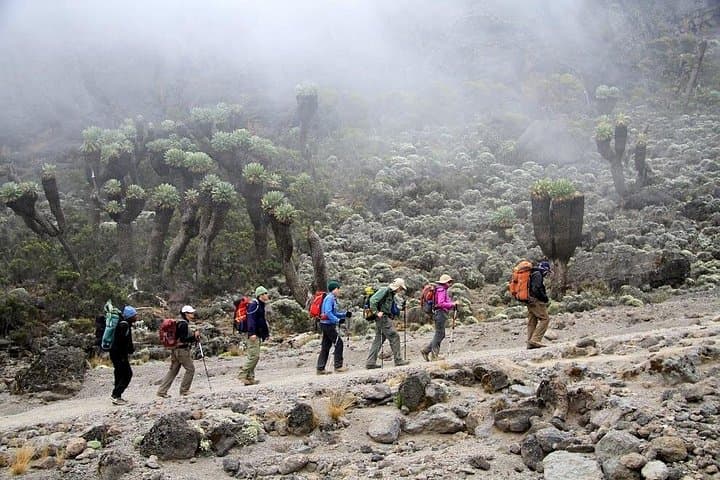
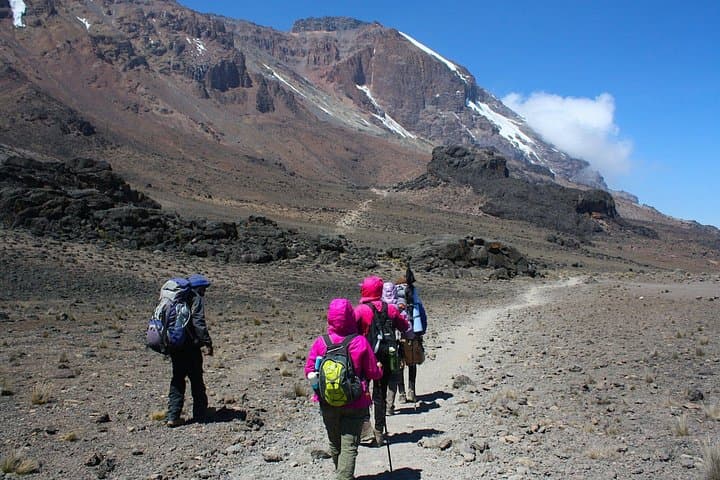
Geology shapes the route: Kilimanjaro is not a single peak but three volcanic cones—Shira, Mawenzi and Kibo—Kibo holding the ice-capped crater at 19,341 ft. The Rongai path skirts Mawenzi’s serrated spires and traces volcanic soils that turn from tropical loam to alpine gravel and finally to rock and ice. The mountain’s glaciers are retreating; you’ll see the jagged edges of old ice scoured into the crater walls.
Cultural history is visible before you step on the trail. The Chagga people farm the lower slopes—terraced maize and potatoes—and village life continues along the approach roads. Mountain guides and porters are often from local communities; they bring a mix of practical knowledge and warm hospitality that’s central to any successful summit.
The itinerary is pragmatic: seven days that balance steady mileage and altitude gain—Rongai Gate (6,398 ft) to Mawenzi Tarn (14,160 ft) with an acclimatization day on the Mawenzi Ridge, then Kibo Hut and the midnight push to Uhuru Peak. Daily distances are short by alpine standards (3–12 miles), but elevation gain is significant—expect sustained climbs of 1,000–2,000 ft on several days and a summit ascent that requires 6–8 hours uphill from Kibo Hut.
Practical guidance: pace yourself. The Rongai route rewards a slow, steady rhythm—walk 45 minutes, rest 10. Hydrate constantly; altitude increases dehydration. Layers are essential: mornings on the lower trail are humid and warm; nights above 13,000 ft are sub-zero. Use trekking poles to protect knees on the long descent to Marangu Gate. The summit night is mainly about mental endurance—short, frequent breaks and rhythmical breathing beat early, hard surges.
Logistics are straightforward: pick up in Moshi, permits at Marangu Gate, camps and basic huts along the route, and full-board meals included on this program. Expect professional guides and porters who handle camp setup and cooking, allowing climbers to concentrate on walking and acclimatization.
This trek is neither technical nor casual; it’s a high-altitude, non-technical climb that tests fitness, resolve, and respect for mountain weather. When you stand on Uhuru Peak at sunrise and watch light spill across the plains, the exhaustion is immediate and, suddenly, irrelevant.
No technical skills are required; the route is a strenuous walk but may require crampons if conditions are icy—guides assess and provide necessary gear.
June to October are the driest and most stable months; January to February also work. Avoid the long rains (March–May) for the clearest approach.
The schedule includes an extra day on Mawenzi Ridge to reduce altitude shock, and gradual sleeping elevations to raise red blood cell production before summit night.
This itinerary typically includes permits and park fees—confirm with the operator. Permits are issued at Marangu Gate early in the trek.
Tipping is customary; most groups pool tips and distribute them to porters and guides—budget roughly 10–20% of the trip cost depending on service.
No strict age limit, but participants should have moderate to high fitness and prior multi-day hiking experience; pregnant travelers are not recommended.
Guide Private operates guided outdoor trips and adventures with an emphasis on safety, stewardship, and memorable experiences.
Before dawn on the saddle between Mawenzi and Kibo, headlamps bob like slow fireflies against the lunar desert. The air is thin and brittle; each breath tastes like metal and cold. Porters move silently, steam rising from their cooking pots, while guides check layers and crampons. This is the Rongai route—Kilimanjaro’s quieter, northeastern approach—where the climb begins through cornfields and rainforest and finishes above the clouds on a rim that overlooks all of East Africa.
Before dawn on the saddle between Mawenzi and Kibo, headlamps bob like slow fireflies against the lunar desert. The air is thin and brittle; each breath tastes like metal and cold. Porters move silently, steam rising from their cooking pots, while guides check layers and crampons. This is the Rongai route—Kilimanjaro’s quieter, northeastern approach—where the climb begins through cornfields and rainforest and finishes above the clouds on a rim that overlooks all of East Africa.
Geology shapes the route: Kilimanjaro is not a single peak but three volcanic cones—Shira, Mawenzi and Kibo—Kibo holding the ice-capped crater at 19,341 ft. The Rongai path skirts Mawenzi’s serrated spires and traces volcanic soils that turn from tropical loam to alpine gravel and finally to rock and ice. The mountain’s glaciers are retreating; you’ll see the jagged edges of old ice scoured into the crater walls.
Cultural history is visible before you step on the trail. The Chagga people farm the lower slopes—terraced maize and potatoes—and village life continues along the approach roads. Mountain guides and porters are often from local communities; they bring a mix of practical knowledge and warm hospitality that’s central to any successful summit.
The itinerary is pragmatic: seven days that balance steady mileage and altitude gain—Rongai Gate (6,398 ft) to Mawenzi Tarn (14,160 ft) with an acclimatization day on the Mawenzi Ridge, then Kibo Hut and the midnight push to Uhuru Peak. Daily distances are short by alpine standards (3–12 miles), but elevation gain is significant—expect sustained climbs of 1,000–2,000 ft on several days and a summit ascent that requires 6–8 hours uphill from Kibo Hut.
Practical guidance: pace yourself. The Rongai route rewards a slow, steady rhythm—walk 45 minutes, rest 10. Hydrate constantly; altitude increases dehydration. Layers are essential: mornings on the lower trail are humid and warm; nights above 13,000 ft are sub-zero. Use trekking poles to protect knees on the long descent to Marangu Gate. The summit night is mainly about mental endurance—short, frequent breaks and rhythmical breathing beat early, hard surges.
Logistics are straightforward: pick up in Moshi, permits at Marangu Gate, camps and basic huts along the route, and full-board meals included on this program. Expect professional guides and porters who handle camp setup and cooking, allowing climbers to concentrate on walking and acclimatization.
This trek is neither technical nor casual; it’s a high-altitude, non-technical climb that tests fitness, resolve, and respect for mountain weather. When you stand on Uhuru Peak at sunrise and watch light spill across the plains, the exhaustion is immediate and, suddenly, irrelevant.