THE ADVENTURE COLLECTIVE® · Independent discovery and booking for outdoor travel

The Rongai Route approaches Kilimanjaro from the north, offering quieter trails, steady acclimatization, and sweeping highland views. Over eight days you’ll cross forest, moorland and alpine desert to push for Uhuru Peak on a guided summit bid.
The Rongai Route approaches Kilimanjaro from the north, offering quieter trails, steady acclimatization, and sweeping highland views. Over eight days you’ll cross forest, moorland and alpine desert to push for Uhuru Peak on a guided summit bid.
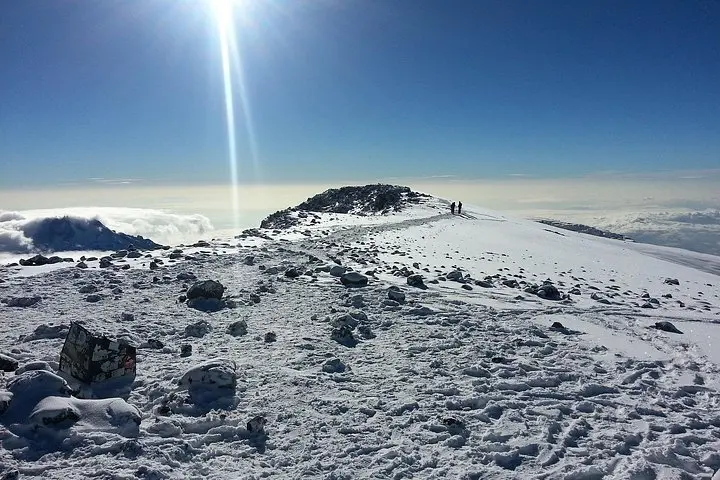
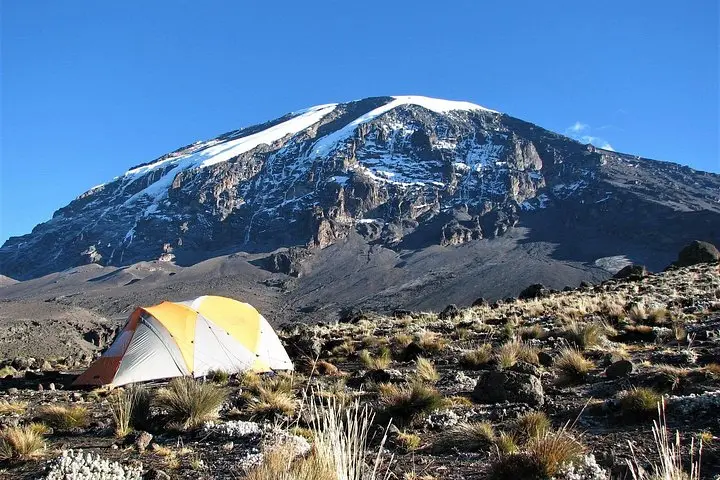
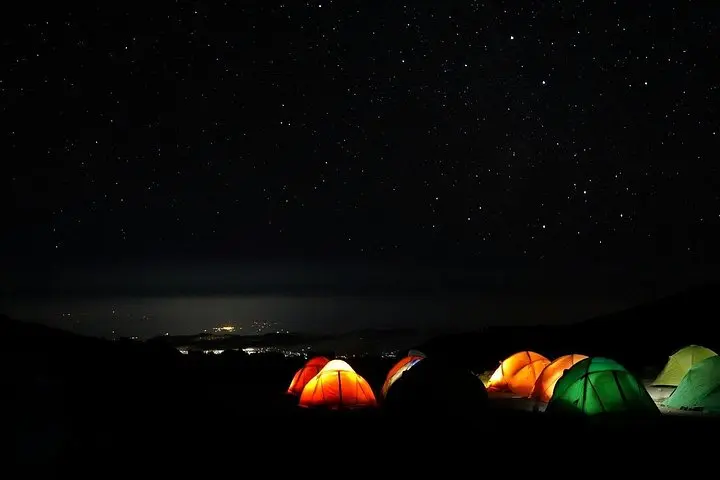
Dawn on the Rongai route begins in cool, thin air. You’ll leave the last lights of Moshi behind and drive north, where the slope of Kilimanjaro rises like a weather system—first a band of dark rainforest, then moorland, then the lunar plain of Kibo high above 4,500 meters. On the second morning you’ll walk out of a pine shelter into a broad moor where giant senecio and lobelia silhouette the sky; by summit night you’ll be following a headlamp procession across volcanic scree toward Gillman’s Point as the sun lifts a bruised horizon.
Verified experiences and guided adventures in the surrounding area.
Operated by Across Africa Tours LLC · Moshi, Kilimanjaro Region
Dawn on the Rongai route begins in cool, thin air. You’ll leave the last lights of Moshi behind and drive north, where the slope of Kilimanjaro rises like a weather system—first a band of dark rainforest, then moorland, then the lunar plain of Kibo high above 4,500 meters. On the second morning you’ll walk out of a pine shelter into a broad moor where giant senecio and lobelia silhouette the sky; by summit night you’ll be following a headlamp procession across volcanic scree toward Gillman’s Point as the sun lifts a bruised horizon.
Rongai is the northern approach to Africa’s highest mountain. Geologically Kilimanjaro is a three-peaked stratovolcano—Shira, Mawenzi and Kibo—whose last major eruptions are ancient but whose glaciers remain a fragile record of high-altitude climate. Culturally, the climb threads through Chagga farmland and remote pastoral villages; porters and guides from local communities are part of the route’s economy and knowledge network.
This itinerary alternates gentle acclimatization days with harder pushes. You start at roughly 1,950m in Nale Moru and gain steadily to Rongai First Camp at 2,600m. Over eight days you reach Mawenzi Tarn (4,330m) and Kibo Hut (4,700m) before the summit bid—Gillman’s Point (5,685m) and the optional march to Uhuru Peak (5,895–5,896m). Total gain from trailhead to summit is about 3,900 meters; daily hikes range from gentle 3–6 hour walks to the 6–8 hour summit push on steep scree.
The terrain changes quickly: damp montane forest that supports colobus monkeys, open moorland where you’ll pass heather and giant senecio, and an alpine desert of loose volcanic scree. Acclimatization is built into the itinerary with one full rest-acclimatize day at Mawenzi Tarn.
Practical notes: the climb is physically demanding and requires good cardiovascular fitness and prior multi-day hiking experience. There are no technical climbing sections—this is high-altitude trekking—but success depends on pacing, hydration, and sleep. Pack layers for wide temperature swings, bring a 4-season sleeping bag, and test boots on steep scree. Kilimanjaro National Park fees and permits are included with most guided packages; choose an operator that provides accredited guides, proper porter support, and adheres to park waste rules.
Best travel windows are January–March and June–October when weather is most stable. Expect cold nights above 4,000m and strong sun during daytime. Respect altitude symptoms: headaches, nausea, and dizziness require immediate attention. If you want views without the summit strain, Mawenzi Tarn and Kikelewa Camp offer dramatic panoramas and fewer crowds.
Rongai’s northern approach rewards quiet days and wide horizons—walk slowly, let the landscape set the cadence, and save energy for that single, unforgettable dawn that turns the summit into a pale, hard edge against the sky.
No technical climbing is required; this is a high-altitude trek, but strength and multi-day hiking experience are important.
January–March and June–October typically offer the most stable weather and clearer summit conditions.
Rongai approaches from the north with a gentler initial grade, drier conditions, and often fewer trekkers; this itinerary ascends via Rongai and descends Marangu.
Most operators include Kilimanjaro National Park fees and camping permits; confirm this before booking.
Guides are trained to monitor symptoms; descent is the primary treatment and operators should have evacuation protocols.
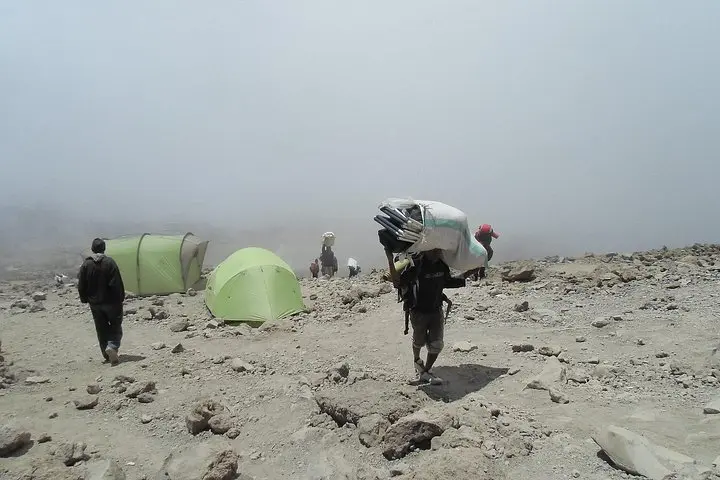
Porters are available and typically carry communal camp gear and personal duffels (limit ~15 kg); reputable operators follow national porter welfare rules.
Across Africa Tours LLC operates guided outdoor trips and adventures with an emphasis on safety, stewardship, and memorable experiences.
Dawn on the Rongai route begins in cool, thin air. You’ll leave the last lights of Moshi behind and drive north, where the slope of Kilimanjaro rises like a weather system—first a band of dark rainforest, then moorland, then the lunar plain of Kibo high above 4,500 meters. On the second morning you’ll walk out of a pine shelter into a broad moor where giant senecio and lobelia silhouette the sky; by summit night you’ll be following a headlamp procession across volcanic scree toward Gillman’s Point as the sun lifts a bruised horizon.
Dawn on the Rongai route begins in cool, thin air. You’ll leave the last lights of Moshi behind and drive north, where the slope of Kilimanjaro rises like a weather system—first a band of dark rainforest, then moorland, then the lunar plain of Kibo high above 4,500 meters. On the second morning you’ll walk out of a pine shelter into a broad moor where giant senecio and lobelia silhouette the sky; by summit night you’ll be following a headlamp procession across volcanic scree toward Gillman’s Point as the sun lifts a bruised horizon.
Rongai is the northern approach to Africa’s highest mountain. Geologically Kilimanjaro is a three-peaked stratovolcano—Shira, Mawenzi and Kibo—whose last major eruptions are ancient but whose glaciers remain a fragile record of high-altitude climate. Culturally, the climb threads through Chagga farmland and remote pastoral villages; porters and guides from local communities are part of the route’s economy and knowledge network.
This itinerary alternates gentle acclimatization days with harder pushes. You start at roughly 1,950m in Nale Moru and gain steadily to Rongai First Camp at 2,600m. Over eight days you reach Mawenzi Tarn (4,330m) and Kibo Hut (4,700m) before the summit bid—Gillman’s Point (5,685m) and the optional march to Uhuru Peak (5,895–5,896m). Total gain from trailhead to summit is about 3,900 meters; daily hikes range from gentle 3–6 hour walks to the 6–8 hour summit push on steep scree.
The terrain changes quickly: damp montane forest that supports colobus monkeys, open moorland where you’ll pass heather and giant senecio, and an alpine desert of loose volcanic scree. Acclimatization is built into the itinerary with one full rest-acclimatize day at Mawenzi Tarn.
Practical notes: the climb is physically demanding and requires good cardiovascular fitness and prior multi-day hiking experience. There are no technical climbing sections—this is high-altitude trekking—but success depends on pacing, hydration, and sleep. Pack layers for wide temperature swings, bring a 4-season sleeping bag, and test boots on steep scree. Kilimanjaro National Park fees and permits are included with most guided packages; choose an operator that provides accredited guides, proper porter support, and adheres to park waste rules.
Best travel windows are January–March and June–October when weather is most stable. Expect cold nights above 4,000m and strong sun during daytime. Respect altitude symptoms: headaches, nausea, and dizziness require immediate attention. If you want views without the summit strain, Mawenzi Tarn and Kikelewa Camp offer dramatic panoramas and fewer crowds.
Rongai’s northern approach rewards quiet days and wide horizons—walk slowly, let the landscape set the cadence, and save energy for that single, unforgettable dawn that turns the summit into a pale, hard edge against the sky.