THE ADVENTURE COLLECTIVE® · Independent discovery and booking for outdoor travel

Follow the Machame “Whiskey Route” from rainforest to glacier in seven days. This guided trek balances scenic variety with deliberate acclimatization, making it one of the most successful lines to Uhuru Peak.
Follow the Machame “Whiskey Route” from rainforest to glacier in seven days. This guided trek balances scenic variety with deliberate acclimatization, making it one of the most successful lines to Uhuru Peak.
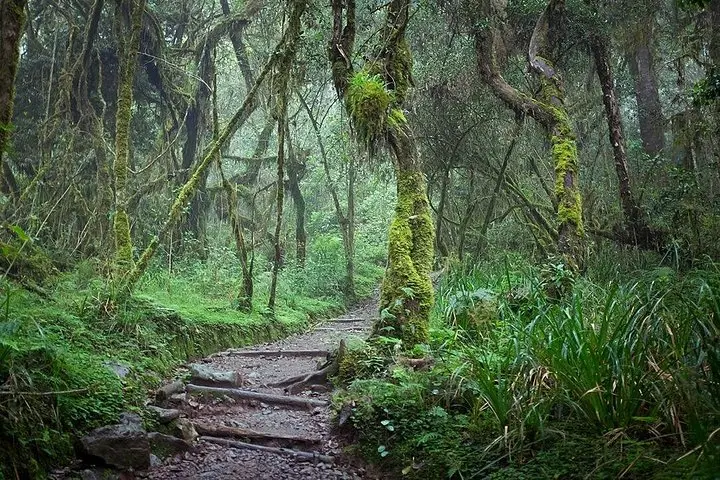
The sun isn't an hour above the horizon when the Machame route opens its first page of forest: a slick ribbon of wet soil, ferns brushing your shins, and the air tasting like green tea. Guides and porters move with practiced choreography—pitching tents, distributing hot cups, and checking oxygen and pulse oximeters—while the mountain looms, patient and indifferent above the cloud line.
Verified experiences and guided adventures in the surrounding area.
Operated by All Weather Adventures · Moshi, Kilimanjaro Region
The sun isn't an hour above the horizon when the Machame route opens its first page of forest: a slick ribbon of wet soil, ferns brushing your shins, and the air tasting like green tea. Guides and porters move with practiced choreography—pitching tents, distributing hot cups, and checking oxygen and pulse oximeters—while the mountain looms, patient and indifferent above the cloud line.
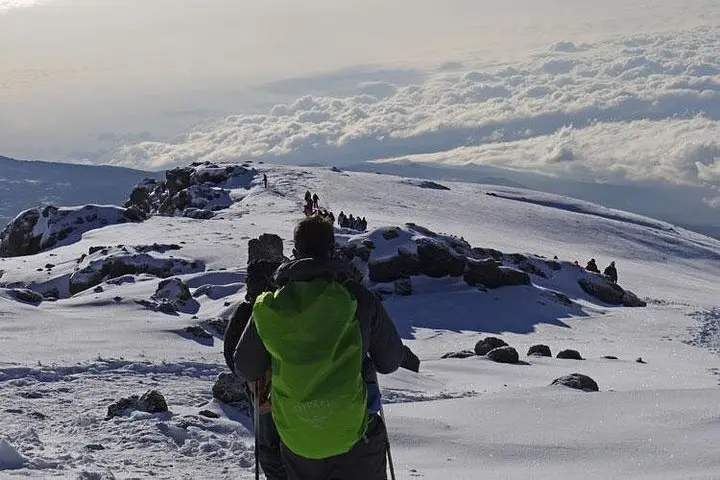
Machame is often called the "Whiskey Route" for its scenic turns and steady acclimatization profile. Over seven days it guides climbers from rainforest into moorland, across the Shira plateau and up to the jagged silhouette of Kibo, before the nocturnal grind toward Uhuru Peak at 5,895 meters. The route’s defining move—climbing high to Lava Tower (4,600 m) then sleeping lower at Barranco—gives biological time for blood chemistry to adjust. That back-and-forth is the practical reason Machame’s summit success rates are high.
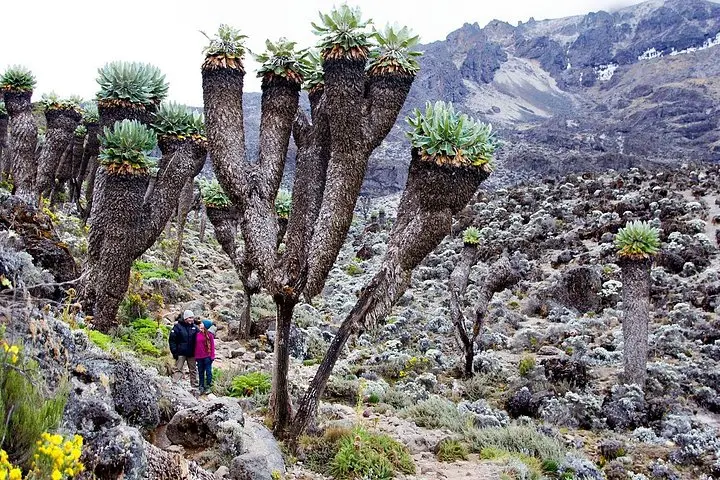
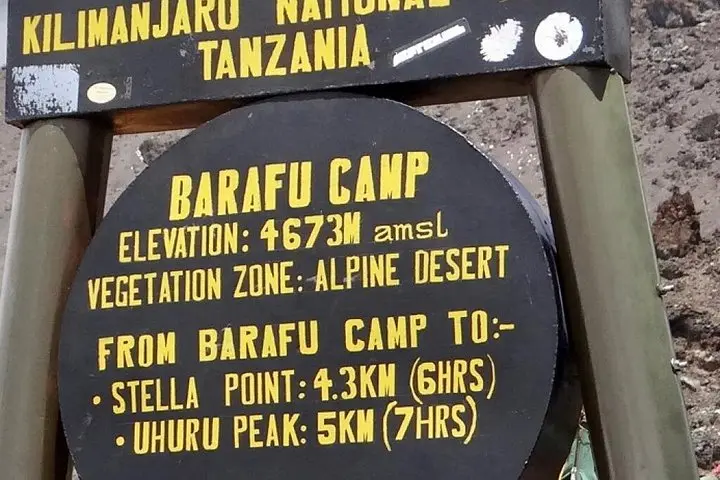
Geologically Kilimanjaro is a stratovolcano composed of three cones—Kibo, Mawenzi and Shira—built across millennia of eruptions and erosion. Hikers move through microclimates: tropical rainforest at the base, heather and moor at mid-elevations, an alpine desert belt near Barafu, and the snow-and-ice summit that holds a shrinking glacier system. Locally the Chagga people have long regarded the mountain as central to identity, with farms and villages on its lower flanks supplying the porters and guides who make modern ascents possible.
Culturally and practically, the climb is a team operation. Expect to share a tent with one or two climbers, to eat communal meals in dining tents, and to lean on experienced guides for pacing and acclimatization. The itinerary supplies camping equipment, sleeping pads, park permits, and emergency oxygen—standard for safe, organized ascents.
For planning: arrive in Moshi a day early to confirm gear, get a final briefing, and sleep at moderate altitude. Hydration, slow pacing, and attention to early symptoms of AMS (headache, nausea, poor sleep) matter as much as stamina. Summit night begins around midnight; mental steadiness and layers win the day on the scree slope toward Stella Point.
Logistics are straightforward—return transfers from Kilimanjaro Airport, certificates at Mweka Gate, and a rescue fee included in the permit package—but the mountain itself is a variable partner. Pack for wind, sun, and below-freezing summit temps; trust the rhythm of walking, resting, and listening to your body.
The Machame route offers a balanced mix of scenery, strategy, and support: a climb designed to test limits while stacking the odds for success.
Success varies with fitness and acclimatization but Machame’s deliberate profile typically yields higher summit rates than shorter routes—expect a good chance if you follow guides’ pacing and acclimatization advice.
Prior multi-day trekking experience is strongly recommended; while technical climbing skills aren’t required, familiarity with long days and altitude helps.
Yes—Kilimanjaro National Park permits and standard rescue fees are included in the package provided by the operator.
Basic latrine facilities are available at camps; portable flush toilets can be arranged on request but are not standard at all camps.
Notify your guide immediately, descend if symptoms worsen, maintain hydration, rest, and consider descending to a lower camp—guides carry pulse oximeters and oxygen for emergencies.
Yes—tipping is customary and supports local livelihoods; allocate a fair gratuity based on group size and service quality.
All Weather Adventures operates guided outdoor trips and adventures with an emphasis on safety, stewardship, and memorable experiences.
The sun isn't an hour above the horizon when the Machame route opens its first page of forest: a slick ribbon of wet soil, ferns brushing your shins, and the air tasting like green tea. Guides and porters move with practiced choreography—pitching tents, distributing hot cups, and checking oxygen and pulse oximeters—while the mountain looms, patient and indifferent above the cloud line.
The sun isn't an hour above the horizon when the Machame route opens its first page of forest: a slick ribbon of wet soil, ferns brushing your shins, and the air tasting like green tea. Guides and porters move with practiced choreography—pitching tents, distributing hot cups, and checking oxygen and pulse oximeters—while the mountain looms, patient and indifferent above the cloud line.
Machame is often called the "Whiskey Route" for its scenic turns and steady acclimatization profile. Over seven days it guides climbers from rainforest into moorland, across the Shira plateau and up to the jagged silhouette of Kibo, before the nocturnal grind toward Uhuru Peak at 5,895 meters. The route’s defining move—climbing high to Lava Tower (4,600 m) then sleeping lower at Barranco—gives biological time for blood chemistry to adjust. That back-and-forth is the practical reason Machame’s summit success rates are high.
Geologically Kilimanjaro is a stratovolcano composed of three cones—Kibo, Mawenzi and Shira—built across millennia of eruptions and erosion. Hikers move through microclimates: tropical rainforest at the base, heather and moor at mid-elevations, an alpine desert belt near Barafu, and the snow-and-ice summit that holds a shrinking glacier system. Locally the Chagga people have long regarded the mountain as central to identity, with farms and villages on its lower flanks supplying the porters and guides who make modern ascents possible.
Culturally and practically, the climb is a team operation. Expect to share a tent with one or two climbers, to eat communal meals in dining tents, and to lean on experienced guides for pacing and acclimatization. The itinerary supplies camping equipment, sleeping pads, park permits, and emergency oxygen—standard for safe, organized ascents.
For planning: arrive in Moshi a day early to confirm gear, get a final briefing, and sleep at moderate altitude. Hydration, slow pacing, and attention to early symptoms of AMS (headache, nausea, poor sleep) matter as much as stamina. Summit night begins around midnight; mental steadiness and layers win the day on the scree slope toward Stella Point.
Logistics are straightforward—return transfers from Kilimanjaro Airport, certificates at Mweka Gate, and a rescue fee included in the permit package—but the mountain itself is a variable partner. Pack for wind, sun, and below-freezing summit temps; trust the rhythm of walking, resting, and listening to your body.
The Machame route offers a balanced mix of scenery, strategy, and support: a climb designed to test limits while stacking the odds for success.