
Climb Mount Kilimanjaro via the Marangu Route: 6-Day Hut Trek to Uhuru Peak
The Marangu Route converts the idea of summiting Kilimanjaro into a measured, hut-to-hut campaign: steady days through rainforest, moorland and alpine desert, a midnight push to Uhuru Peak, and the pragmatic logistics of crew, huts and acclimatization that make success possible.
An Adventure In Moshi.
The Marangu Route converts the idea of summiting Kilimanjaro into a measured, hut-to-hut campaign: steady days through rainforest, moorland and alpine desert, a midnight push to Uhuru Peak, and the pragmatic logistics of crew, huts and acclimatization that make success possible.
Read the full experience
Night on the trail collapses into a strip of headlamp light and the mountain’s silhouette—sharp, uncompromising—rises behind it. On the Marangu Route, that silhouette becomes a personal horizon you approach step by steady step: eucalyptus and rainforest give way to heath and moorland, then an alpine desert where the air itself feels thin and honest. The route’s hut-to-hut rhythm (Mandara, Horombo, Kibo) turns the climb into a series of lived-in chapters—each camp a brief, essential community of porters, cooks and trekkers catching breath before the next push.
Night on the trail collapses into a strip of headlamp light and the mountain’s silhouette—sharp, uncompromising—rises behind it. On the Marangu Route, that silhouette becomes a personal horizon you approach step by steady step: eucalyptus and rainforest give way to heath and moorland, then an alpine desert where the air itself feels thin and honest. The route’s hut-to-hut rhythm (Mandara, Horombo, Kibo) turns the climb into a series of lived-in chapters—each camp a brief, essential community of porters, cooks and trekkers catching breath before the next push.
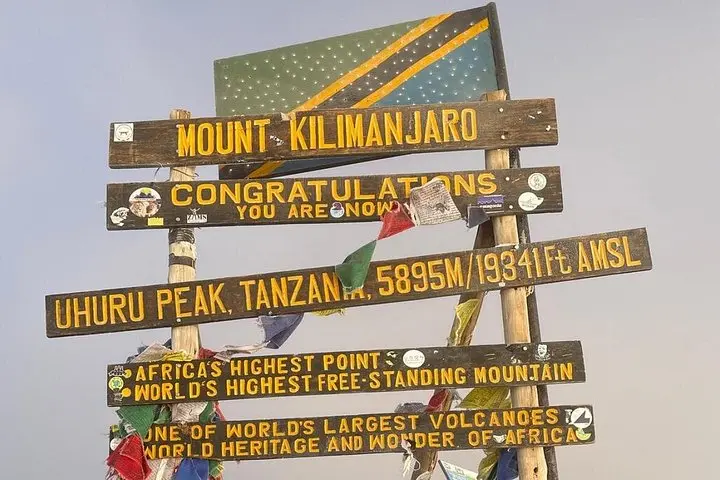
Kilimanjaro’s geology reads like a slow-motion explosion. The massif is a free-standing volcano whose three cones—Kibo, Mawenzi and Shira—record different pulses of activity. Kibo, crowned by the ice and snow of its crater, is the objective: the ridge and glacier at Uhuru Peak sit at 5,895 m and demand respect. Historically, Kilimanjaro has been both a local landmark for Chagga communities and a magnet for explorers since the 19th century; the Marangu route itself was one of the earliest established paths, favored for its hut system and relatively straightforward terrain.
Culture and crew are inseparable from the ascent. Local guides and porters manage everything from meals to tent logistics; their knowledge—how to read weather patterns on Kibo’s flanks, how to pace for altitude—makes summit day possible. Flora changes on the way up: giant heath and lobelia interrupt the scrub, and at lower elevations the forest hosts black-and-white colobus and a noisy cast of birdlife.
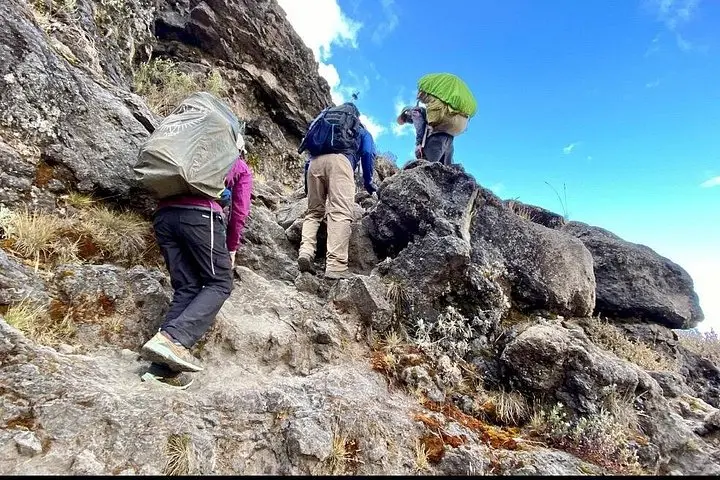
Practically, the Marangu is a test of steady pacing and acclimatization, not technical climbing. Expect daily hikes of 5–7 hours, with an alpine desert night at Kibo before a midnight push for the crater rim and Uhuru Peak at sunrise. Hut sleeping eases weight but doesn’t reduce the need for warm layers; temperatures drop sharply above 4,000 m. Hydration and calorie density matter—soup and hot drinks on the trail are not luxuries, they are tools against hypothermia and altitude fatigue.
Timing: travel early in the morning on arrival days, and for summit attempts start around midnight. Footwear: broken-in boots with ankle support; poles help on loose scree during ascent and descent. Listen to your guide about symptoms of acute mountain sickness—turning back can be the right decision.
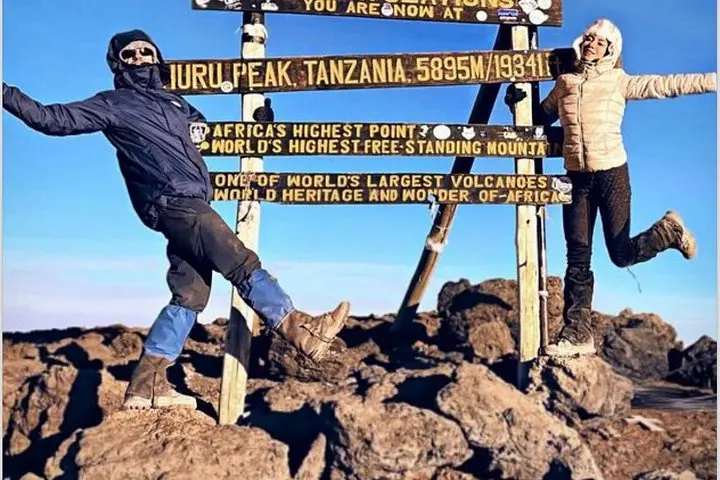
At day’s end, the mountain gives small rewards: sunlight piercing through giant lobelia, a view of Mawenzi’s teeth, or the quiet of a high camp sky gone black and studded with stars. The summit is brief—photo, breath, descend—but it changes the way the land feels. Practically speaking, plan for reliable guides, moderate fitness, layered clothing, and the humility to move at the mountain’s pace. Do that, and Kilimanjaro is not simply conquered; it’s earned.
Frequently asked questions
No technical climbing skills are required—the route is a strenuous hike that tests endurance and acclimatization rather than rope work.
Huts provide bunks, basic blankets and communal dining; bring a warm sleeping bag and earplugs for comfort.
June–October and January–February are drier and more reliable for summit attempts; weather can still change rapidly at high altitude.
Altitude sickness is possible for any climber; guides monitor symptoms, enforce rest days, and have pulse oximeters and evacuation procedures if needed.
Yes—standard Marangu packages include porters and cooks; confirm load limits and tipping expectations before departure.
No—summit success depends on acclimatization, weather and individual response to altitude; longer itineraries offer better acclimatization and higher summit rates.
About This Experience
Discover Africa operates guided outdoor trips and adventures with an emphasis on safety, stewardship, and memorable experiences.
Adventure tips
Recommended gear
- Stiff-soled, insulated mountaineering boots: Support and insulation for long days and cold summit temperatures.
- Down jacket (800-fill or equivalent): Critical for summit night and high-camp temperatures.
- Sleeping bag rated to −10°C/14°F: Hut and high-altitude nights are cold—bring a tested, warm bag.
- Trekking poles: Stabilize your knees on steep, loose sections and speed descents while conserving energy.
Photos of the experience
Related adventures & guides
Read the full experience
Night on the trail collapses into a strip of headlamp light and the mountain’s silhouette—sharp, uncompromising—rises behind it. On the Marangu Route, that silhouette becomes a personal horizon you approach step by steady step: eucalyptus and rainforest give way to heath and moorland, then an alpine desert where the air itself feels thin and honest. The route’s hut-to-hut rhythm (Mandara, Horombo, Kibo) turns the climb into a series of lived-in chapters—each camp a brief, essential community of porters, cooks and trekkers catching breath before the next push.
Night on the trail collapses into a strip of headlamp light and the mountain’s silhouette—sharp, uncompromising—rises behind it. On the Marangu Route, that silhouette becomes a personal horizon you approach step by steady step: eucalyptus and rainforest give way to heath and moorland, then an alpine desert where the air itself feels thin and honest. The route’s hut-to-hut rhythm (Mandara, Horombo, Kibo) turns the climb into a series of lived-in chapters—each camp a brief, essential community of porters, cooks and trekkers catching breath before the next push.
Kilimanjaro’s geology reads like a slow-motion explosion. The massif is a free-standing volcano whose three cones—Kibo, Mawenzi and Shira—record different pulses of activity. Kibo, crowned by the ice and snow of its crater, is the objective: the ridge and glacier at Uhuru Peak sit at 5,895 m and demand respect. Historically, Kilimanjaro has been both a local landmark for Chagga communities and a magnet for explorers since the 19th century; the Marangu route itself was one of the earliest established paths, favored for its hut system and relatively straightforward terrain.
Culture and crew are inseparable from the ascent. Local guides and porters manage everything from meals to tent logistics; their knowledge—how to read weather patterns on Kibo’s flanks, how to pace for altitude—makes summit day possible. Flora changes on the way up: giant heath and lobelia interrupt the scrub, and at lower elevations the forest hosts black-and-white colobus and a noisy cast of birdlife.
Practically, the Marangu is a test of steady pacing and acclimatization, not technical climbing. Expect daily hikes of 5–7 hours, with an alpine desert night at Kibo before a midnight push for the crater rim and Uhuru Peak at sunrise. Hut sleeping eases weight but doesn’t reduce the need for warm layers; temperatures drop sharply above 4,000 m. Hydration and calorie density matter—soup and hot drinks on the trail are not luxuries, they are tools against hypothermia and altitude fatigue.
Timing: travel early in the morning on arrival days, and for summit attempts start around midnight. Footwear: broken-in boots with ankle support; poles help on loose scree during ascent and descent. Listen to your guide about symptoms of acute mountain sickness—turning back can be the right decision.
At day’s end, the mountain gives small rewards: sunlight piercing through giant lobelia, a view of Mawenzi’s teeth, or the quiet of a high camp sky gone black and studded with stars. The summit is brief—photo, breath, descend—but it changes the way the land feels. Practically speaking, plan for reliable guides, moderate fitness, layered clothing, and the humility to move at the mountain’s pace. Do that, and Kilimanjaro is not simply conquered; it’s earned.
Make a day of it nearby.
Verified experiences and guided adventures in the surrounding area.