THE ADVENTURE COLLECTIVE® · Independent discovery and booking for outdoor travel

Spend a private day climbing Coba’s 120-foot Nohoch Mul, wandering Tulum’s cliff-top walled city, and cooling off in a cenote. This guided tour blends active exploration with concise archaeological context—ideal for travelers who want movement, views, and local insight.
Spend a private day climbing Coba’s 120-foot Nohoch Mul, wandering Tulum’s cliff-top walled city, and cooling off in a cenote. This guided tour blends active exploration with concise archaeological context—ideal for travelers who want movement, views, and local insight.
The day begins before the air thickens: a minivan pulls away from a hotel lobby in Cancun, leaving the coastal hum for a ribbon of limestone road that runs inland. By midmorning the jungle shifts from roadside scrub to a green hush. At Coba, palms give way to a clearing where a single stone pyramid rises above the canopy—Nohoch Mul’s ragged silhouette catching light like an invitation. Guides unfurl the site’s history in short, clear phrases while the wind pulls at the undergrowth as if to hurry visitors toward the monument.
Verified experiences and guided adventures in the surrounding area.
Operated by Special Mayan Tours Cancun · Coba, Quintana Roo
The day begins before the air thickens: a minivan pulls away from a hotel lobby in Cancun, leaving the coastal hum for a ribbon of limestone road that runs inland. By midmorning the jungle shifts from roadside scrub to a green hush. At Coba, palms give way to a clearing where a single stone pyramid rises above the canopy—Nohoch Mul’s ragged silhouette catching light like an invitation. Guides unfurl the site’s history in short, clear phrases while the wind pulls at the undergrowth as if to hurry visitors toward the monument.
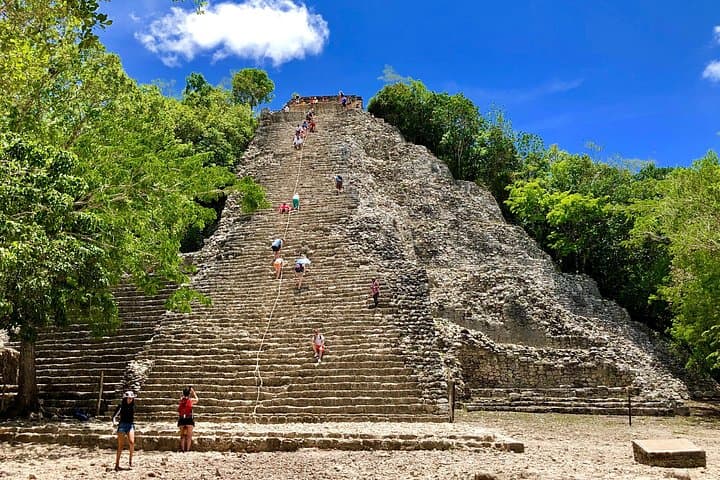
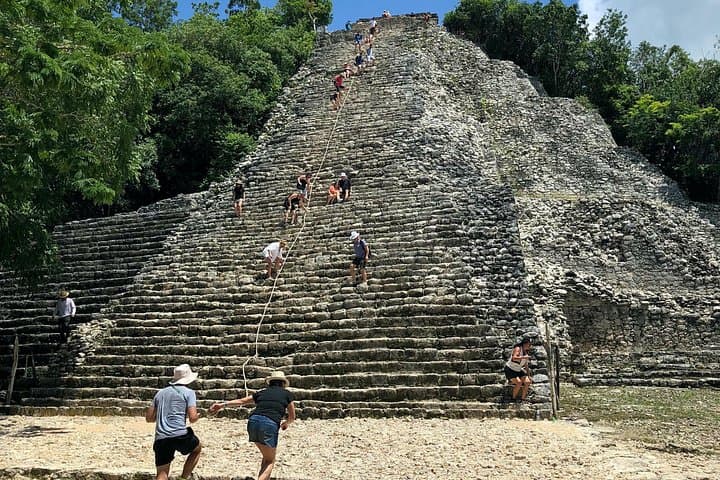
Coba was once the largest city in the northern Yucatán, a network of causeways and villages connected by raised stone sacbeob. Its centerpiece, Nohoch Mul, tops out at roughly 120 feet—one of the few Mayan monuments you can still climb. The ascent is immediate and physical: steep stone steps, narrow risers, and a summit that opens into a crooked panorama of jungle and sky.
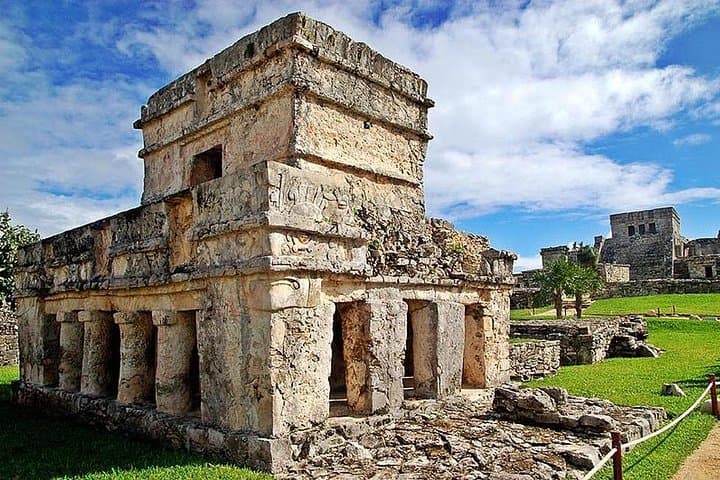
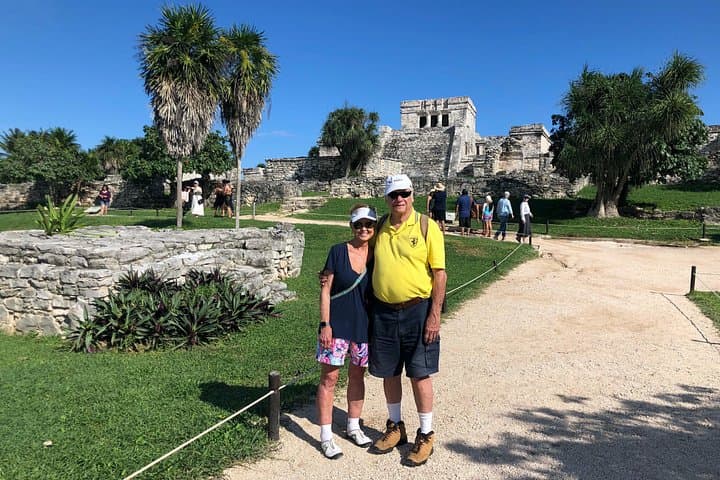
An hour away, Tulum presents a different argument. Perched on cliffs above the Caribbean, the walled city served as a port for maritime trade; its stuccoed temples and trade rooms read like a ledger of salt and goods. The cliffside view over turquoise water is less a single photograph than a shifting conversation between waves and reef.
Halfway between the two is a cenote — a sinkhole that cuts into the limestone table and offers cool, mineral-rich water. A swim here resets the day: the current is lazy, the water clear, and the scent of wet stone strong.
Practicalities matter on a long, private day tour. The full circuit runs about 12 hours with roughly three main stops; entrance fees are typically not included, so budget cash or card for park admissions. Wear shoes with grip for the pyramid and light layers for heat that can swing from humid under the canopy to blistering along the coast. Hydration is non-negotiable; local guides usually provide water onboard, but bring a refillable bottle.
Timing can transform the visit. Early arrivals at Coba encounter cooler steps and fewer people; late afternoon at Tulum yields softer light over the sea. Photography is worth planning for—bring a wide lens for both the cliff views and the cenote’s reflections. Respect the sites: some areas are fragile and access rules change seasonally.
For travelers wanting archaeology with movement, the private tour balances interpretation and exploration: a climb, a coastal walk, and a swim. It’s a day calibrated for curiosity and stamina—a clear, tactile way to read the footprint of the Maya across stone, water and sky.
No—admission to Coba, Tulum and the cenote are typically not included; bring cash or card to pay at each site.
Climbing is often allowed but can be restricted for safety or conservation—your guide will confirm onsite.
Yes—private transportation includes hotel pickup across major Riviera Maya hotels; provide your hotel name when booking.
Some transport and flat areas are accessible, but climbing the pyramid and uneven paths are not suitable for wheelchairs.
Lunch is usually not included; the tour often allows a break to eat at local restaurants or bring snacks.
Expect moderate walking at ruins and short trails; much of the day is spent standing during guided explanations and short transfers between sites.
Special Mayan Tours Cancun operates guided outdoor trips and adventures with an emphasis on safety, stewardship, and memorable experiences.
The day begins before the air thickens: a minivan pulls away from a hotel lobby in Cancun, leaving the coastal hum for a ribbon of limestone road that runs inland. By midmorning the jungle shifts from roadside scrub to a green hush. At Coba, palms give way to a clearing where a single stone pyramid rises above the canopy—Nohoch Mul’s ragged silhouette catching light like an invitation. Guides unfurl the site’s history in short, clear phrases while the wind pulls at the undergrowth as if to hurry visitors toward the monument.
The day begins before the air thickens: a minivan pulls away from a hotel lobby in Cancun, leaving the coastal hum for a ribbon of limestone road that runs inland. By midmorning the jungle shifts from roadside scrub to a green hush. At Coba, palms give way to a clearing where a single stone pyramid rises above the canopy—Nohoch Mul’s ragged silhouette catching light like an invitation. Guides unfurl the site’s history in short, clear phrases while the wind pulls at the undergrowth as if to hurry visitors toward the monument.
Coba was once the largest city in the northern Yucatán, a network of causeways and villages connected by raised stone sacbeob. Its centerpiece, Nohoch Mul, tops out at roughly 120 feet—one of the few Mayan monuments you can still climb. The ascent is immediate and physical: steep stone steps, narrow risers, and a summit that opens into a crooked panorama of jungle and sky.
An hour away, Tulum presents a different argument. Perched on cliffs above the Caribbean, the walled city served as a port for maritime trade; its stuccoed temples and trade rooms read like a ledger of salt and goods. The cliffside view over turquoise water is less a single photograph than a shifting conversation between waves and reef.
Halfway between the two is a cenote — a sinkhole that cuts into the limestone table and offers cool, mineral-rich water. A swim here resets the day: the current is lazy, the water clear, and the scent of wet stone strong.
Practicalities matter on a long, private day tour. The full circuit runs about 12 hours with roughly three main stops; entrance fees are typically not included, so budget cash or card for park admissions. Wear shoes with grip for the pyramid and light layers for heat that can swing from humid under the canopy to blistering along the coast. Hydration is non-negotiable; local guides usually provide water onboard, but bring a refillable bottle.
Timing can transform the visit. Early arrivals at Coba encounter cooler steps and fewer people; late afternoon at Tulum yields softer light over the sea. Photography is worth planning for—bring a wide lens for both the cliff views and the cenote’s reflections. Respect the sites: some areas are fragile and access rules change seasonally.
For travelers wanting archaeology with movement, the private tour balances interpretation and exploration: a climb, a coastal walk, and a swim. It’s a day calibrated for curiosity and stamina—a clear, tactile way to read the footprint of the Maya across stone, water and sky.