THE ADVENTURE COLLECTIVE® · Independent discovery and booking for outdoor travel

Stand beneath the lion paws and ascend a 200‑meter rock column carved into a royal citadel. This fast‑track eTicket gets you past the queues to explore Sigiriya’s frescoes, water gardens, and summit panoramas with fewer delays.
Stand beneath the lion paws and ascend a 200‑meter rock column carved into a royal citadel. This fast‑track eTicket gets you past the queues to explore Sigiriya’s frescoes, water gardens, and summit panoramas with fewer delays.
The climb begins before the summit reveals itself — a vertical silhouette rising from rice paddies and mahogany trees, the rock’s sheer flank catching the first light. At the base, the water gardens mirror the cliff and the path of visitors, and a pair of carved lion paws marks the final approach to a staircase that winds into history. By the time the metal staircases narrow and the fresco gallery comes into view, the landscape below has already rearranged: canals, terraced gardens and ponds sitting like deliberate brushstrokes around the base of a 200-meter basalt column.
Verified experiences and guided adventures in the surrounding area.
Operated by Ceylon Pass · Sigiriya, Central Province
The climb begins before the summit reveals itself — a vertical silhouette rising from rice paddies and mahogany trees, the rock’s sheer flank catching the first light. At the base, the water gardens mirror the cliff and the path of visitors, and a pair of carved lion paws marks the final approach to a staircase that winds into history. By the time the metal staircases narrow and the fresco gallery comes into view, the landscape below has already rearranged: canals, terraced gardens and ponds sitting like deliberate brushstrokes around the base of a 200-meter basalt column.
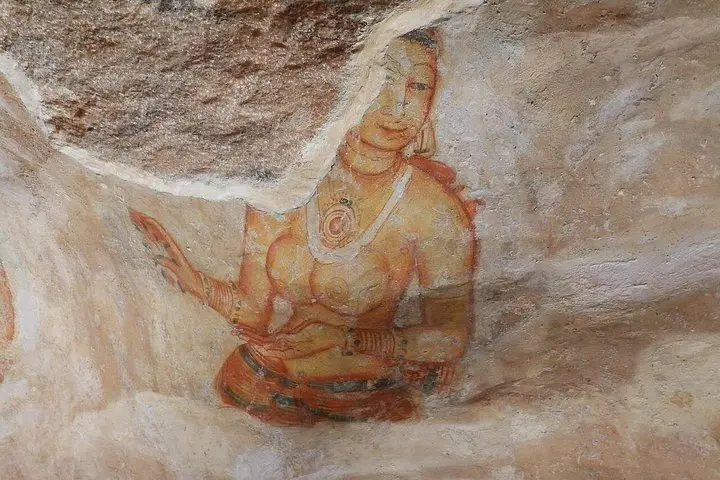
Sigiriya was raised into myth in the 5th century CE by King Kashyapa, who transformed a natural rock outcrop into a fortified palace atop an isolated volcanic plug. The site is an archaeological lesson in ambition — hydraulic gardens that still channel water, a mirror wall once polished to a sheen, and frescoes of celestial maidens whose pigments have weathered centuries yet retain surprising color. Geologically, the rock is the hardened core of an extinct volcano; its vertical face was the point of defense and drama.
Culturally, Sigiriya occupies both royal and monastic chapters of Sri Lanka’s past. For a period it became a Buddhist monastery; earlier and later layers of occupation reveal shifts in power, art, and engineering. Today the climb reads like a curated archive: rock-cut staircases, ancient foundations, and interpretive exhibits in the small on-site museum that add context before and after the ascent.
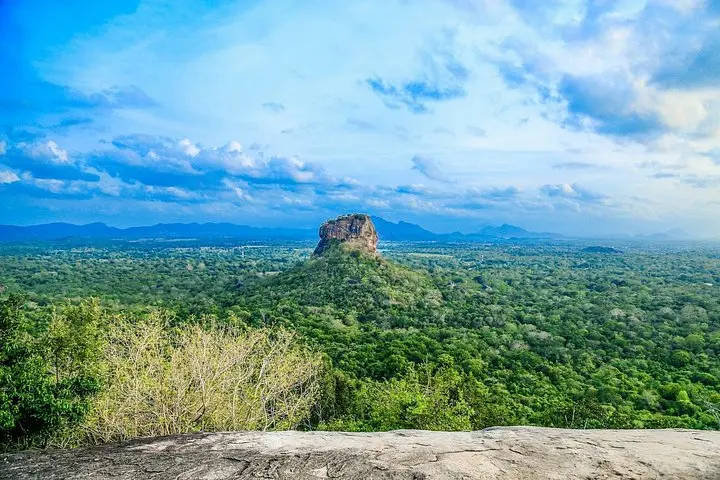
Practicalities are straightforward but important. The summit sits roughly 200 meters above the surrounding plain; expect about 1,200 steps and intermittent sections of narrow metal stairway that demand steady footing and a head for heights. Plan 2–3 hours to move through the water gardens, climb at a measured pace, linger at the fresco gallery, and take in the summit panorama. Heat and humidity can be severe mid-day — bring at least 1–2 liters of water, sun protection, and closed-toe shoes with good traction. The eTicket option allows fast-track entry to avoid long queues at the gate, a real time-saver on high-traffic days.
Health restrictions are in place: the route is not recommended for travelers with significant spinal, heart, or mobility issues, and pregnant visitors should avoid the climb. For photographers and history-minded travelers, early morning or late afternoon visits deliver softer light on the frescoes and quieter terraces for uninterrupted views. Respect ropes and signage around fragile frescoes, and leave no trace—Sigiriya’s longevity depends on steady conservation and mindful visitation.
Whether you come for the engineering, the views, or the drama of climbing through layers of Sri Lankan history, Sigiriya reads as both challenge and classroom: a place where landscape and human ambition meet, and where a thoughtful climb yields both insight and panorama.
The eTicket provides fast-track entry to Sigiriya and admission to the on-site museum; present your mobile ticket at the designated entry point.
Expect roughly 1,200 steps and about 200 meters of elevation gain; most visitors take 60–90 minutes roundtrip for the climb itself, with 2–3 hours total to explore the site.
Older children who are comfortable on stairs and heights can manage the route; supervise younger children closely, especially on narrow metal stair sections.
Basic restroom facilities and small refreshment stalls are available near the ticket area; bring snacks and water for the climb.
Photography is allowed in many areas but avoid flash and obey signage protecting sensitive fresco surfaces.
Due to the steep stairways and narrow passages, the summit is not wheelchair accessible and the site is not suitable for those with limited mobility.
Ceylon Pass operates guided outdoor trips and adventures with an emphasis on safety, stewardship, and memorable experiences.
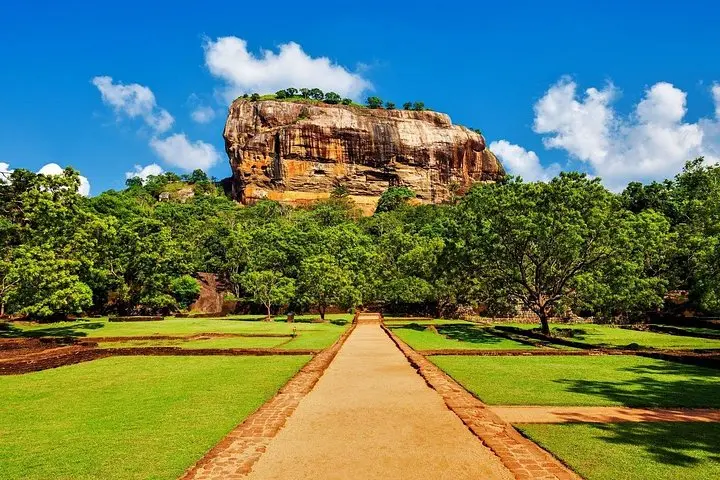
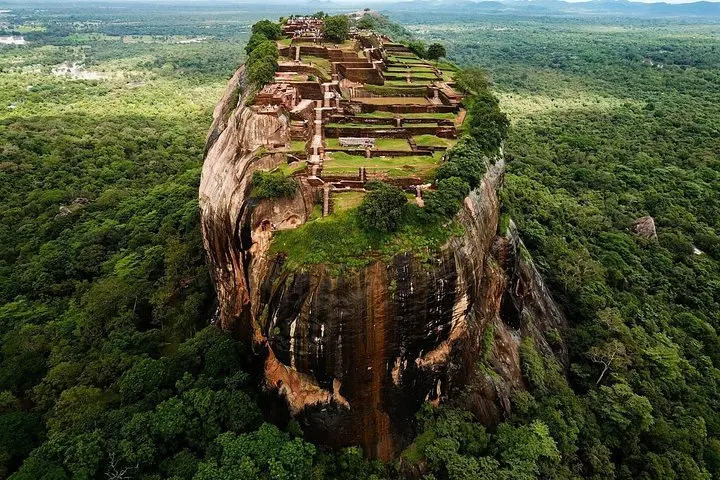
The climb begins before the summit reveals itself — a vertical silhouette rising from rice paddies and mahogany trees, the rock’s sheer flank catching the first light. At the base, the water gardens mirror the cliff and the path of visitors, and a pair of carved lion paws marks the final approach to a staircase that winds into history. By the time the metal staircases narrow and the fresco gallery comes into view, the landscape below has already rearranged: canals, terraced gardens and ponds sitting like deliberate brushstrokes around the base of a 200-meter basalt column.
The climb begins before the summit reveals itself — a vertical silhouette rising from rice paddies and mahogany trees, the rock’s sheer flank catching the first light. At the base, the water gardens mirror the cliff and the path of visitors, and a pair of carved lion paws marks the final approach to a staircase that winds into history. By the time the metal staircases narrow and the fresco gallery comes into view, the landscape below has already rearranged: canals, terraced gardens and ponds sitting like deliberate brushstrokes around the base of a 200-meter basalt column.
Sigiriya was raised into myth in the 5th century CE by King Kashyapa, who transformed a natural rock outcrop into a fortified palace atop an isolated volcanic plug. The site is an archaeological lesson in ambition — hydraulic gardens that still channel water, a mirror wall once polished to a sheen, and frescoes of celestial maidens whose pigments have weathered centuries yet retain surprising color. Geologically, the rock is the hardened core of an extinct volcano; its vertical face was the point of defense and drama.
Culturally, Sigiriya occupies both royal and monastic chapters of Sri Lanka’s past. For a period it became a Buddhist monastery; earlier and later layers of occupation reveal shifts in power, art, and engineering. Today the climb reads like a curated archive: rock-cut staircases, ancient foundations, and interpretive exhibits in the small on-site museum that add context before and after the ascent.
Practicalities are straightforward but important. The summit sits roughly 200 meters above the surrounding plain; expect about 1,200 steps and intermittent sections of narrow metal stairway that demand steady footing and a head for heights. Plan 2–3 hours to move through the water gardens, climb at a measured pace, linger at the fresco gallery, and take in the summit panorama. Heat and humidity can be severe mid-day — bring at least 1–2 liters of water, sun protection, and closed-toe shoes with good traction. The eTicket option allows fast-track entry to avoid long queues at the gate, a real time-saver on high-traffic days.
Health restrictions are in place: the route is not recommended for travelers with significant spinal, heart, or mobility issues, and pregnant visitors should avoid the climb. For photographers and history-minded travelers, early morning or late afternoon visits deliver softer light on the frescoes and quieter terraces for uninterrupted views. Respect ropes and signage around fragile frescoes, and leave no trace—Sigiriya’s longevity depends on steady conservation and mindful visitation.
Whether you come for the engineering, the views, or the drama of climbing through layers of Sri Lankan history, Sigiriya reads as both challenge and classroom: a place where landscape and human ambition meet, and where a thoughtful climb yields both insight and panorama.